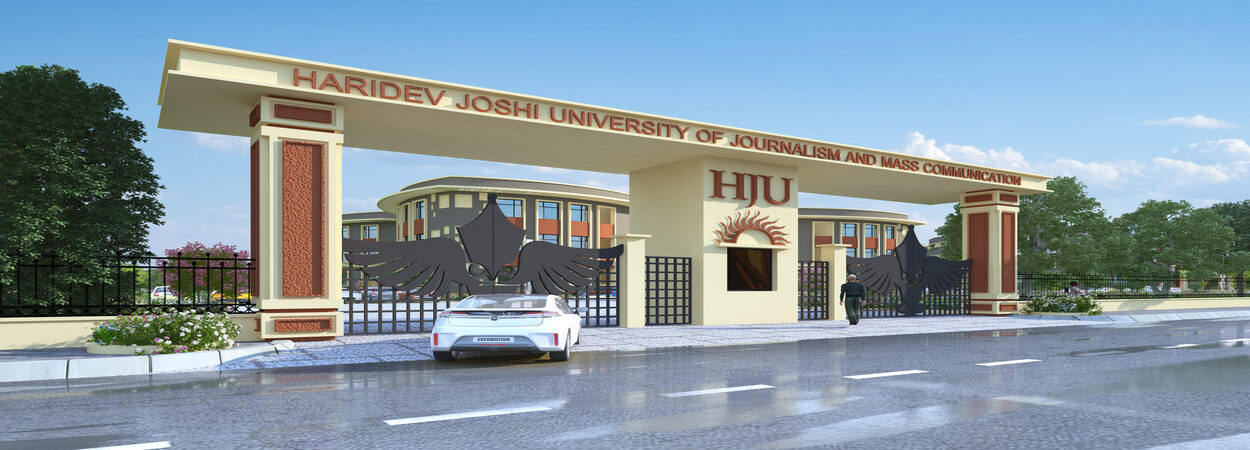
Pursuing a Ph.D. from Haridev Joshi University of Journalism and Mass Communication in Rajasthan offers a unique blend of rigorous academic research and practical media expertise. This esteemed institution is renowned for its commitment to advancing the fields of journalism, media studies, and mass communication through innovative research and interdisciplinary studies. The doctoral program is meticulously designed to bridge the gap between traditional academic theories and contemporary media practices. Students are encouraged to explore various dimensions of media communication, digital journalism, public relations, and emerging communication technologies.
The curriculum is structured to foster critical thinking, analytical skills, and creative research methodologies, ensuring that candidates are well-prepared to contribute significantly to both academic literature and the practical world of mass communication. With access to cutting-edge research facilities, digital libraries, and a network of experienced faculty members who are leading experts in the field, Ph.D. candidates gain invaluable insights and mentorship throughout their academic journey. Additionally, the vibrant campus culture, regular seminars, and industry collaborations provide a platform for dynamic learning and professional growth.
In essence, the Ph.D. program at Haridev Joshi University of Journalism and Mass Communication not only emphasizes scholarly excellence but also the practical application of research to solve real-world challenges in media and communication. Whether you are passionate about digital media, investigative journalism, or strategic communication, this program equips you with the necessary tools and knowledge to excel in an ever-evolving global media landscape.
Fee Structure for Ph.D. in Haridev Joshi University of Journalism and Mass Communication
| Fee Component | Amount (INR) |
|---|---|
| Tuition Fee Per Year | 40,000 - 80,000 |
| Registration Fee | 3,000 - 6,000 |
| Total Fee (Approx.) | 43,000 - 86,000 per year |
Admission Process For Ph.D. in Haridev Joshi University of Journalism and Mass Communication
The admission process at Haridev Joshi University of Journalism and Mass Communication is designed to select candidates with strong academic records and a passion for research in journalism and mass communication. The process involves several stages to ensure that only the most qualified applicants are admitted.
- Online Application: Complete and submit the application form available on the university’s official website.
- Document Submission: Provide all required academic transcripts, certificates, and identity proofs.
- Entrance Examination: Appear for a competitive entrance exam that evaluates your research aptitude and subject knowledge.
- Personal Interview: Shortlisted candidates will be invited for a personal interview with the selection committee.
- Research Proposal: Submit a detailed research proposal outlining your intended research area, methodology, and expected outcomes.
- Final Selection: Admissions are based on a combination of entrance exam scores, interview performance, and the quality of the research proposal.
Ph.D. Subjects in Haridev Joshi University of Journalism and Mass Communication
| Subject Area | Specializations |
|---|---|
| Journalism | Investigative Journalism, Digital Journalism, Broadcast Journalism |
| Mass Communication | Media Management, Public Relations, Advertising |
| Communication Studies | Interpersonal Communication, Organizational Communication, Strategic Communication |
| Digital Media | Social Media Analytics, New Media, Multimedia Storytelling |
| Interdisciplinary Studies | Media Ethics, Communication Theory, Global Media Trends |
Document Required For Ph.D. in Haridev Joshi University of Journalism and Mass Communication
Applicants must submit a comprehensive set of documents to verify their academic credentials and research capabilities. The following documents are typically required:
- Completed Online Application Form
- Academic Transcripts and Degree Certificates
- Detailed Research Proposal
- Curriculum Vitae (CV) or Resume
- Letters of Recommendation
- Proof of Identity (Aadhar Card, Passport, etc.)
- Recent Passport Size Photographs
- Entrance Exam Scorecard (if applicable)
Haridev Joshi University of Journalism and Mass Communication Ph.D. Syllabus
| Stage | Core Subjects/Modules |
|---|---|
| Stage 1 | Advanced Research Methodology, Media Ethics, Literature Review |
| Stage 2 | Specialized Electives, Seminar & Presentation Skills, Research Design |
| Stage 3 | Data Analysis Techniques, Field Research, Thesis Writing |
| Stage 4 | Thesis Submission, Viva Voce, Final Research Presentation |
Haridev Joshi University of Journalism and Mass Communication Research Methodology
- Identify key research gaps in the field of journalism and mass communication
- Formulate clear research objectives and hypotheses
- Design a comprehensive research framework and methodology
- Collect data using qualitative and quantitative methods
- Employ advanced analytical tools for data interpretation
- Critically evaluate and validate research findings
- Document and systematically report research outcomes
Haridev Joshi University of Journalism and Mass Communication Highlights
| Aspect | Details |
|---|---|
| Academic Excellence | Renowned for excellence in journalism and media research |
| Expert Faculty | Experienced academicians and industry professionals |
| State-of-the-Art Facilities | Modern labs, digital libraries, and research centers |
| Industry Collaborations | Strong ties with media houses and communication agencies |
| Campus Environment | Vibrant campus with a focus on innovation and creative research |
| Alumni Network | Extensive network of successful professionals in journalism and media |
How To Apply For Ph.D. in Haridev Joshi University of Journalism and Mass Communication
- Visit the official Haridev Joshi University website and navigate to the Ph.D. admissions section.
- Download and complete the online application form with accurate personal and academic details.
- Attach all required documents as per the application guidelines.
- Submit the application form along with the requisite fee via the online portal.
- Register for the entrance examination and prepare thoroughly.
- Attend the personal interview and submit a comprehensive research proposal.
- Follow up with the admissions office for further updates and instructions.
- Ensure that all deadlines are met and documents are submitted on time.
Courses After Ph.D. in Haridev Joshi University of Journalism and Mass Communication
- Post-Doctoral Research Programs
- Advanced Certification Courses in Specialized Media Areas
- Executive Education and Leadership Workshops
- Short-Term Courses for Skill Enhancement
- Interdisciplinary Research Fellowships
Haridev Joshi University of Journalism and Mass Communication Scholarship
Haridev Joshi University of Journalism and Mass Communication is committed to fostering academic excellence by providing a range of scholarships that help alleviate financial burdens for Ph.D. candidates. Scholarships are awarded based on academic merit, research potential, and financial need, ensuring that deserving scholars have the opportunity to pursue their research interests without financial constraints. Awardees benefit from tuition fee waivers, research grants, travel allowances for academic conferences, and stipends for living expenses. This robust financial support system is designed to encourage innovative research and allow candidates to focus entirely on their academic and professional growth. Through collaborations with governmental bodies and private organizations, the university ensures that comprehensive funding opportunities are available for all committed researchers.
- Merit-Based Scholarships
- Research Grants and Fellowships
- Need-Based Financial Assistance
- Special Scholarships for International Students
Haridev Joshi University of Journalism and Mass Communication FAQ's Regarding Ph.D.
- Q1: What are the eligibility criteria for the Ph.D. program?
- A1: Applicants must hold a relevant Master’s degree with a minimum of 55% marks and demonstrate strong research potential in journalism or mass communication.
- Q2: Is there an entrance examination for the Ph.D. program?
- A2: Yes, candidates must appear for a competitive entrance exam followed by a personal interview.
- Q3: What documents are required for the application process?
- A3: Required documents include academic transcripts, degree certificates, a detailed research proposal, CV, letters of recommendation, proof of identity, and recent passport-size photographs.
- Q4: How long does the Ph.D. program typically take?
- A4: The program generally takes between 3 to 5 years, depending on the research progress and thesis completion.
- Q5: Are scholarships available for Ph.D. candidates?
- A5: Yes, a variety of scholarships are available based on academic merit, research potential, and financial need, along with external funding options.
- Q6: What are the main research areas available at the university?
- A6: Research areas include Investigative Journalism, Digital Media, Media Management, Communication Studies, and Interdisciplinary Media Research.
- Q7: How is the research methodology structured in the program?
- A7: The research methodology involves identifying research gaps, formulating hypotheses, designing a comprehensive research framework, collecting and analyzing data, and systematically documenting findings.
- Q8: Can international students apply for the Ph.D. program?
- A8: Yes, international candidates are welcome to apply and may be eligible for special scholarships and financial assistance.
- Q9: What career opportunities are available after completing the Ph.D.?
- A9: Graduates can pursue careers in academia, research institutions, media organizations, government, and international agencies.
- Q10: Where can I find more detailed information about the application process?
- A10: Detailed information is available on the official Haridev Joshi University of Journalism and Mass Communication website or by contacting the admissions office directly.
