Ph.D. From Jawaharlal Nehru Krishi Vishwavidyalaya, Madhya Pradesh
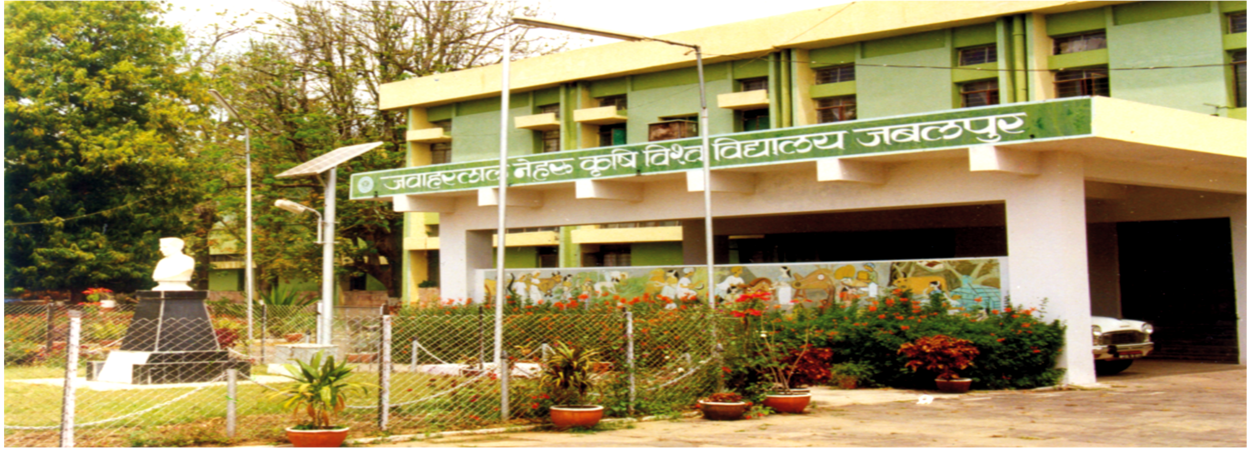
Introduction about Ph.D. From Jawaharlal Nehru Krishi Vishwavidyalaya
Jawaharlal Nehru Krishi Vishwavidyalaya (JNKVV), located in the heart of Madhya Pradesh, stands as a prestigious institution dedicated to advanced agricultural research and education. The Ph.D. program at JNKVV is meticulously designed to foster high-level research, encouraging scholars to contribute innovative solutions in the field of agricultural sciences. With a legacy spanning several decades, JNKVV has played a pivotal role in transforming agricultural practices and developing sustainable methodologies that benefit both the local community and the national economy. The institution’s research framework is built on state-of-the-art laboratories, experimental farms, and a dedicated faculty team that has vast experience in both traditional and modern agricultural practices.
Prospective candidates are offered an opportunity to work on interdisciplinary projects that encompass agronomy, horticulture, plant breeding, soil science, and allied fields. The Ph.D. curriculum is structured to provide a balance between theoretical knowledge and practical research. Students are encouraged to engage in critical analysis, design experiments, and publish their findings in reputed journals. The vibrant research environment, combined with the institution's commitment to innovation, ensures that each scholar can make a significant impact in the agricultural sector. Whether you aim to improve crop productivity, develop sustainable farming practices, or explore novel agricultural technologies, the Ph.D. program at JNKVV provides a solid platform to advance your career and contribute to the future of agriculture.
Fee Structure for Ph.D. in Jawaharlal Nehru Krishi Vishwavidyalaya
| Fee Type | Amount (INR) |
|---|---|
| Tuition Fee Per Year | 25,000 - 40,000 |
| Registration Fee | 2,000 - 5,000 |
| Total Fee (Approx.) | 27,000 - 45,000 per year |
Admission Process For Ph.D. in Jawaharlal Nehru Krishi Vishwavidyalaya
The admission process at Jawaharlal Nehru Krishi Vishwavidyalaya is designed to identify and enroll candidates with strong academic backgrounds and a passion for agricultural research. The multi-stage selection procedure ensures that the most promising scholars are admitted into the Ph.D. program. The process involves the following steps:
- Online application submission via the official university portal.
- Screening of academic records and research experience.
- Submission of a comprehensive research proposal.
- Shortlisting based on the evaluation of academic credentials and research potential.
- Personal interview with the selection committee.
- Final selection and issuance of the admission offer.
Ph.D. Subjects in Jawaharlal Nehru Krishi Vishwavidyalaya
| Subject Code | Subject Name | Description |
|---|---|---|
| JNKVV101 | Agronomy and Crop Production | Focuses on crop management, sustainable production techniques, and yield optimization. |
| JNKVV102 | Soil Science and Fertility | Covers soil properties, nutrient management, and sustainable soil conservation practices. |
| JNKVV103 | Plant Breeding and Genetics | Explores genetic improvement, hybridization techniques, and biotechnology applications. |
| JNKVV104 | Horticultural Science | Studies fruit, vegetable, and ornamental crop production along with post-harvest management. |
| JNKVV105 | Agro-Environmental Science | Deals with environmental impacts on agriculture, sustainable practices, and climate resilience. |
Document Required For Ph.D. in Jawaharlal Nehru Krishi Vishwavidyalaya
Applicants must compile a complete set of documents to verify their academic background, research experience, and identity. The submission of these documents is crucial for the evaluation process. The required documents include:
- Official academic transcripts and degree certificates.
- Valid identification proof (Aadhaar card, Passport, etc.).
- Detailed research proposal outlining the intended research area.
- Letters of recommendation from academic or professional referees.
- A comprehensive curriculum vitae (CV) highlighting academic and research accomplishments.
- Statement of purpose detailing research interests and career objectives.
- Any published papers or research work, if available.
Jawaharlal Nehru Krishi Vishwavidyalaya Ph.D. Syllabus
| Module | Topics Covered |
|---|---|
| Module 1: Research Foundations | Research ethics, literature review, research design, and proposal formulation |
| Module 2: Advanced Agricultural Sciences | Modern agronomy, crop physiology, sustainable farming practices, and precision agriculture |
| Module 3: Experimental Methodologies | Field trials, laboratory experiments, data collection methods, and statistical analysis |
| Module 4: Dissertation Development | Thesis writing, academic writing standards, publication ethics, and research defense |
| Module 5: Interdisciplinary Studies | Integration of allied sciences, environmental impact assessment, and policy formulation |
Jawaharlal Nehru Krishi Vishwavidyalaya Research Methodology
- Clearly define the research problem and set objectives.
- Conduct a comprehensive literature review to understand existing knowledge.
- Develop a robust research design incorporating both qualitative and quantitative methods.
- Utilize appropriate data collection techniques, including field studies and lab experiments.
- Employ statistical tools and software for thorough data analysis.
- Maintain high ethical standards and integrity throughout the research process.
- Continuously revise the methodology based on feedback and interim findings.
- Draft the dissertation with clarity and academic rigor.
Jawaharlal Nehru Krishi Vishwavidyalaya Highlights
| Aspect | Details |
|---|---|
| Legacy & Reputation | Renowned for its long-standing tradition in agricultural research and education. |
| Faculty Expertise | Experienced researchers and academicians dedicated to innovation in agriculture. |
| Research Facilities | Modern laboratories, experimental farms, and advanced research equipment. |
| Collaborative Research | Partnerships with national and international research institutions and industry bodies. |
| Student Support | Mentorship programs, research grants, and career development services. |
| Innovation & Impact | Significant contributions to sustainable agriculture and rural development. |
How To Apply For Ph.D. in Jawaharlal Nehru Krishi Vishwavidyalaya
- Visit the official website of Jawaharlal Nehru Krishi Vishwavidyalaya.
- Navigate to the Ph.D. admissions section and register an account.
- Complete the online application form with accurate personal and academic details.
- Upload all required documents, including transcripts, research proposal, CV, and identification proofs.
- Submit a detailed statement of purpose outlining your research interests and career goals.
- Pay the requisite application fee through the secure payment gateway.
- Attend the screening and interview process as scheduled by the admissions committee.
- Follow up with the admissions office for any additional requirements.
- Receive the admission offer and complete the enrollment formalities.
Courses After Ph.D. in Jawaharlal Nehru Krishi Vishwavidyalaya
- Post-doctoral Research Programs and Fellowships
- Advanced Certification Courses in Agricultural Sciences
- Specialized Workshops on Sustainable Farming Practices
- Interdisciplinary Courses Integrating Agriculture and Technology
- Professional Development and Leadership Programs in Research
Jawaharlal Nehru Krishi Vishwavidyalaya Scholarship
Jawaharlal Nehru Krishi Vishwavidyalaya is committed to fostering research excellence by providing various scholarship opportunities to its Ph.D. scholars. These scholarships are designed to support students financially, allowing them to focus entirely on their research endeavors without the burden of financial stress. The scholarships may cover tuition fee waivers, research grants, and stipends for living expenses. Awarded based on academic merit, research potential, and financial need, these scholarships ensure that promising researchers have the resources to advance their work in agricultural innovation. This robust financial support system underscores the university’s dedication to nurturing talent and encouraging groundbreaking research in the field of agriculture.
- Merit-based Scholarships for outstanding academic achievements.
- Need-based Financial Assistance for candidates from underprivileged backgrounds.
- Research Grants for innovative projects and publications.
- Special Awards for exceptional contributions in agricultural research.
Jawaharlal Nehru Krishi Vishwavidyalaya FAQ's Regarding Ph.D.
Q1: What are the eligibility criteria for the Ph.D. program?
A1: Applicants must hold a relevant Master’s degree in agricultural sciences or related fields with a strong academic record and research proposal.
Q2: How is the entrance examination conducted?
A2: The selection process generally includes an online application review, submission of research proposals, and a personal interview with the selection committee.
Q3: What documents are required for the application?
A3: Required documents include academic transcripts, degree certificates, research proposal, letters of recommendation, CV, identification proof, and a statement of purpose.
Q4: How long does the Ph.D. program typically take to complete?
A4: The program generally takes between 3 to 5 years, depending on the progress of the research and dissertation work.
Q5: Are there any scholarships available for Ph.D. candidates?
A5: Yes, the university offers various scholarships and financial aid options based on merit, research potential, and financial need.
Q6: Can professionals with work experience apply for the program?
A6: Yes, professionals with relevant work experience are encouraged to apply as it may enhance their application.
Q7: What is the mode of the admission process?
A7: The admission process is conducted online, and shortlisted candidates are invited for an in-person or virtual interview.
Q8: Is the program offered on a full-time or part-time basis?
A8: The Ph.D. program is primarily offered on a full-time basis, though exceptions may be made on a case-by-case basis.
Q9: What research facilities are available at JNKVV?
A9: The university provides state-of-the-art laboratories, experimental farms, and extensive research resources to support innovative agricultural research.
Q10: Where can I find more information about the Ph.D. program?
A10: For more detailed information, please visit the official Jawaharlal Nehru Krishi Vishwavidyalaya website or contact the admissions office directly.
