Introduction about Ph.D. in Geology at Alagappa University
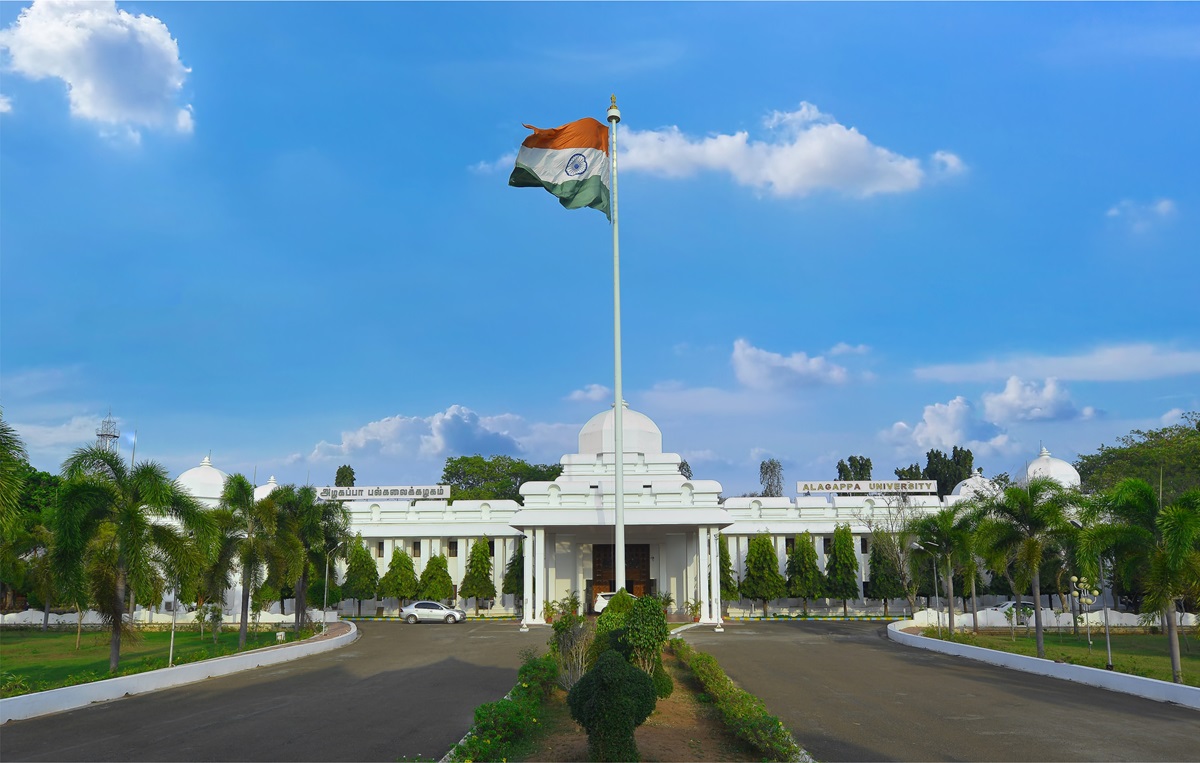
Alagappa University, situated in the vibrant educational hub of Tamil Nadu, offers a distinguished Ph.D. in Geology that blends rigorous research with contemporary industry relevance. The program is designed for professionals and academicians who aspire to deepen their expertise in earth sciences, contribute to cutting‑edge research, and lead innovative projects in mining, environmental consultancy, petroleum exploration, and academia. With state‑of‑the‑art laboratories, access to regional geological formations, and a faculty renowned for national and international publications, the university stands out as a premier destination for doctoral studies in geology.
Eligibility Criteria for Ph.D. in Geology at Alagappa University
- A Master’s degree (M.Sc., M.Tech., M.E.) in Geology, Earth Sciences, or a closely related discipline with a minimum 55% aggregate (or equivalent CGPA of 6.0/10).
- For candidates with an integrated M.Sc.–Ph.D. route, a B.Sc. (Hons) in Geology with at least 60% is acceptable.
- Candidates must have qualified the National Eligibility Test (NET) or the University’s Ph.D. Entrance Exam, unless they hold a UGC‑JRF or a prestigious fellowship.
- English proficiency (IELTS/TOEFL) is not mandatory for Indian nationals, but international candidates should have a minimum IELTS score of 6.0.
- Applicants should demonstrate a clear research interest aligned with the university’s research groups.
Entrance Exam for Ph.D. in Geology at Alagappa University
The university conducts a comprehensive Ph.D. Entrance Test covering:
- Fundamentals of Geology – mineralogy, petrology, structural geology.
- Geophysical and Geochemical methods.
- Research methodology and statistical analysis.
- Current trends in environmental and engineering geology.
Written test (120 marks) is followed by a personal interview where candidates discuss their proposed research topic, past project experience, and future objectives. Candidates with NET/JRF scores are exempted from the written portion.
Fee Structure for Ph.D. in Geology at Alagappa University
| Category | Annual Fee (INR) | Notes |
|---|---|---|
| General Merit (no scholarship) | ₹ 45,000 | Includes lab charges and library subscription |
| NET/JRF Qualified | ₹ 20,000 | Reduced fee as per UGC guidelines |
| SC/ST/PWD | ₹ 15,000 | Waiver of 66% as per government policy |
| International Students | ₹ 120,000 | Includes additional research material fees |
Admission Process for Ph.D. in Geology at Alagappa University
- Online Application: Submit the application through the university’s portal, upload scanned copies of academic certificates, and pay the application fee.
- Entrance Examination: Appear for the written test or submit NET/JRF score certificates.
- Interview & Proposal Review: Shortlisted candidates present a 10‑minute research proposal and undergo a panel interview.
- Document Verification: Physical verification of originals at the Admissions Office.
- Admission Letter: Successful candidates receive an official enrollment letter and are required to register for the academic session.
Ph.D. Subjects and Specializations in Geology at Alagappa University
The doctoral programme offers a spectrum of specializations, allowing scholars to tailor their study to personal interests and market demand:
- Petrology & Igneous Processes
- Sedimentology & Basin Analysis
- Structural Geology & Tectonics
- Mineralogy & Crystallography
- Environmental Geology & Geo‑hazards
- Hydrogeology & Groundwater Modelling
- Geophysics & Seismic Interpretation
- Petroleum Geology & Reservoir Characterization
- Remote Sensing & GIS in Geosciences
Research Areas in Geology at Alagappa University
Alagamma University’s Department of Geology maintains active research clusters that tackle both regional challenges and global scientific questions:
- Monsoon‑induced landslide dynamics in the Western Ghats.
- Geochemical fingerprinting of mineral deposits in Tamil Nadu.
- Carbon sequestration potential of basalt formations.
- Integrating AI‑based predictive models for groundwater quality.
- Stratigraphic correlation of the Cretaceous sedimentary basins.
- Seismic risk assessment for coastal megacities.
Graduate scholars often collaborate with industry partners such as Oil India Ltd., Coal India, and the Geological Survey of India, providing a robust pathway for translational research.
Documents Required for Ph.D. in Geology at Alagappa University
| Document | Format | Remarks |
|---|---|---|
| Online Application Form | Completed and signed | |
| Academic Transcripts (M.Sc./M.Tech.) | Scanned PDFs | Attested copies required |
| NET/JRF Score Card (if applicable) | Original certificate optional | |
| Research Proposal (5‑10 pages) | DOCX or PDF | Include objectives, methodology, and bibliography |
| Curriculum Vitae | Highlight publications and project experience | |
| Two Academic References | PDF (signed) | From supervisors or senior faculty |
Alagappa University Ph.D. Syllabus for Geology
The syllabus is structured to develop both depth of knowledge and research competence. Core modules include:
- Advanced Petrology and Geochemistry
- Structural Analysis and Tectonic Evolution
- Geophysical Survey Techniques
- Environmental Impact Assessment & Geo‑hazards
- Statistical Methods and Data Modelling in Geosciences
- Scientific Writing, Publication Ethics, and Intellectual Property Rights
Students must also attend weekly seminars, journal clubs, and field trips to foster practical understanding.
Alagappa University Research Methodology for Ph.D. in Geology
Research methodology is taught through a blend of classroom sessions and hands‑on workshops:
- Literature Review Techniques – systematic mapping using Scopus and Web of Science.
- Field Data Acquisition – GPS‑based mapping, core sampling, and stratigraphic logging.
- Laboratory Analyses – XRD, SEM‑EDS, isotope dating, and petrographic microscopy.
- Computational Modelling – GIS, MATLAB, and Python for spatial and statistical analysis.
- Thesis Preparation – Guidance on structuring chapters, referencing, and defending the dissertation.
For a seamless writing experience, candidates can leverage Thesis and Dissertation Writing Services to refine their drafts and meet university standards.
Highlights of Ph.D. in Geology at Alagappa University
| Feature | Benefit |
|---|---|
| Duration | Typically 3‑4 years (full‑time) |
| Funding | UGC fellowships, university scholarships, and project grants |
| Infrastructure | Modern petrology labs, GIS suite, and a well‑equipped geological museum |
| Industry Tie‑ups | Internships with leading mining and petroleum corporations |
| Publication Support | Access to high‑impact journals and Research Publication Support |
How To Apply for Ph.D. in Geology at Alagappa University
- Visit the official Alagappa University Admissions Portal and register an account.
- Fill the application form, upload all required documents, and pay the non‑refundable ₹ 1,500 application fee.
- Schedule the entrance test date; for NET/JRF candidates, upload the scorecard instead.
- Prepare a concise research proposal (max 10 pages) and have it reviewed by your prospective supervisor.
- After the entrance test, attend the interview (online or on‑campus) and submit the original documents for verification.
- Upon receiving the admission letter, activate your university email, complete the fee payment, and register for the first semester.
Applicants uncertain about topic selection can obtain assistance through PhD Topic Selection and Proposal Assistance to craft a compelling proposal that aligns with faculty expertise.
Career Scope and Job Opportunities After Ph.D. in Geology from Alagappa University
Graduates enjoy a diverse career trajectory across academia, industry, and government sectors:
- Academic Roles: Assistant Professor, Research Fellow, Department Head.
- Research Institutes: Positions at CSIR‑NMIC, Indian Institute of Technology (IIT) labs, and international geological surveys.
- Mining & Minerals: Exploration geologist, resource evaluator, and sustainability analyst for companies like Vedanta and NMDC.
- Petroleum & Energy: Reservoir engineer, basin analyst, and geoscientist with ONGC, Oil India, or private oil firms.
- Environmental Consulting: Geo‑hazard assessment, groundwater remediation, and climate impact studies for NGOs and consulting firms.
- Data‑Intensive Roles: GIS specialist, remote sensing analyst, and AI‑driven geospatial modeler.
To enhance employability, many candidates use Research Data Analysis Services and Research Paper Writing Services to build a strong publication record.
Scholarship for Ph.D. in Geology at Alagappa University
The university offers several merit‑based and need‑based scholarships:
- UGC‑JRF & SRF – Full stipend with contingency allowance.
- Alagappa University Merit Scholarship – 50% fee waiver for top 10% of candidates.
- State Government Scholarship for SC/ST/PDW – Covers tuition, travel, and living expenses.
- Industry Sponsored Fellowships – Projects funded by corporations that provide additional research grants.
Students interested in patenting their innovations can leverage the Patent Filing and Support Services to protect intellectual property derived from their research.
FAQs Regarding Ph.D. in Geology at Alagappa University
- 1. What is the minimum qualification to apply?
- A master’s degree in Geology or a related field with at least 55% aggregate, or a B.Sc. (Hons) with 60% for integrated programs.
- 2. Is NET mandatory for admission?
- NET (or equivalent) is not mandatory if you clear the university’s entrance exam, but NET qualification reduces the tuition fee and provides a scholarship boost.
- 3. How long does it take to complete the Ph.D.?
- Typically 3‑4 years for full‑time students, depending on research progress and publication requirements.
- 4. Can I pursue the Ph.D. part‑time while working?
- Yes, Alagappa University offers a part‑time mode for working professionals, with flexible class schedules and extended submission deadlines.
- 5. Are there opportunities for international collaboration?
- Absolutely. The department maintains MoUs with universities in Australia, Canada, and Germany, facilitating joint projects and exchange programs.