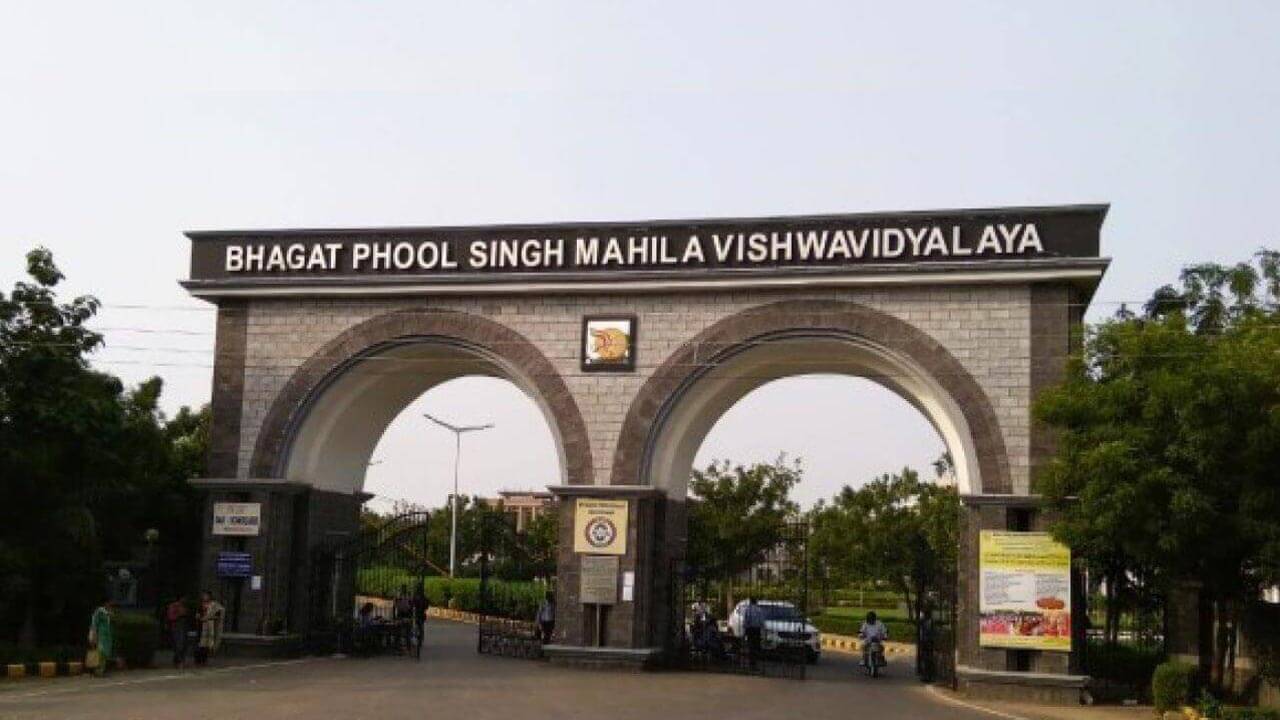
Introduction about Ph.D. in Law at Baba Mastnath University
The Ph.D. in Law offered by Baba Mastnath University (BMU) stands as a beacon for legal scholars aspiring to contribute to jurisprudence, policy making, and academic excellence. Designed for professionals and academicians, this doctoral programme blends rigorous research methodology with contemporary legal challenges, empowering candidates to become thought‑leaders in criminal law, constitutional studies, international law, and more. With a faculty of seasoned jurists and state‑of‑the‑art resources, BMU cultivates a vibrant ecosystem for groundbreaking legal research.
Eligibility Criteria for Ph.D. in Law at Baba Mastnath University
Prospective candidates must meet the following minimum requirements:
- Holding a Master’s degree (LL.M., M.A. Law, or equivalent) from a recognized university with at least 55% marks (or 5.0 CGPA on a 10‑point scale).
- For candidates with a 3‑year postgraduate degree, a minimum of 60% marks is required.
- Qualifying the entrance assessment conducted by the university.
- Age limit: No upper age restriction, but candidates should demonstrate the academic maturity required for doctoral research.
- Professional experience in legal practice, judiciary, or academic teaching is considered a strong advantage.
Entrance Exam for Ph.D. in Law at Baba Mastnath University
The entrance test evaluates both theoretical knowledge and research aptitude. It consists of:
- Written Examination – 100 multiple‑choice questions covering Constitutional Law, International Law, Criminal Law, and Legal Theory.
- Research Proposal Presentation – Candidates submit a concise 1,500‑word proposal and defend it before a panel of experts.
- Interview – An oral assessment focusing on motivation, research interests, and career objectives.
Preparation resources such as previous year papers and study guides are available on the university’s official portal.
Fee Structure for Ph.D. in Law at Baba Mastnath University
| Fee Component | Amount (INR) |
|---|---|
| Application & Registration Fee | 5,000 |
| Entrance Examination Fee | 4,500 |
| Annual Tuition & Laboratory Fee | 45,000 |
| Library & E‑Resources Access | 8,000 |
| Miscellaneous (Printing, Stationery) | 2,500 |
| Total Approx. Annual Cost | 65,000 |
BMU also offers fee waivers and scholarships for meritorious candidates, which can reduce the financial burden substantially.
Admission Process for Ph.D. in Law at Baba Mastnath University
The admission journey is streamlined into six clear steps:
- Online Application – Fill the application form on the university’s website and upload scanned copies of academic transcripts, ID proof, and passport‑size photograph.
- Payment of Application Fee – Complete the secure online transaction.
- Entrance Examination – Appear for the written test on the scheduled date.
- Submission of Research Proposal – Upload a 1,500‑word proposal outlining your intended research problem, methodology, and expected contribution.
- Interview & Viva Voce – Attend the personal interview (virtual or on‑campus) with the Ph.D. selection committee.
- Final Offer & Admission Letter – Upon successful clearance, receive an official admission letter and proceed to enrolment.
Ph.D. Subjects and Specializations in Law at Baba Mastnath University
BMU provides a diverse array of specializations to align with emerging legal demands:
- Constitutional & Administrative Law
- Criminal Justice & Forensic Law
- International Human Rights Law
- Intellectual Property and Cyber Law
- Corporate Governance & Securities Law
- Environmental & Climate Change Law
- Legal Theory and Jurisprudence
Research Areas in Law at Baba Mastnath University
Selected research domains reflect national priorities and global trends:
- Judicial reforms and access to justice
- Impact of digital technologies on privacy and data protection
- Comparative constitutional frameworks
- Legal implications of artificial intelligence and autonomous systems
- Transnational criminal networks and anti‑terrorism policies
- Sustainable development law and climate litigation
- Indigenous rights and tribal law in India
Documents Required for Ph.D. in Law at Baba Mastnath University
| Document | Details / Format |
|---|---|
| Academic Transcripts | Original + Certified copies of Master’s degree |
| Degree Certificate | Scanned PDF (max 2 MB) |
| Research Proposal | Word document, 1,500 words |
| Identity Proof | Aadhaar / Passport (front & back) |
| Passport‑size Photograph | White background, 2.5 cm x 3.5 cm |
| Experience Letter (if applicable) | From current/past employer confirming legal practice or academic duties |
Baba Mastnath University Ph.D. Syllabus for Law
The doctoral syllabus is structured into three core modules:
- Foundations of Legal Research – Methodologies, legal historiography, qualitative & quantitative analysis.
- Specialized Subject Courses – Tailored to the chosen specialization (e.g., International Law, Cyber Law).
- Dissertation Development – Proposal writing, literature review, data collection, analysis, and final thesis submission.
Students are encouraged to attend seminars, workshops, and international conferences to enrich their scholarly perspective.
Baba Mastnath University Research Methodology for Ph.D. in Law
BMU emphasizes a blended research approach:
- Doctrinal Research – Critical analysis of statutes, case law, and legal doctrines.
- Empirical Legal Studies – Surveys, interviews, and statistical modeling using Research Data Analysis Services.
- Comparative Method – Cross‑jurisdictional examination to uncover best practices.
- Interdisciplinary Integration – Collaboration with economics, sociology, and technology experts to broaden legal insights.
Highlights of Ph.D. in Law at Baba Mastnath University
| Feature | Benefit |
|---|---|
| Renowned Faculty Panel | Guidance from judges, senior advocates, and internationally published scholars. |
| State‑of‑the‑Art Legal Library | Access to over 150,000 law journals, databases, and case law archives. |
| Industry Partnerships | Internships and research collaborations with law firms, NGOs, and government bodies. |
| Funding Opportunities | Scholarships, research grants, and fellowships covering tuition & living expenses. |
| Publication Support | Assistance from Research Paper Writing Services and Research Publication Support to publish in indexed journals. |
How To Apply for Ph.D. in Law at Baba Mastnath University
Follow these steps to submit a successful application:
- Visit the official BMU portal and click “Apply for Ph.D.”.
- Create a user account and fill in personal, academic, and professional details.
- Upload the required documents (refer to the Documents Required table).
- Pay the non‑refundable application fee via net banking or credit card.
- Schedule your entrance examination date and download the exam syllabus.
- Prepare a concise research proposal; you may consult PhD Admission Assistance for personalized guidance.
- Attend the interview and, upon clearance, accept the admission offer.
Career Scope and Job Opportunities After Ph.D. in Law from Baba Mastnath University
Graduates can explore a wide spectrum of roles:
- Academic Positions – Lecturer, Associate Professor, or Dean in law schools and universities.
- Judicial Services – Higher Judicial Officer, Legal Advisor to the Supreme Court or High Courts.
- Policy & Legislative Research – Think‑tank analyst, government legal counsel, or policy drafting expert.
- Corporate Legal Departments – Chief Legal Officer, Compliance Manager, or Intellectual Property Strategist.
- International Organizations – Legal consultant for UN bodies, World Bank, or NGOs focusing on human rights.
- Legal Publishing & Editing – Author, editor, or reviewer for law journals and textbooks.
With a robust network and the research competencies honed at BMU, alumni are well‑positioned for leadership roles both in India and abroad.
Scholarship for Ph.D. in Law at Baba Mastnath University
BMU offers merit‑based scholarships covering up to 100% of tuition fees and a monthly stipend of INR 15,000. Eligibility includes:
- Top 10% rank in the entrance examination.
- Outstanding academic record (minimum 70% in Master’s degree).
- High‑impact research proposal addressing societal challenges.
Applicants can also apply for external fellowships such as the UGC Doctoral Fellowship and the ICSSR Research Grant. For assistance with proposal writing, consider the PhD Topic Selection and Proposal Assistance service.
FAQs Regarding Ph.D. in Law at Baba Mastnath University
- 1. How long does the Ph.D. programme take?
- The typical duration is 3‑5 years, depending on research progress and publication requirements.