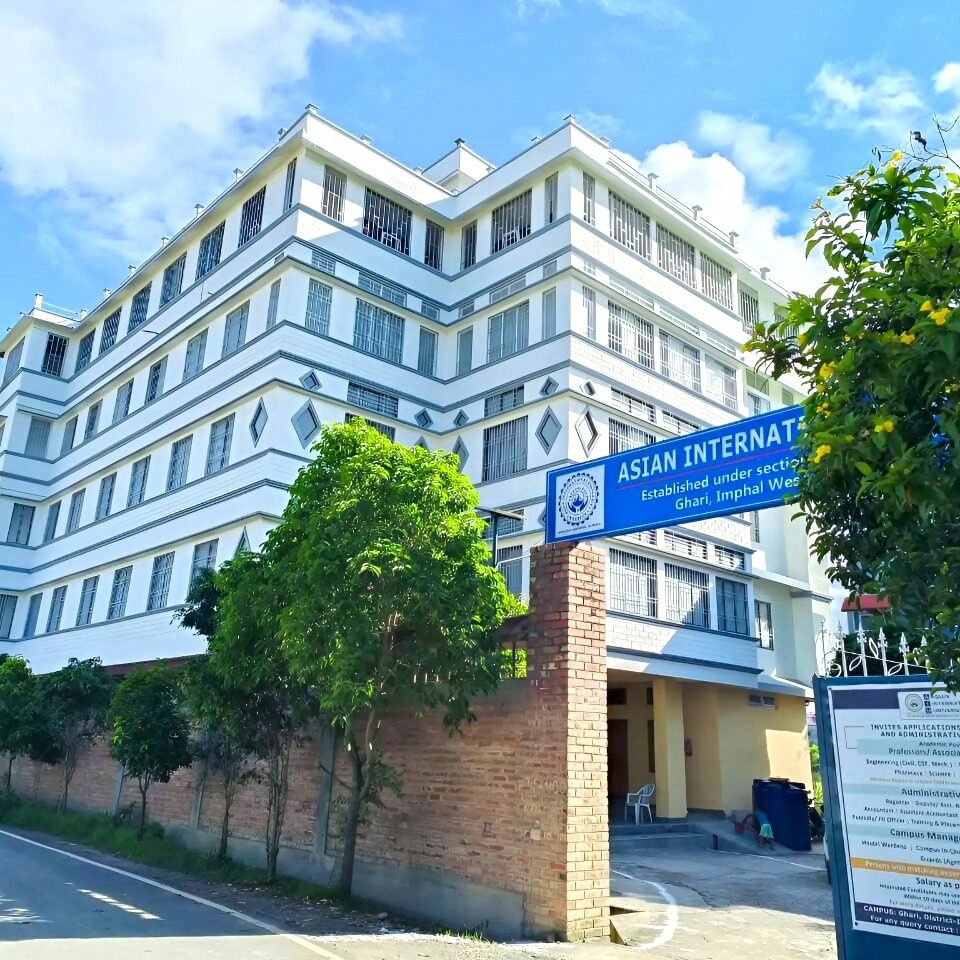
Eligibility Criteria for Ph.D. in Physics at Vinoba Bhave University
- A Master’s degree (M.Sc., M.Tech., or an equivalent) in Physics or a closely related discipline with a minimum of 55% marks (or CGPA 6.0 on a 10‑point scale). For candidates with a B.E./B.Tech. in Engineering Physics, a minimum of 60% is preferred.
- Qualified in the National Eligibility Test (NET) or GATE in Physics, or any other national level exam recognized by VBU.
- For candidates without NET/GATE qualification, a satisfactory score in the university‑conducted entrance test is mandatory.
- Applicants must possess a valid scorecard for English proficiency (IELTS/TOEFL) if the medium of instruction is English and the candidate’s previous education was in a regional language.
- Age limit: No upper age restriction, but candidates must demonstrate the physical and mental stamina required for intensive research.
Entrance Exam for Ph.D. in Physics at Vinoba Bhave University
VBU conducts a two‑stage entrance examination:
- Written Test (120 marks): This paper assesses core physics concepts, analytical reasoning, and research aptitude. Topics include Classical Mechanics, Electrodynamics, Quantum Theory, Statistical Physics, and Modern Experimental Techniques.
- Interview & Proposal Presentation (30 marks): Shortlisted candidates present a research proposal and undergo an interview panel to evaluate their motivation, originality, and alignment with faculty expertise.
The written test is scheduled twice a year – in June and December – with application deadlines posted on the official university portal.
Fee Structure for Ph.D. in Physics at Vinoba Bhave University
| Category | Annual Fee (INR) | Notes |
|---|---|---|
| General Category | ₹ 18,500 | Includes tuition, library, and lab usage. |
| SC/ST/OBC (Non‑creamy layer) | ₹ 11,200 | 15% fee waiver under the university’s scholarship scheme. |
| Women Candidates (All categories) | ₹ 12,500 | Additional 10% concession as per Govt. policy. |
| International Students | ₹ 45,000 | Higher fee includes additional support services. |
All fees are payable at the start of the academic year. Late payment may attract a penalty of 2% per month.
Admission Process for Ph.D. in Physics at Vinoba Bhave University
- Online Application: Submit the application through the VBU admission portal, upload scanned copies of academic certificates, research proposal (max 1500 words), and pay the application fee of ₹ 1,500.
- Document Verification: The university’s admission office verifies credentials and forwards eligible profiles to the Department of Physics.
- Entrance Examination: Appear for the written test on the scheduled date. Admit cards are issued 10 days prior.
- Interview & Proposal Defense: Successful candidates are called for a panel interview and presentation of their research proposal.
- Final Selection & Offer Letter: Candidates receive an official admission letter with details of registration, fee payment, and orientation schedule.
- Registration: Complete the registration process within 15 days of receiving the offer, upload the signed declaration form, and submit the initial fee.
Ph.D. Subjects and Specializations in Physics at Vinoba Bhave University
- Quantum Mechanics & Quantum Information
- Condensed Matter Physics (Magnetism, Superconductivity)
- Particle Physics & High Energy Phenomena
- Astronomy & Astrophysics
- Optical & Laser Physics
- Nano‑Science & Nanotechnology
- Computational Physics & Modeling
- Applied Physics (Materials, Renewable Energy)
- Biophysics & Medical Physics
Research Areas in Physics at Vinoba Bhave University
VBU’s Department of Physics hosts several interdisciplinary research clusters, including:
- Quantum Computing: Development of qubit architectures and error‑correction algorithms.
- Renewable Energy Materials: Synthesis and characterization of photovoltaic and thermoelectric materials.
- Space Science: Satellite data analysis and celestial mechanics.
- Advanced Spectroscopy: Ultrafast laser spectroscopy for probing electron dynamics.
- Medical Imaging: Physics of MRI, PET, and radiation therapy.
Documents Required for Ph.D. in Physics at Vinoba Bhave University
| Document | Format | Remarks |
|---|---|---|
| Academic Transcripts (M.Sc./M.Tech.) | PDF, scanned copy | Original and mark sheets required. |
| NET/GATE Score Card | Valid for the last 3 years. | |
| Research Proposal | DOCX or PDF (max 1500 words) | Must outline objectives, methodology, and expected outcomes. |
| Identity Proof (Aadhaar/Passport) | Government‑issued photo ID. | |
| Passport‑size Photograph | JPEG (300 dpi) | White background. |
| Letter of Recommendation (2) | From academicians familiar with your research potential. |
Vinoba Bhave University Ph.D. Syllabus for Physics
The syllabus is structured into three phases:
- Coursework (Year 1): Core modules covering Advanced Quantum Theory, Statistical Mechanics, Computational Techniques, and Research Methodology.
- Laboratory & Project Work (Year 2): Hands‑on experiments, data acquisition, and preliminary publications.
- Thesis & Defense (Year 3–4): Independent research, writing of the dissertation, and oral defense before a panel of experts.
Vinoba Bhave University Research Methodology for Ph.D. in Physics
All candidates must complete a compulsory Research Methodology workshop that covers:
- Literature Review & Critical Analysis
- Experimental Design and Safety Protocols
- Statistical Data Analysis and Use of Software (MATLAB, Python, COMSOL)
- Scientific Writing and Publication Ethics
- Intellectual Property Rights and Patent Filing
Upon completion, students receive a certificate that is essential for thesis submission.
Highlights of Ph.D. in Physics at Vinoba Bhave University
| Feature | Details |
|---|---|
| State‑of‑the‑art Laboratories | Ultra‑high vacuum chambers, cryogenic facilities, and high‑resolution spectrometers. |
| International Collaborations | Joint projects with CERN, ISRO, and leading Indian Institutes of Technology. |
| Funding Opportunities | UGC‑CSIR fellowships, university scholarships, and industry‑sponsored grants. |
| Publication Support | Access to open‑access journals and assistance from Research Publication Support services. |
| Career Services | Dedicated placement cell, networking events, and alumni mentorship. |
How To Apply for Ph.D. in Physics at Vinoba Bhave University
Follow these steps for a smooth application:
- Visit the official VBU admissions portal and create a user account.
- Fill in the application form with personal, academic, and research details.
- Upload required documents (see the Documents Required table).
- Pay the non‑refundable application fee via net banking or UPI.
- Submit your research proposal and wait for the email confirmation of acceptance for the written test.
- Prepare for the entrance exam using past papers and recommended textbooks.
- After successful interview, accept the admission offer and complete the registration formalities.
Career Scope and Job Opportunities After Ph.D. in Physics from Vinoba Bhave University
A doctorate in Physics opens diverse career pathways, including:
- Academic Positions: Assistant Professor, Lecturer, or Research Fellow in universities and colleges.
- Research Institutes: Scientist or Senior Fellow at CSIR, DRDO, Indian Institute of Science (IISc), or international labs.
- Industry Roles: R&D Engineer, Materials Scientist, Data Analyst, or Quantum Technology Developer in sectors such as aerospace, renewable energy, semiconductor manufacturing, and financial modeling.
- Entrepreneurship: Start‑up ventures focusing on nanotech, photonics, or scientific consulting.
- Policy & Advisory: Science policy analyst for governmental bodies or NGOs.
According to recent placement data, 78% of VBU Physics Ph.D. graduates secure a position within six months of graduation.
Scholarship for Ph.D. in Physics at Vinoba Bhave University
VBU offers several financial aids to deserving candidates:
- UGC‑CSIR JRF & SRF: Covers tuition, monthly stipend, and travel allowance.
- University Merit Scholarship: 50% fee waiver for top‑ranked entrants.
- Women’s Empowerment Scholarship: Additional INR 5,000 per month for female researchers.
- Industry‑Sponsored Fellowships: Partnerships with Tata Energy, ISRO, and private labs provide project‑based funding.
- External Grants: Candidates may apply for funding from the Department of Science & Technology (DST) and the Indian National Science Academy (INSA).
For assistance in preparing grant proposals, students can avail of PhD Admission Assistance and Thesis and Dissertation Writing Services.
FAQs Regarding Ph.D. in Physics at Vinoba Bhave University
- 1. What is the minimum duration to complete the Ph.D.?
- The program is designed for 3–4 years of full‑time study, subject to satisfactory progress and timely submission of the thesis.
- 2. Can I pursue the Ph.D. part‑time while working?
- Yes, VBU offers a part‑time route for industry professionals, extending the duration to a maximum of 6 years.
- 3. Are there any language requirements?
- English is the medium of instruction. Non‑native speakers must provide proof of proficiency (IELTS ≥ 6.0 or TOEFL ≥ 80).
- 4. How many publications are required before thesis submission?
- At least one paper in a peer‑reviewed international journal is highly recommended; however, it is not mandatory if the research quality is demonstrated through conference proceedings.
- 5. Is there support for patent filing?
- Yes, the university’s Innovation Cell collaborates with Patent Filing and Support Services to guide candidates through the intellectual property process.
- 6. What are the career services available after graduation?
- VBU provides placement counseling, CV workshops, and networking events, supplemented by Research Paper Writing Services and Editing and Proofreading Services to enhance your professional profile.