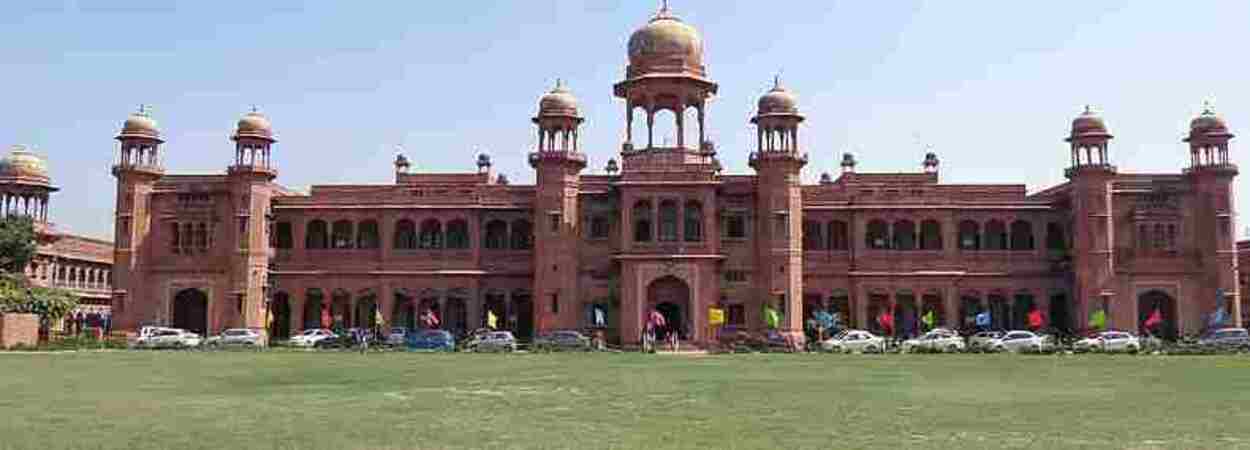
Introduction about Ph.D. From Dr. B.R. Ambedkar University
Dr. B.R. Ambedkar University, located in Uttar Pradesh, upholds the enduring legacy of Dr. B.R. Ambedkar’s commitment to social inclusion, academic integrity, and educational excellence. Offering doctoral programs in a wide range of disciplines, the university fosters a vibrant scholarly ecosystem where research, teaching, and community engagement converge. At the heart of its Ph.D. framework is the belief that higher education should serve as a catalyst for societal transformation, equipping scholars with both theoretical knowledge and practical insights.
Pursuing a Ph.D. at this university immerses candidates in a culture of inquiry, where interdisciplinary collaboration is actively encouraged. The institution not only provides robust academic infrastructure—encompassing modern labs, well-stocked libraries, and digital resources—but also engages students in workshops, seminars, and field projects to hone their research skills. Mentors and faculty members with extensive industry and academic backgrounds guide doctoral candidates through every phase of research, offering personalized support and constructive feedback.
In addition to academic rigor, the university emphasizes ethical research practices, ensuring that candidates uphold integrity in data collection and publishing. Students are also encouraged to explore cross-cultural perspectives by participating in exchange programs and networking events. Collectively, these elements craft an enriching Ph.D. experience that prepares graduates to take on influential roles in academia, public policy, private enterprises, and beyond. If you seek a doctoral journey imbued with scholarly depth, social relevance, and professional growth, Dr. B.R. Ambedkar University stands out as a compelling choice.
Fee Structure for Ph.D. in Dr. B.R. Ambedkar University
| Tuition Fee Per Year | Registration Fee | Total Fee |
|---|---|---|
| INR 25,000 | INR 5,000 | INR 30,000 |
Please note that the exact fee may vary depending on the specific department and any revised university regulations. Prospective scholars are advised to verify the most current fee details through official notifications or the admissions office.
Admission Process For Ph.D. in Dr. B.R. Ambedkar University
The university has established a transparent admission procedure designed to evaluate applicants on both academic merit and research aptitude. While departments may have additional prerequisites, below is a generalized snapshot of the steps usually involved:
- Complete the university’s Ph.D. application form, which can be downloaded or filled out online.
- Provide academic transcripts from recognized institutions for bachelor’s and master’s degrees.
- Draft a well-defined research proposal illustrating your study objectives and proposed methodology.
- Appear for the university’s entrance exam or a recognized national-level test if required by your program.
- Participate in an interview or departmental presentation to discuss your research interests and objectives.
- Check the final selection list after the review process is completed by the research committee.
- Once selected, confirm your admission by paying the specified fee and fulfilling registration formalities.
Meeting deadlines and adhering to departmental criteria are critical to securing a seat in this competitive program.
Ph.D. Subjects in Dr. B.R. Ambedkar University
| Discipline | Research Specializations |
|---|---|
| Social Sciences | Sociology, Political Science, History, Public Administration |
| Humanities | English Literature, Hindi Literature, Philosophy, Cultural Studies |
| Management & Commerce | Business Administration, Finance, Marketing, E-commerce |
| Sciences | Environmental Science, Biotechnology, Physics, Chemistry |
| Law & Governance | Constitutional Law, Human Rights, Administrative Law |
| Education | Curriculum Development, Educational Psychology, Special Education |
| Interdisciplinary Studies | Rural Development, Gender Studies, Urban Planning |
The university periodically updates its subject offerings in response to emerging academic trends and societal demands.
Document Required For Ph.D. in Dr. B.R. Ambedkar University
Ensuring that you have all the necessary documentation is vital for a smooth admissions process. Below is a general outline of the key documents you may need to submit. Always consult official departmental guidelines for any program-specific requirements:
- Completed application form (online or downloaded copy).
- Academic transcripts (bachelor’s and master’s degrees) attested by the relevant authorities.
- Proof of date of birth (Aadhaar, birth certificate, passport, etc.).
- A structured research proposal detailing objectives, scope, and methodologies.
- Letters of recommendation from academic or professional referees.
- No Objection Certificate (if employed), confirming your availability for research.
- Valid entrance exam scorecard (if required) or other qualifying examination results.
- Passport-sized photographs conforming to the specified format.
Dr. B.R. Ambedkar University Ph.D. Syllabus
| Year / Semester | Core Areas of Study |
|---|---|
| Year 1 | Core Modules: Research Methodology, Advanced Theoretical Frameworks, Literature Reviews Workshops & Seminars: Data Collection Techniques, Research Ethics, Academic Writing Practical Sessions: Introductory Fieldwork or Laboratory Work (Where Applicable) |
| Year 2 | Elective Streams: Specialized Topics in Chosen Discipline, Emerging Trends Research Activities: Ongoing Data Collection, Pilot Studies, Conceptual Refinement Mid-Semester Evaluations: Presentations of Preliminary Findings, Peer Discussions |
| Year 3 | Thesis Development: In-depth Analysis, Synthesis of Data, Final Drafting of Thesis Peer Review & Publication: Submissions to Journals, Conferences, or Academic Workshops Final Assessments: Thesis Defense, Viva Voce, and Evaluation by External Examiners |
Exact coursework and timelines may differ based on the specific department and any new directives from the academic council.
Dr. B.R. Ambedkar University Research Methodology
- Comprehensive exposure to both qualitative and quantitative research methods.
- Emphasis on ethical considerations such as citation practices, data confidentiality, and plagiarism checks.
- Hands-on training with statistical software and analytical tools (SPSS, R, or STATA).
- Case studies and real-world simulations to apply theoretical concepts to practical scenarios.
- Collaborative projects that encourage interdisciplinary perspectives and peer-learning.
- Regular feedback from faculty mentors to refine research designs and methodology.
- Promotion of publication in peer-reviewed journals to validate and disseminate findings.
Dr. B.R. Ambedkar University Highlights
| Highlight | Information |
|---|---|
| Foundation & Vision | Founded to promote inclusive, socially relevant, and high-quality education. |
| Faculty Strength | Diverse team of academicians, researchers, and industry professionals guiding research. |
| Infrastructure | Cutting-edge labs, extensive libraries, digital archives, and advanced IT facilities. |
| Research Ecosystem | Frequent conferences, seminars, workshops, and collaborative projects. |
| Academic Collaborations | Partnerships with national and international institutions, fostering global exposure. |
| Student Support | Scholarships, mentorship programs, and dedicated placement/career cells. |
| Cultural Inclusivity | Encouragement of student-led clubs, events, and cultural exchange forums. |
| Community Engagement | Field-oriented outreach programs addressing local and regional societal challenges. |
How To Apply For Ph.D. in Dr. B.R. Ambedkar University
- Browse the official university website for Ph.D. admission announcements and guidelines.
- Download the application form or complete the online application as instructed.
- Gather mandatory documents, including academic records, ID proofs, and research proposals.
- Check if you need to register for a particular entrance exam or if you qualify for exemptions.
- Pay the application fee via the specified payment modes (online transaction, draft, etc.).
- Submit the filled form and supporting documents within the announced deadline.
- Stay updated on any communication regarding entrance tests or interview schedules.
- Attend the interview or present your research concept to the departmental committee.
- Once selected, finalize admission by completing fee payment and document verification.
- Enroll in mandatory coursework and initiate your doctoral research under assigned supervision.
Courses After Ph.D. in Dr. B.R. Ambedkar University
- Post-Doctoral Fellowships to expand research horizons and deepen expertise.
- Professional Certifications in niche areas like data analytics or policy development.
- Diploma Courses focused on leadership, academic administration, or project management.
- Short-term fellowships with NGOs, government bodies, or think tanks for applied research.
- Academic teaching certifications for those aspiring to lectureships or professorships.
Dr. B.R. Ambedkar University Scholarship
Dr. B.R. Ambedkar University provides various scholarship opportunities to ensure that driven scholars from all walks of life can thrive in its Ph.D. programs. Many scholarships target specific student groups, including reserved categories, differently-abled students, and candidates with outstanding academic achievements. In some instances, research grants may be available for project-based initiatives or interdisciplinary collaborations, reflecting the university’s commitment to fostering innovation and social relevance in research. Additionally, the university collaborates with government departments and private organizations, enabling access to a wider range of funding options such as teaching assistantships, fellowship programs, and stipends. This multi-layered scholarship framework not only relieves financial burdens but also encourages scholars to focus on delivering research that can meaningfully impact policy decisions, educational reforms, and community upliftment.
- Merit-based Scholarships for high-performing students and researchers.
- Need-based Financial Support tailored to economically disadvantaged scholars.
- Government-funded Grants for specific disciplines or community categories.
- Industry-Partnered Fellowships offering real-world exposure and research collaboration.
Dr. B.R. Ambedkar University FAQ's Regarding Ph.D.
- What is the minimum eligibility for the Ph.D. program?
Generally, candidates need a Master’s degree in a relevant field with a qualifying percentage or CGPA. Additional department-specific criteria may apply.
- Are entrance exams compulsory for every subject?
Some disciplines do require a university-level or national-level entrance exam, whereas others may consider equivalent test scores or interviews.
- How long does it typically take to complete the Ph.D.?
Most doctoral programs span three to five years, depending on research complexity and the pace of thesis submission.
- Is there a part-time or external Ph.D. option?
Yes, select departments offer part-time or external Ph.D. formats, subject to university policies and approvals.
- Can international students apply?
Yes, the university welcomes international scholars, provided they fulfill eligibility criteria and secure appropriate visas and documentation.
- What financial aid options are available for Ph.D. candidates?
Scholarships, research grants, and fellowships are offered based on merit, financial need, or specific project criteria. Government funding may also be available for certain categories.
- How important is the research proposal during admissions?
The research proposal is crucial as it indicates your preparedness, clarity of objectives, and methodological approach, heavily influencing the selection process.
- Do I need to publish papers during my Ph.D.?
While not always mandatory, many departments encourage at least one publication in a peer-reviewed journal before thesis submission.
- Does the university offer campus placements post-Ph.D.?
A dedicated placement cell assists Ph.D. graduates in exploring academic, governmental, and industry opportunities, though placements may vary by discipline.
- What are the potential career paths after completing a Ph.D.?
Graduates can pursue academia, research roles, policy advisory positions, corporate R&D, entrepreneurial ventures, or consultancy, depending on their expertise and interests.








