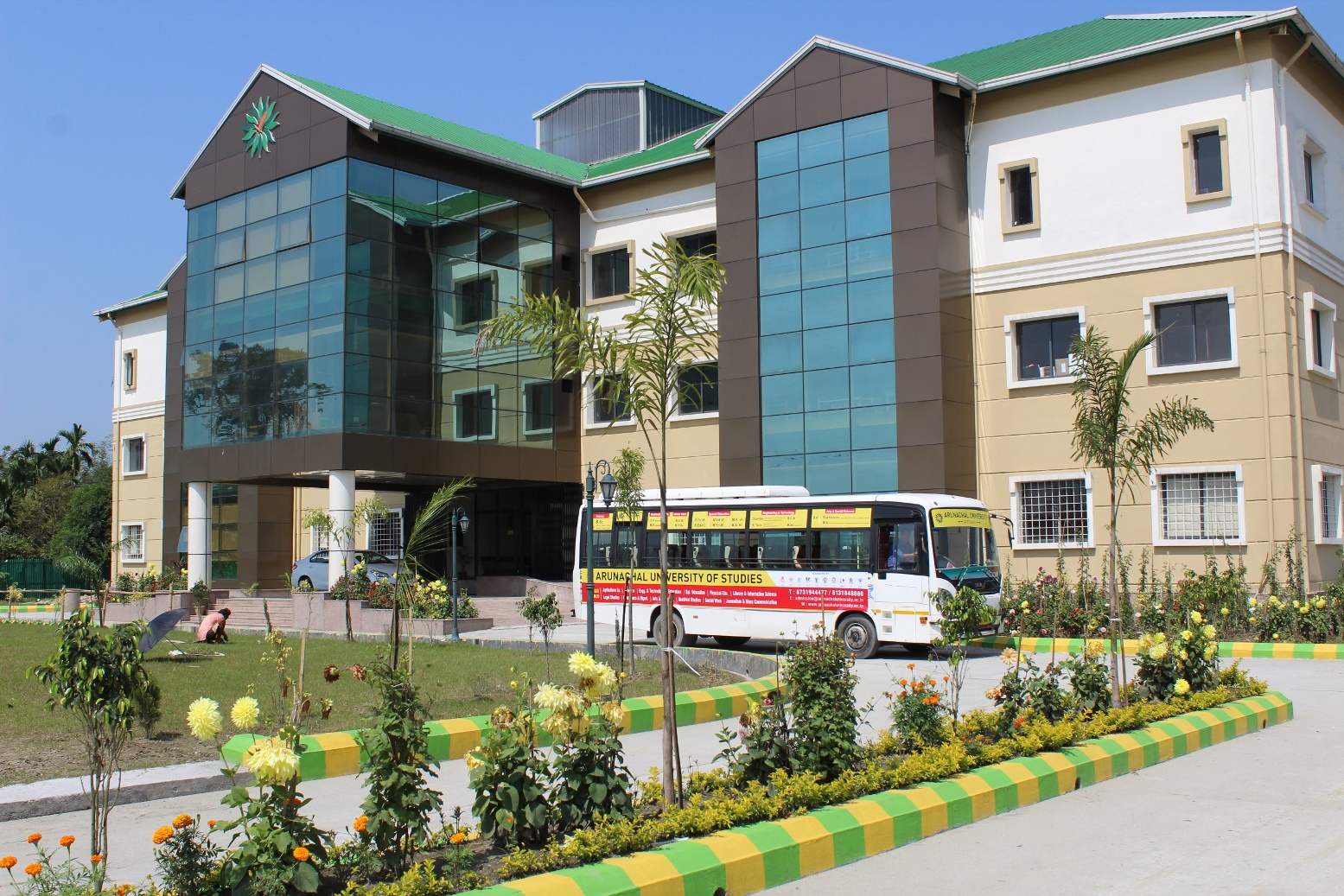
Introduction about Ph.D. in Journalism And Mass Communication at Arunachal University of Studies
Arunachal University of Studies (AUS) stands as a beacon of academic excellence in the North‑East, offering a transformative Ph.D. in Journalism And Mass Communication. Designed for seasoned professionals, educators, and media practitioners, this doctoral programme blends rigorous research methodology with cutting‑edge media theory. Whether you aspire to shape media policy, lead investigative journalism units, or become a thought‑leader in communication studies, AUS provides the ecosystem—state‑of‑the‑art labs, seasoned faculty, and industry collaborations—to turn your vision into scholarly impact.
Eligibility Criteria for Ph.D. in Journalism And Mass Communication at Arunachal University of Studies
- Master’s degree (M.A., M.Com, M.Sc.) in Journalism, Mass Communication, Media Studies or a closely related discipline with a minimum of 55% marks (or equivalent CGPA) from a recognized university.
- Holding a UGC NET or CSIR NET qualification automatically satisfies the eligibility.
- For candidates with a professional background (e.g., senior editors, broadcast managers) possessing at least 5 years of relevant work experience is considered equivalent to the academic requirement.
- Non‑resident Indian (NRI) and foreign candidates must have their qualifications evaluated by the Association of Indian Universities (AIU).
Entrance Exam for Ph.D. in Journalism And Mass Communication at Arunachal University of Studies
AUS conducts a two‑stage selection process:
- Written Test – 100 multiple‑choice questions covering research methodology, communication theory, media ethics, and quantitative analysis. The test is held online and lasts 2 hours.
- Interview & Presentation – Shortlisted candidates present a 15‑minute research proposal followed by a panel interview assessing originality, feasibility, and alignment with AUS research strengths.
Candidates who have cleared UGC NET/CSIR NET are exempted from the written test but must appear for the interview.
Fee Structure for Ph.D. in Journalism And Mass Communication at Arunachal University of Studies
| Component | Indian Students (INR) | International Students (USD) |
|---|---|---|
| Application & Registration Fee | ₹ 2,500 | $ 150 |
| Annual Tuition (per annum) | ₹ 45,000 | $ 1,200 |
| Research Materials & Lab Access | ₹ 10,000 | $ 300 |
| Final Thesis Submission Fee | ₹ 5,000 | $ 100 |
| Total (Estimated 4‑year program) | ₹ 212,500 | $ 5,700 |
Admission Process for Ph.D. in Journalism And Mass Communication at Arunachal University of Studies
- Online Application: Fill the AUS portal, upload scanned copies of academic certificates, and pay the registration fee.
- Document Verification: The admissions office contacts you for original document verification (if applicable).
- Entrance Examination: Appear for the written test (unless exempted) and receive the score within two weeks.
- Interview & Proposal Presentation: Successful candidates are invited to the campus for a face‑to‑face interview.
- Final Admission Letter: Admit cards, fee payment instructions, and enrollment details are sent via email.
- Orientation: A mandatory induction program familiarizes scholars with research facilities, ethical guidelines, and mentorship structures.
Ph.D. Subjects and Specializations in Journalism And Mass Communication at Arunachal University of Studies
AUS offers a flexible curriculum allowing you to tailor your doctorate around one of the following specializations:
- Digital Media & Social Networking
- Investigative Journalism & Media Law
- Broadcast & New Media Production
- Communication Policy & Governance
- Media Audiences & Cultural Studies
- Strategic Public Relations & Crisis Communication
Research Areas in Journalism And Mass Communication at Arunachal University of Studies
The university’s research clusters focus on emerging trends that matter to professionals and academia alike:
- Impact of Artificial Intelligence on Newsroom Operations
- Fake News Detection and Fact‑Checking Frameworks
- Media Representation of Indigenous Communities in North‑East India
- Television & OTT Consumption Patterns in Rural Markets
- Policy Analysis of Media Ownership Concentration
- Data‑Driven Audience Analytics and Personalization
Documents Required for Ph.D. in Journalism And Mass Communication at Arunachal University of Studies
| Document | Format | Remarks |
|---|---|---|
| Completed Application Form | PDF (online submission) | Signed electronically |
| Academic Transcripts & Degree Certificates | Scanned PDF (certified) | From Bachelor & Master levels |
| UGC/CSIR NET Score Card (if applicable) | Only for exempted candidates | |
| Curriculum Vitae (CV) | Highlight research, publications, and industry experience | |
| Research Proposal (2,000‑3,000 words) | Word Document or PDF | Must align with university research clusters |
| Two Academic Reference Letters | PDF (signed) | From professors or senior managers |
| Proof of Identity (Passport/Aadhaar) | Scanned Copy | Valid for the duration of the programme |
Arunachal University of Studies Ph.D. Syllabus for Journalism And Mass Communication
The syllabus is structured over four semesters, each blending core courses and research milestones:
- Semester 1: Research Methodology I, Theories of Mass Communication, Qualitative Data Analysis.
- Semester 2: Research Methodology II, Digital Media Analytics, Ethics & Media Law.
- Semester 3: Specialization Electives (choose two), Proposal Development Workshop.
- Semester 4: Advanced Writing & Publication, Thesis Writing, Defense Preparation.
All courses are delivered through a blend of lectures, webinars, and field‑based assignments, encouraging immediate application in professional contexts.
Arunachal University of Studies Research Methodology for Ph.D. in Journalism And Mass Communication
AUS emphasizes a mixed‑methods approach. Students gain proficiency in:
- Quantitative techniques – surveys, content analysis, statistical modeling using SPSS/R.
- Qualitative techniques – ethnography, narrative analysis, focus‑group facilitation.
- Digital tools – NVivo for thematic coding, Tableau for data visualization, and AI‑assisted text mining.
Regular workshops with industry veterans ensure that research designs remain relevant to contemporary media challenges.
Highlights of Ph.D. in Journalism And Mass Communication at Arunachal University of Studies
| Feature | Details |
|---|---|
| Duration | Minimum 3 years, maximum 5 years (full‑time) |
| Medium of Instruction | English |
| Scholarship Opportunities | Merit‑based, Research Assistantships, Government Fellowships |
| Industry Partnerships | Collaborations with All India Radio, NDTV, Press Trust of India, and regional news portals. |
| Publication Support | Access to Shiksha Research’s Research Publication Support and journal funding. |
| Career Services | Dedicated placement cell, alumni network, and mentorship programs. |
How To Apply for Ph.D. in Journalism And Mass Communication at Arunachal University of Studies
Follow these steps to submit a successful application:
- Visit the official AUS admissions portal and create a user account.
- Download the Ph.D. Application Form, fill in personal and academic details, and upload required documents.
- Pay the non‑refundable registration fee via net banking or UPI.
- Submit your research proposal (max 3,000 words) clearly stating objectives, literature gap, and methodology.
- Schedule the written test (if applicable) and keep the confirmation receipt.
- Await the merit list, then prepare for the interview and presentation.
- Once admitted, explore the university’s PhD Admission Assistance for visa, housing, and financial aid guidance.
Career Scope and Job Opportunities After Ph.D. in Journalism And Mass Communication from Arunachal University of Studies
Graduates enjoy a wide spectrum of high‑impact roles:
- Academic Positions: Assistant Professor, Associate Professor, or Dean in leading universities and media schools.
- Research Fellowships: Post‑doctoral fellowships at think‑tanks such as IDSA, CSIR‑NMRC, and international media research centres.
- Senior Editorial Roles: Editor‑in‑Chief, Investigative Desk Head, or Content Strategy Lead in national newspapers, news agencies, and digital media houses.
- Policy & Advocacy: Media policy analyst for government ministries, NGOs, and regulatory bodies like the Press Council of India.
- Consultancy & Corporate Communication: Chief Communication Officer, Brand Storyteller, or Crisis Management Consultant in multinational corporations.
- Entrepreneurship: Founding media startups, data‑driven news platforms, or content‑creation agencies.
AUS alumni have reported salary packages ranging from ₹ 12 lakhs to ₹ 30 lakhs in the first three years post‑graduation, reflecting the programme’s market relevance.
Scholarship for Ph.D. in Journalism And Mass Communication at Arunachal University of Studies
AUS offers several financial aids designed for merit and need:
- Merit‑Based Scholarships: 50% tuition waiver for candidates scoring above 75% in the entrance test.
- Research Assistantships: Stipends of ₹ 15,000 per month for students assisting faculty in funded projects.
- Government Schemes: Eligibility for UGC‑JRF, CSIR‑SRF, and state-sponsored fellowships.
- External Funding: Opportunities to apply for Thesis and Dissertation Writing Services grants and corporate-sponsored scholarships








