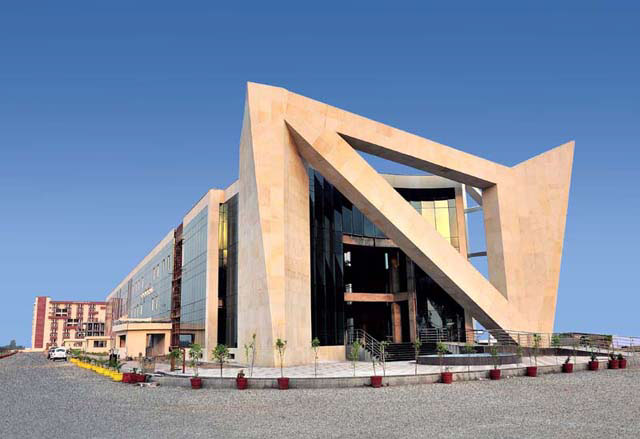
Introduction about Ph.D. in Agricultural Meteorology at DAV University
Embarking on a Ph.D. in Agricultural Meteorology at DAV University opens the door to cutting?edge climate science, sustainable farming solutions, and a future where agriculture thrives despite weather variability. As the world confronts climate change, specialists equipped with advanced knowledge of atmospheric dynamics, crop?climate interactions, and remote sensing are in high demand. DAV University?s doctoral programme blends rigorous research with interdisciplinary collaborations, fostering innovators who can translate meteorological data into actionable agricultural strategies. This comprehensive guide walks you through every facet of the programme?eligibility, entrance examinations, fee structure, admission steps, subject specializations, research domains, syllabus, scholarships, and career pathways?so you can make an informed decision and chart a successful academic journey.
Eligibility Criteria for Ph.D. in Agricultural Meteorology at DAV University
Prospective candidates must possess a Master?s degree (M.Sc., M.Tech., M.Phil.) in Meteorology, Agronomy, Environmental Science, or a closely related discipline with a minimum aggregate of 55% (or equivalent CGPA). Candidates with a Bachelor?s degree in Agriculture coupled with a relevant postgraduate qualification are also eligible. Candidates who have cleared the National Eligibility Test (NET) or the UGC Junior Research Fellowship (JRF) are given priority. International students must meet the same academic thresholds and provide proof of English proficiency (IELTS???6.5 or TOEFL???80). Applicants with a strong research background, publications in peer?reviewed journals, or relevant industry experience are considered favorably during the selection process.
Entrance Exam for Ph.D. in Agricultural Meteorology at DAV University
DAV University conducts its own entrance examination to assess analytical skills, subject knowledge, and research aptitude. The test comprises three sections: (1) General Aptitude?quantitative and verbal reasoning, (2) Core Meteorology?synoptic analysis, climate modeling, and statistical methods, and (3) Research Methodology?research design, data analysis, and scientific writing. The exam is held twice a year, in June and December, and can be taken either online or at designated test centres. Candidates who have cleared UGC?NET or have a valid GATE score in related engineering streams may be exempted from the written test and invited directly for a personal interview and presentation of their research proposal.
Fee Structure for Ph.D. in Agricultural Meteorology at DAV University
| Category | Annual Fee (INR) | Remarks |
|---|---|---|
| General Category (Self?Financed) | 45,000 | Includes tuition, library, and lab access |
| SC/ST/PWD (Self?Financed) | 30,000 | Reduced fee as per university policy |
| Sponsored Candidates (ISRO, ICAR, etc.) | 0 | Fully funded by sponsoring agency |
| UGC?JRF/NET Awardees | 0 | Stipend covers all academic expenses |
Admission Process for Ph.D. in Agricultural Meteorology at DAV University
The admission workflow is streamlined into six clear steps:
- Online Application Submission: Candidates fill the application form on the university portal, upload academic transcripts, and pay the application fee.
- Document Verification: The admissions office verifies the authenticity of the submitted certificates and marksheets.
- Entrance Examination: Eligible applicants sit for the university?conducted test or submit NET/GATE scores for exemption.
- Personal Interview & Research Proposal Review: Shortlisted candidates present their research proposal to a panel of experts.
- Final Selection & Offer Letter: Successful candidates receive an official admission letter outlining stipend, fee waiver, and registration details.
- Enrollment & Orientation: New students complete registration, receive their ID, and attend a mandatory orientation covering campus resources and research ethics.
Ph.D. Subjects and Specializations in Agricultural Meteorology at DAV University
The programme offers a flexible framework allowing scholars to specialize in one or more of the following domains:
- Climatology and Climate Change Impact on Crops
- Remote Sensing and GIS for Agricultural Monitoring
- Crop?Specific Weather Forecasting Models
- Soil?Atmosphere Interactions and Water Use Efficiency
- Extreme Weather Events, Drought & Flood Risk Assessment
- Agricultural Risk Management and Insurance Modelling
- Precision Agriculture and Decision Support Systems
Research Areas in Agricultural Meteorology at DAV University
DAV University?s research ecosystem encourages interdisciplinary projects that align with national priorities and global sustainability goals. Current research thrusts include:
- Developing high?resolution climate scenarios for major Indian agro?ecological zones.
- Integrating satellite?derived vegetation indices with ground?based phenological data.
- Evaluating the efficacy of climate?smart irrigation techniques under variable rainfall patterns.
- Modeling pest and disease outbreaks as a function of micro?climatic conditions.
- Assessing carbon sequestration potentials of different cropping systems under changing climate.
- Designing AI?driven early warning systems for heat stress in staple crops.
Documents Required for Ph.D. in Agricultural Meteorology at DAV University
| Document | Purpose |
|---|---|
| Completed Application Form (online) | Initiates the admission workflow |
| Academic Transcripts & Degree Certificates | Proof of eligibility and academic performance |
| Research Proposal (2,000?3,000 words) | Demonstrates research intent and feasibility |
| Curriculum Vitae (CV) | Highlights research experience and publications |
| Letters of Recommendation (2) | Validates academic and professional competence |
| Proof of English Proficiency (if applicable) | Ensures language readiness for scholarly work |
| NET/GATE Scorecard (optional) | Qualifies for fee waiver and direct interview |
DAV University Ph.D. Syllabus for Agricultural Meteorology
The doctoral curriculum balances coursework, seminars, and research milestones. Core courses (mandatory) include:
- Advanced Atmospheric Dynamics
- Statistical Methods for Climate Data
- Remote Sensing Techniques in Agriculture
- Research Methodology & Scientific Writing
- Crop Physiology and Climate Interaction
Elective modules allow candidates to deepen expertise in areas such as:
- Geospatial Analysis with GIS & Python
- Hydrometeorology and Water Resources Management
- Climate Policy and Sustainable Development
- Machine Learning Applications in Agri?Climatology
Progress is evaluated through periodic seminars, mid?term reviews, and a final thesis defense before an expert panel.
How To Apply for Ph.D. in Agricultural Meteorology at DAV University
Applying is a straightforward, digital-first process:
- Visit the official Ph.D. admissions portal and create a user account.
- Fill out the application form, upload scanned copies of required documents, and pay the non?refundable processing fee of INR?1,500.
- Submit your research proposal and select a preferred faculty supervisor from the university?s listed experts.
- Track application status via the portal; you will receive email notifications for each stage (verification, exam slot, interview schedule).
- Upon clearance, confirm your acceptance by uploading the fee receipt and signing the admission agreement.
For international candidates, the portal also provides a separate section for uploading Visa and Passport details.
Career Scope and Job Opportunities After Ph.D. in Agricultural Meteorology from DAV University
Graduates emerge as thought leaders equipped to address climate?driven agricultural challenges. Career pathways include:
- Senior Research Scientist ? Indian Council of Agricultural Research (ICAR)</








