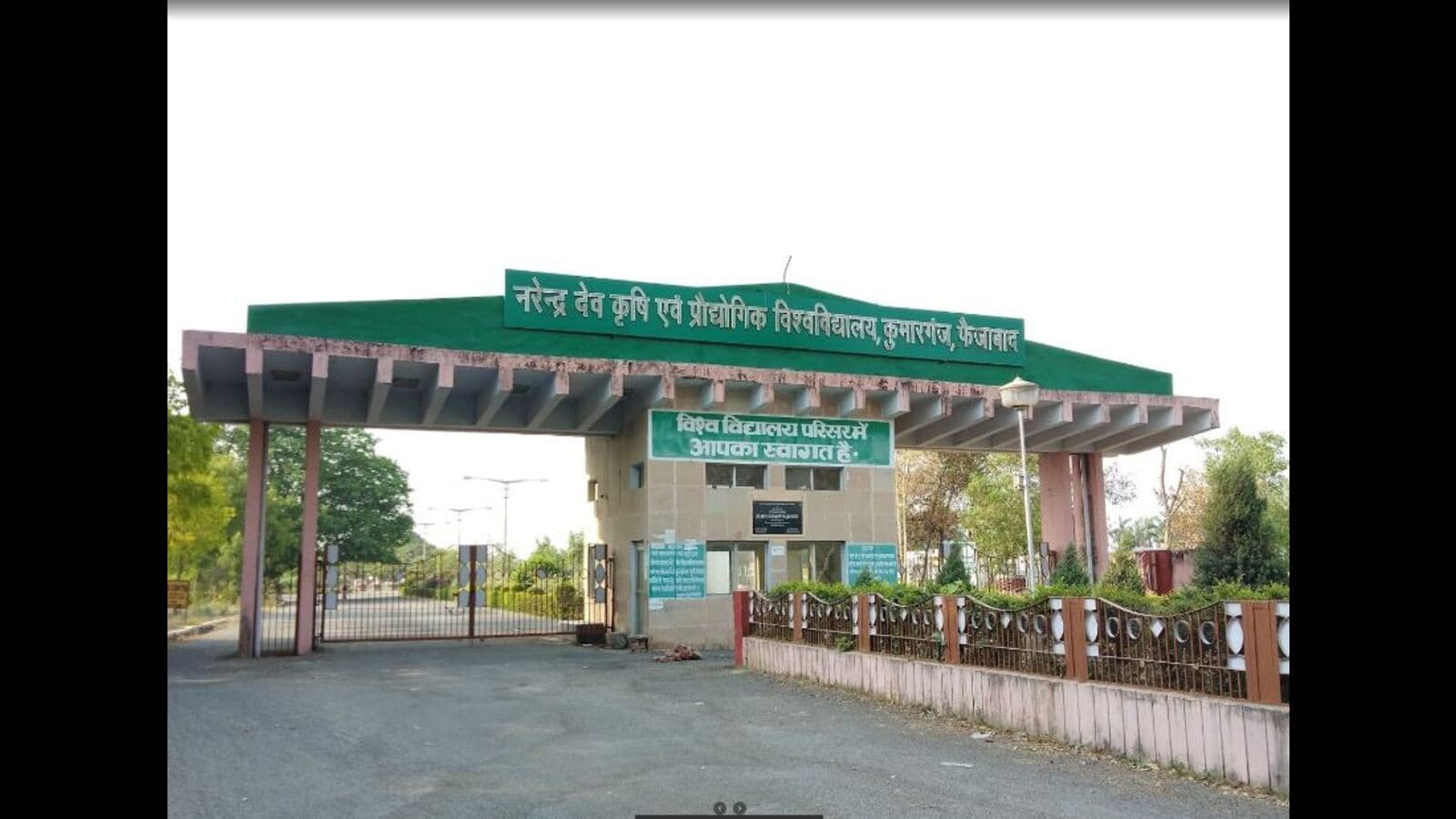
Ph.D. in Agronomy from Narendra Deo University: Eligibility, Entrance Exam, Fee Structure, Admission Process, Subjects, Research Areas, Syllabus, Scholarship & Career Scope
Introduction about Ph.D. in Agronomy at Narendra Deo University
Embarking on a doctoral journey in Agronomy at Narendra Deo University opens doors to groundbreaking research, global collaborations, and leadership roles in sustainable agriculture. The program is meticulously designed for professionals who aspire to transform food security, environmental stewardship, and rural economies through scientific innovation.
From state‑of‑the‑art laboratories to extensive field stations, the university offers a vibrant ecosystem where theory meets practice. Whether your passion lies in crop genetics, soil health, or precision farming, this Ph.D. equips you with the expertise to influence policy, drive industry standards, and publish in top‑tier journals.
Ph.D Admission 2026-2027 & Writing Support Services by Shiksha Research
Eligibility Criteria for Ph.D. in Agronomy at Narendra Deo University
- Master’s degree (M.Sc., M.S., or equivalent) in Agronomy, Crop Science, Soil Science, Horticulture, Plant Breeding, or any related discipline with a minimum of 55% aggregate (or 5.0 CGPA on a 10‑point scale).
- Valid GATE/ICAR/NET score is preferred but not mandatory; candidates without a national score can appear for the university’s entrance test.
- Research experience (publications, project work) is considered a strong advantage.
- Minimum age of 21 years; no upper age limit for candidates with a valid research proposal.
Entrance Exam for Ph.D. in Agronomy at Narendra Deo University
The university conducts a comprehensive Ph.D. Entrance Examination that evaluates:
- Fundamental concepts in Agronomy, Plant Physiology, Soil Chemistry, and Statistics.
- Analytical reasoning and problem‑solving abilities.
- Research aptitude through a written proposal abstract.
Candidates with a qualifying GATE/ICAR/NET score are exempted from the written test but must attend an interview and a research proposal presentation.
Fee Structure for Ph.D. in Agronomy at Narendra Deo University
| Fee Component | Annual Amount (INR) | Total for 3‑Year Program |
|---|---|---|
| Tuition & Laboratory Charges | 55,000 | 165,000 |
| Library & Digital Resources | 8,000 | 24,000 |
| Examination & Evaluation Fees | 4,500 | 13,500 |
| Research Material & Field Work Allowance | 12,000 | 36,000 |
| Total (excluding scholarships) | 238,500 |
Note: The fee is subject to revision annually. Merit‑based scholarships and research grants can significantly reduce the payable amount.
Admission Process for Ph.D. in Agronomy at Narendra Deo University
- Online Application: Fill the web‑based form on the university portal and upload academic transcripts, research proposal, and identity proof.
- Entrance Examination: Appear for the university’s Ph.D. entrance test or submit a valid GATE/ICAR/NET score.
- Interview & Proposal Defense: Shortlisted candidates are invited for a panel interview and presentation of their research proposal.
- Document Verification: Submit original certificates for verification at the admissions office.
- Admission Confirmation: Receive the admission letter, fee payment instructions, and enrollment details.
Ph.D. Subjects and Specializations in Agronomy at Narendra Deo University
The doctoral programme offers a range of specializations tailored to emerging challenges:
- Crop Genetics and Molecular Breeding
- Soil Fertility and Nutrient Management
- Integrated Pest Management
- Precision Agriculture and Remote Sensing
- Post‑Harvest Technology and Value Addition
- Climate‑Smart Agriculture
Research Areas in Agronomy at Narendra Deo University
Faculty and doctoral scholars collaborate on interdisciplinary research themes, including:
- Genomic approaches for drought‑tolerant crops.
- Biochar and organic amendments for soil carbon sequestration.
- Smart irrigation systems powered by IoT.
- Integrated weed management using biological agents.
- Food safety and post‑harvest loss reduction.
- Policy analysis for sustainable agri‑value chains.
Documents Required for Ph.D. in Agronomy at Narendra Deo University
- Completed application form (online).
- Scanned copies of academic transcripts (B.Sc. & M.Sc.).
- Degree certificates (original for verification).
- Valid GATE/ICAR/NET score report (if applicable).
- Research proposal (maximum 1500 words) and abstract.
- Two recent passport‑size photographs.
- Proof of identity (Aadhaar, PAN, or passport).
- Letter of recommendation from a qualified academic/research supervisor.
Narendra Deo University Ph.D. Syllabus for Agronomy
The syllabus is structured into three phases, each focusing on progressive competency development:
- Core Coursework (Year 1): Advanced Plant Physiology, Soil Chemistry, Statistical Methods for Agronomy, Research Methodology, and Ethics in Agricultural Science.
- Specialized Modules (Year 2): Choose two electives aligned with your specialization—e.g., Molecular Breeding Techniques, Remote Sensing in Agriculture, Sustainable Soil Management.
- Dissertation Research (Year 3): Conduct original research, publish at least two peer‑reviewed articles, and defend a comprehensive thesis.
How To Apply for Ph.D. in Agronomy at Narendra Deo University
Follow these steps to submit a successful application:
- Visit the official admissions portal: Narendra Deo University Ph.D. Admissions.
- Create a user account and complete the personal information section.
- Upload all required documents (ensure PDF format, max 2 MB each).
- Pay the non‑refundable application fee of INR 2,500 via net banking or UPI.
- Submit the form and note the application reference number for future tracking.
Career Scope and Job Opportunities After Ph.D. in Agronomy from Narendra Deo University
Graduates are highly sought after in both academia and industry. Typical career pathways include:
- Assistant/Associate Professor or Research Scientist at agricultural universities and research institutes.
- Senior Agronomist or R&D Manager in agro‑chemical, seed, and biotechnology companies.
- Policy Analyst or Consultant for governmental bodies and NGOs focused on food security.
- Entrepreneurial ventures in agri‑tech startups, precision farming solutions, and sustainable farming consultancy.
- International research fellowships and post‑doctoral positions at renowned global labs.
According to recent industry surveys, Ph.D. holders in Agronomy command an average salary of INR 12‑18 lakhs per annum in the private sector, with higher remuneration in leadership roles.
Scholarship for Ph.D. in Agronomy at Narendra Deo University
The university offers several merit‑based and need‑based scholarships:
- University Merit Scholarship: 50% tuition waiver for candidates with ≥75% in their Master's degree.
- ICAR Fellowship: Full tuition coverage plus a monthly stipend of INR 20,000 for research projects aligned with national priorities.
- Industry Sponsored Grants: Collaborative projects with leading agri‑companies provide research funding and equipment access.
- Women in Science Scholarship: Dedicated support for female researchers to promote gender equity in agricultural sciences.
Applications for scholarships are processed simultaneously with the admission workflow. Early submission of a robust research proposal increases the likelihood of receiving financial aid.
FAQs Regarding Ph.D. in Agronomy at Narendra Deo University
- Q: Can I pursue the Ph.D. part‑time while working?
- A: Yes, the university offers a part‑time mode with flexible coursework and research timelines, subject to approval by the faculty supervisor.
- Q: Is there a provision for foreign students?
- A: International candidates are welcomed. They must satisfy the same academic criteria and obtain a valid student visa.
- Q: How many publications are required before thesis submission?
- A: At least two peer‑reviewed journal articles or conference papers must be accepted before the final defense.
- Q: Are there opportunities for interdisciplinary collaboration?
- A: Absolutely. The university encourages joint projects with departments such as Biotechnology, Environmental Science, and Computer Engineering.
- Q: What support services are available for dissertation writing?
- A: Candidates can access Editing and Proofreading Services, PhD Topic Selection and Proposal Assistance, and PhD Admission Assistance through our partner network.
Additional Professional Support Services
Beyond university provisions, scholars can enhance their research impact with specialized services:
- Honorary Doctorate Programs – Recognize outstanding contributions in agricultural innovation.
- <a href="https://shik








