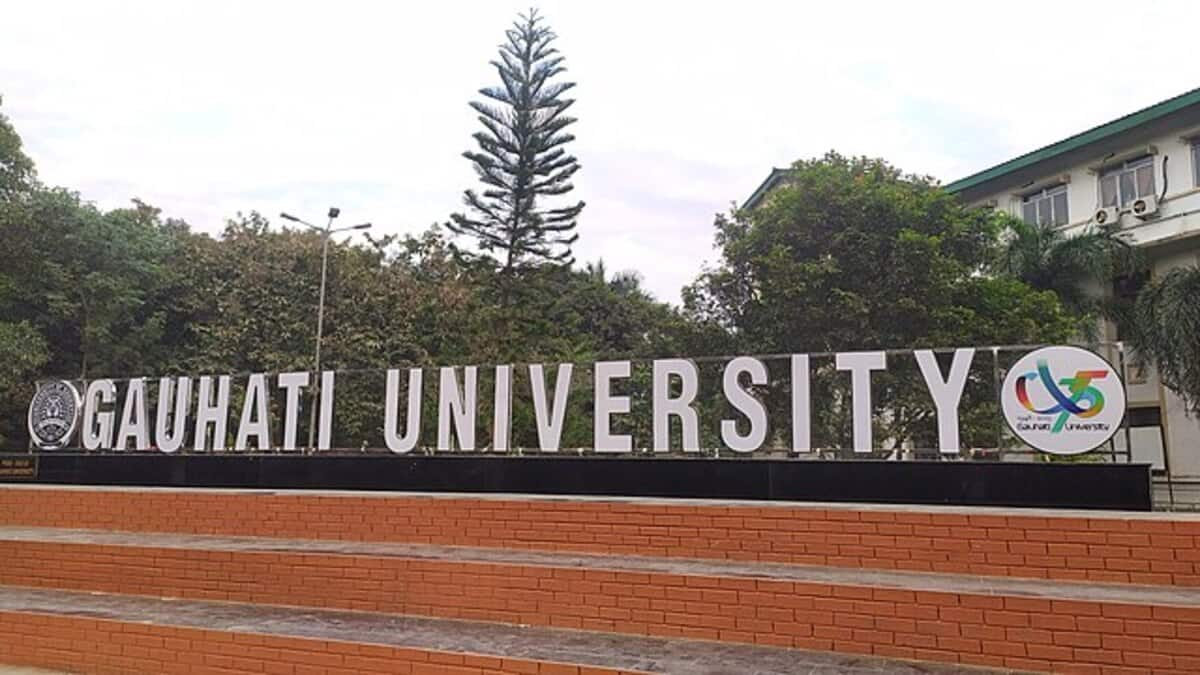
Ph.D. in Anthropology from Gauhati University: Eligibility, Entrance Exam, Fee Structure, Admission Process, Subjects, Research Areas, Syllabus, Scholarship & Career Scope
Introduction about Ph.D. in Anthropology at Gauhati University
Gauhati University, one of the oldest and most respected institutions in the North‑East, offers a rigorous Ph.D. programme in Anthropology that blends traditional ethnographic methods with cutting‑edge interdisciplinary research. Designed for scholars who aspire to become thought leaders, this doctorate cultivates critical thinking, advanced methodological skills, and a deep understanding of cultural dynamics across global and local contexts.
Embarking on this academic journey can transform your professional trajectory, opening doors to academia, policy research, consultancy, and leadership roles in NGOs, cultural heritage agencies, and multinational corporations.
Ph.D Admission 2026-2027 & Writing Support Services by Shiksha Research
Eligibility Criteria for Ph.D. in Anthropology at Gauhati University
Prospective candidates must satisfy the following minimum requirements:
- Holding a Master’s degree (or equivalent) in Anthropology, Sociology, History, Geography, or a related social science discipline with a minimum aggregate of 55% (50% for SC/ST/PH categories).
- For candidates with a Master’s in a different discipline, a qualifying score in the university’s entrance test is mandatory.
- Applicants should demonstrate a strong research inclination, reflected through publications, conference presentations, or relevant project work.
- English proficiency is essential, and candidates may be required to submit a statement of purpose outlining their research interests.
Entrance Exam for Ph.D. in Anthropology at Gauhati University
The university conducts a two‑stage selection process:
- Written Entrance Test – A 2‑hour objective and descriptive exam covering research methodology, core anthropology concepts, statistics, and language proficiency.
- Personal Interview & Research Proposal Review – Candidates present a concise research proposal (max 1500 words) and answer questions related to their academic background and research intent.
Preparation resources, sample papers, and previous year question banks are regularly updated on the university’s official portal.
Fee Structure for Ph.D. in Anthropology at Gauhati University
| Component | Amount (INR) | Notes |
|---|---|---|
| Registration & Application Fee | 2,000 | One‑time, non‑refundable |
| Annual Tuition Fee | 12,000 | Payable at the beginning of each academic year |
| Laboratory & Fieldwork Charges | 5,000 | Depends on research requirements |
| Project/Thesis Submission Fee | 3,000 | Due upon final submission |
| Total Approximate Cost (4‑Year Program) | 68,000 | Excluding scholarships & external funding |
Admission Process for Ph.D. in Anthropology at Gauhati University
The admission cycle follows a structured timeline:
- Online Application Submission – Fill the digital form, upload scanned documents, and pay the application fee.
- Document Verification – The university verifies academic credentials and research proposals.
- Entrance Examination – Conducted at designated centers; results are declared within three weeks.
- Interview & Proposal Assessment – Shortlisted candidates appear for a personal interview.
- Final Merit List & Admission Offer – Successful candidates receive an admission letter with fee payment instructions.
Ph.D. Subjects and Specializations in Anthropology at Gauhati University
Students may choose from a range of specializations that reflect contemporary research demands:
- Social & Cultural Anthropology
- Biological & Physical Anthropology
- Archaeology and Heritage Studies
- Medical Anthropology
- Economic Anthropology
- Environmental & Ecological Anthropology
- Urban & Rural Development Anthropology
Research Areas in Anthropology at Gauhati University
The university’s research ecosystem encourages interdisciplinary collaboration. Prominent research themes include:
- Indigenous knowledge systems and tribal resilience in the North‑East.
- Migration patterns, diaspora studies, and trans‑border cultural exchange.
- Public health anthropology – disease ecology and traditional healing practices.
- Climate change impacts on vulnerable communities.
- Digital anthropology – effects of technology on social structures.
- Heritage management and archaeological site preservation.
Documents Required for Ph.D. in Anthropology at Gauhati University
| Document | Specification | Submission Mode |
|---|---|---|
| Application Form (online) | Completed with personal details | Electronic upload |
| Mark sheets & Degree certificates | Original + scanned copies | PDF upload |
| Research Proposal (1500 words) | Clear objective, methodology, and bibliography | PDF upload |
| Curriculum Vitae | Maximum 2 pages | PDF upload |
| Letter of Recommendation (2) | From academic supervisors or professional mentors | PDF upload |
| Proof of Category (if applicable) | SC/ST/PH certificate | PDF upload |
Gauhati University Ph.D. Syllabus for Anthropology
The doctoral syllabus is designed to build expertise in theory, methodology, and applied research:
- Year 1: Advanced research methods, statistics for social sciences, and literature review techniques.
- Year 2: Specialized coursework aligned with chosen specialization, ethics in research, and fieldwork design.
- Year 3‑4: Independent research, data collection, analysis, and dissertation writing under faculty supervision.
- Regular seminars, journal clubs, and conference participation are mandatory throughout the programme.
How To Apply for Ph.D. in Anthropology at Gauhati University
Follow these step‑by‑step instructions to submit a successful application:
- Visit the official university admissions portal and create a user account.
- Complete the online application form, ensuring all fields are accurately filled.
- Upload the required documents (refer to the “Documents Required” table).
- Pay the non‑refundable application fee via net banking or credit card.
- Submit the research proposal and await the entrance exam schedule.
- Prepare for the written test using the university’s sample papers and recommended reading.
- Attend the interview with a well‑structured presentation of your proposal.
- Upon selection, confirm your admission by paying the initial tuition installment.
Career Scope and Job Opportunities After Ph.D. in Anthropology from Gauhati University
A doctorate in Anthropology unlocks a diverse array of professional pathways:
- Academic Positions – Lecturer, Assistant Professor, Associate Professor, or full Professor in universities and colleges.
- Research Institutes – Senior researcher or project leader in governmental and non‑governmental research bodies.
- Policy & Planning – Advisory roles in ministries, think‑tanks, and international development agencies.
- Cultural Heritage Management – Curator, heritage consultant, or site manager for museums and archaeological sites.
- Public Health & Medical Anthropology – Analyst for health ministries, NGOs, or WHO programs.
- Corporate Sector – Consumer behavior analyst, corporate social responsibility (CSR) strategist, or market research manager.
Many alumni also pursue post‑doctoral fellowships abroad, leveraging their Ph.D. credentials to expand global networks.
Scholarship for Ph.D. in Anthropology at Gauhati University
The university, along with central and state bodies, offers several financial assistance schemes:
- University Merit Scholarship – Covers 50% of tuition for candidates with a first‑class Master’s degree.
- UGC NET/CSIR JRF Stipend – Eligible candidates receive a monthly stipend of INR 31,000.
- North‑East Council (NEC) Research Grants – Provides research funds for fieldwork and data collection.
- External Fellowships – Options include Commonwealth Scholarship, Fulbright-Nehru Doctoral Program, and DAAD Research Grants.
Applicants should actively explore these opportunities and submit separate applications where required.
FAQs Regarding Ph.D. in Anthropology at Gauhati University
- Q1: What is the minimum duration to complete the Ph.D.?
- A: The programme is structured for a minimum of 4 years, but extensions up to 6 years are permitted for valid research reasons.
- Q2: Can I pursue the Ph.D. part‑time while working?
- A: Yes, the university offers a part‑time mode for working professionals, with flexible class schedules and extended submission deadlines.
- Q3: Is a published paper mandatory for admission?
- A: While not compulsory, having at least one peer‑reviewed publication strengthens the application and may enhance scholarship eligibility.
- Q4: How many attempts are allowed for the entrance exam?
- A: Candidates may appear for the entrance test a maximum of two times in a single admission cycle.</dd








