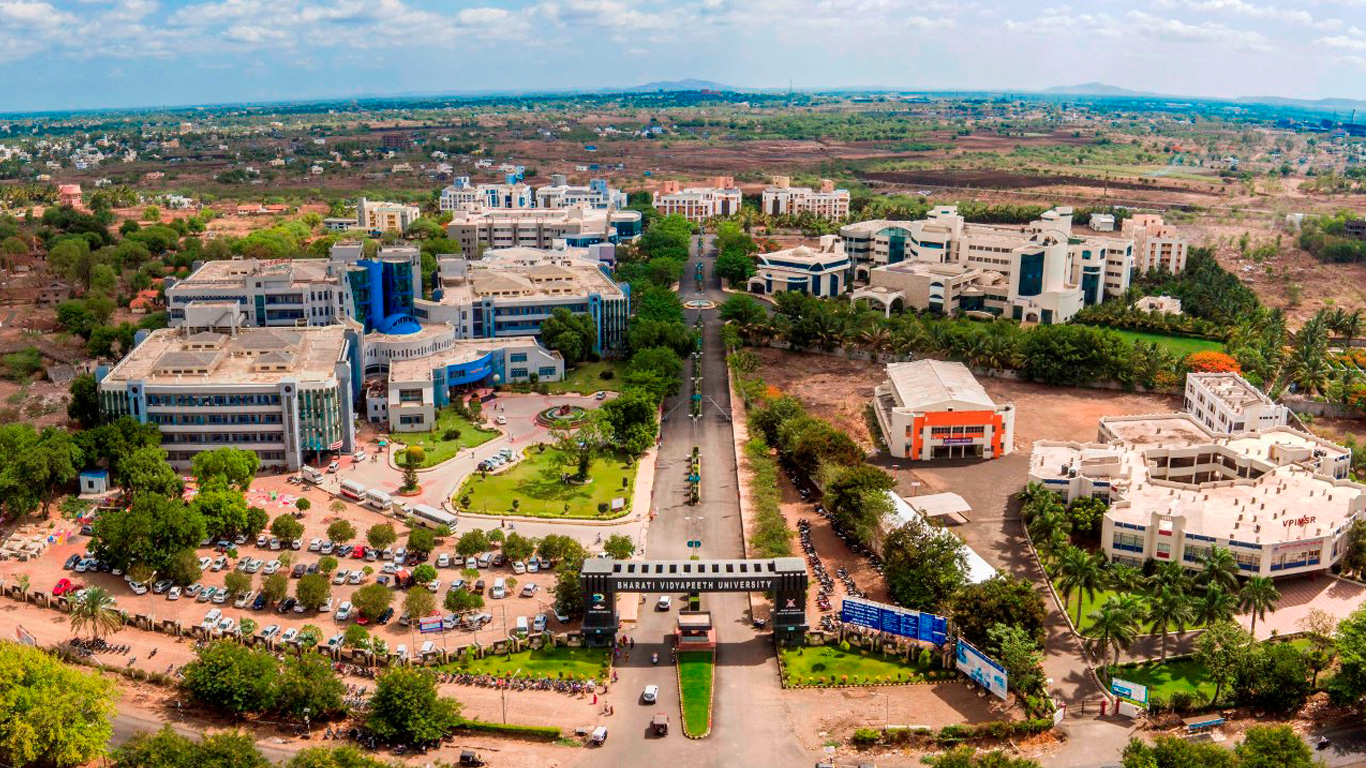
Introduction about Ph.D. in Architecture at Bharati Vidyapeeth
Embedded in the rich cultural and educational tapestry of Pune, Bharati Vidyapeeth (Deemed to be University) stands as a beacon of academic excellence and innovation. Pursuing a Ph.D. in Architecture at this prestigious institution is more than just earning a degree; it is a transformative journey for professionals who aspire to redefine the built environment. As the world faces unprecedented challenges in urbanization, climate change, and social equity, the need for advanced research in architecture has never been more critical. Bharati Vidyapeeth provides a nurturing ecosystem where intellectual curiosity meets practical wisdom, allowing doctoral candidates to explore the intersections of design, technology, and humanity. This program is meticulously crafted for visionary architects and academicians who wish to contribute original knowledge to the field, fostering a future where architecture serves as a catalyst for sustainable and inclusive growth.
Ph.D Admission 2026-2027 & Writing Support Services by Shiksha Research
Eligibility Criteria for Ph.D. in Architecture at Bharati Vidyapeeth
The path to a doctorate at Bharati Vidyapeeth is designed for those with a robust academic background and a passion for deep-seated inquiry. To be eligible for the Ph.D. in Architecture program, candidates must typically fulfill the following requirements:
- Master?s Degree: Candidates must hold a Master of Architecture (M.Arch) or an equivalent degree in a related field from a recognized university.
- Minimum Marks: A minimum of 55% aggregate marks (or an equivalent grade 'B' in the UGC 7-point scale) is required. A relaxation of 5% is usually provided to candidates from reserved categories (SC/ST/OBC/Differently-abled).
- Professional Experience: While not always mandatory, professional practice in the field of architecture or teaching experience is highly valued and can strengthen a candidate's profile during the selection process.
- Interdisciplinary Entry: Professionals from related fields like Urban Planning or Environmental Design may be considered, provided they demonstrate a strong alignment with architectural research.
Entrance Exam for Ph.D. in Architecture at Bharati Vidyapeeth
Bharati Vidyapeeth maintains high academic standards through a rigorous selection process. The primary gateway to the doctoral program is the All India Entrance Test (Ph.D. Entrance Test) conducted by the university. The exam typically consists of two parts:
- Research Methodology: This section evaluates the candidate's aptitude for scientific inquiry, logical reasoning, and analytical skills. Success in this section often requires a deep understanding of qualitative and quantitative methods, where seeking Questionnaire Design and Development expertise can be beneficial during the preparation of pilot studies.
- Subject-Specific Knowledge: This section focuses on the core concepts of architecture, history, theory, and contemporary practices.
Candidates who have qualified for UGC-NET (including JRF), UGC-CSIR NET (including JRF), SLET, GATE, or hold a teacher fellowship are generally exempted from the entrance test but must still participate in the personal interview round.
Fee Structure for Ph.D. in Architecture at Bharati Vidyapeeth
The investment in a Ph.D. program is an investment in your future as a leader in the architectural community. The fee structure at Bharati Vidyapeeth is competitive and reflects the premium resources and faculty guidance provided. Below is a generic breakdown of the expected costs:
| Component | Approximate Fee (INR) | Frequency |
|---|---|---|
| Application & Entrance Fee | 2,500 - 5,000 | One-time |
| Tuition Fee (Indian Students) | 70,000 - 1,20,000 | Per Annum |
| Laboratory/Studio Fee | 10,000 - 20,000 | Per Annum |
| Eligibility/Registration Fee | 5,000 - 10,000 | One-time |
| Thesis Submission Fee | 15,000 - 25,000 | At the time of submission |
Note: The fees mentioned are indicative and subject to change based on university policy and specific specializations. For the most accurate details, candidates should refer to the official university brochure.
Admission Process for Ph.D. in Architecture at Bharati Vidyapeeth
The admission process at Bharati Vidyapeeth is structured to identify candidates with the highest potential for original research. The journey begins with the publication of the admission notification, usually available on the university's official website.
- Online Application: Interested candidates must register and submit their applications online, ensuring all academic credentials are correctly uploaded.
- Entrance Examination: Candidates appear for the University-led entrance test (unless exempted).
- Research Proposal Submission: Shortlisted candidates are required to submit a preliminary research proposal. This is a critical stage where your vision for doctoral study is scrutinized. Professionals often utilize Thesis and Dissertation Writing Services to ensure their initial roadmap is academically sound and well-structured.
- Personal Interview/Viva-Voce: The final selection is based on a presentation of the research interest before the Departmental Research Committee (DRC). Here, the feasibility, originality, and relevance of the topic are assessed.
- Provisional Registration: Once selected, candidates are granted provisional registration and must complete the mandatory course work.
Ph.D. Subjects and Specializations in Architecture at Bharati Vidyapeeth
The program offers a diverse range of subjects and specializations, allowing researchers to tailor their studies to their specific interests. The curriculum is a blend of theoretical depth and practical application. Core subjects often include:
- Advanced Research Methodology
- History and Theory of Contemporary Architecture
- Sustainable Urban Systems
- Digital Architecture and Parametric Design
- Sociology of the Built Environment
Specializations are offered in niches such as Environmental Architecture, Urban Design, Construction Management, and Architectural Education. This breadth ensures that scholars can innovate within their chosen domain while maintaining a broad understanding of the architectural landscape.
Research Areas in Architecture at Bharati Vidyapeeth
Bharati Vidyapeeth encourages interdisciplinary research that addresses modern-day architectural dilemmas. Some of the prominent research areas include:
- Sustainability and Energy Efficiency: Exploring net-zero buildings, passive design strategies, and renewable energy integration.
- Urban Regeneration: Studying the revitalization of historic city centers and the management of urban sprawl.
- Smart Cities and IoT: Researching the role of technology in enhancing urban living and infrastructure management. Analyzing complex urban data often necessitates specialized Research Data Analysis Services to draw meaningful conclusions.
- Vernacular and Traditional Architecture: documenting and reinventing traditional building techniques for modern use.
- Affordable Housing: Innovating in materials and policy to solve the global housing crisis.
Documents Required for Ph.D. in Architecture at Bharati Vidyapeeth
To ensure a smooth application process, candidates should prepare an organized dossier of the following documents:
- Post-Graduate Degree Certificate and Marksheets (M.Arch/Equivalent).
- Under-Graduate Degree Certificate (B.Arch).
- Valid Scorecard of Entrance Exams (NET/SLET/GATE) if applicable.
- Statement of Purpose (SOP) detailing research interest.
- Detailed Curriculum Vitae (CV) highlighting professional achievements.
- Experience Certificates (for teaching or professional practice).
- Identity Proof (Aadhar Card, Passport, or Voter ID).
- Passport-sized photographs.
- Caste Certificate (if applying under reserved categories).
- No Objection Certificate (NOC) from the current employer (for part-time candidates).
Bharati Vidyapeeth Ph.D. Syllabus for Architecture
The Ph.D. syllabus is divided into two main phases: Coursework and the Research Phase. The coursework is mandatory and must be completed within the first year or six months of registration.
Phase 1: Coursework
- Paper I: Research Methodology: Includes philosophy of science, research ethics, and data collection techniques.
- Paper II: Advances in Architecture: Focuses on current global trends, theoretical discourses, and technological advancements.
- Paper III: Domain-Specific Study: Literature review and pilot study related specifically to the candidate's chosen research topic.
Phase 2: Dissertation and Thesis
Following successful completion of coursework, the candidate focuses entirely on data collection, experimentation, and writing. Scholarly output is expected in the form of journal publications. Candidates to enhance the quality of their submissions should consider Research Paper Writing Services to meet international publication standards.
How To Apply for Ph.D. in Architecture at Bharati Vidyapeeth
Applying for a Ph.D. at Bharati Vidyapeeth is a streamlined online process:
- Step 1: Visit the Portal: Go to the official Bharati Vidyapeeth Deemed University website and navigate to the "Admissions" section.
- Step 2: Registration: Create a user ID and password by providing basic details.
- Step 3: Fill Application Form: Enter academic details, professional experience, and select "Architecture" as your research department.
- Step 4: Upload Documents: Upload scanned copies of the required documents in the prescribed format.
- Step 5: Pay Fee: Pay the application fee through the integrated online payment gateway.
- Step 6: Print Confirmation: Save and print the application confirmation for future reference and for the entrance exam admit card.
Career Scope and Job Opportunities After Ph.D. in Architecture from Bharati Vidyapeeth
A Ph.D. from Bharati Vidyapeeth opens doors to the highest levels of professional and academic success. Graduates are sought after for roles that require not just design skills, but strategic thinking and deep domain expertise.
- Academia: Senior Professor, Dean, or Head of Department in leading Architectural schools worldwide.
- Research and Development: Lead Researcher in government organizations like CSIR, HUDCO, or private R&D wings of international design firms.
- Policy Making: Consultants for urban planning bodies, municipal corporations, and international NGOs like UN-Habitat.
- Specialized Consultancy: Becoming an expert in niche areas like Acoustic Design, Conservation Architecture, or Sustainable Building Certification.
- Authorship and Criticism: Leading voices in architectural journalism and publishing.
Scholarship for Ph.D. in Architecture at Bharati Vidyapeeth
Bharati Vidyapeeth is committed to supporting meritorious students. Various financial aids are available:
- University Fellowships: Awarded to full-time Ph.D. scholars based on their performance in the entrance exam and interview.
- Junior Research Fellowship (JRF): Candidates who have cleared UGC-NET JRF receive stipends directly from the central government.
- Sponsorships: Opportunities for faculty members of the university or other affiliated colleges to pursue a Ph.D. with partial or full sponsorship.
- External Funding: Guidance is provided to students to apply for funding from bodies like ICSSR, DST, and private foundations interested in sustainable urban development.
FAQs Regarding Ph.D. in Architecture at Bharati Vidyapeeth
Q1: Is the Ph.D. in Architecture at Bharati Vidyapeeth available for part-time students?
Yes, the university offers both full-time and part-time options to accommodate working professionals, provided they meet the residency and coursework requirements.
Q2: How long does it take to complete the Ph.D. program?
The minimum duration is three years, and the maximum is six years. Extensions are granted only under exceptional circumstances.
Q3: Does the university provide assistance in publishing research?
Yes, faculty guides actively mentor students in publishing their findings in Scopus-indexed and UGC-CARE listed journals, which is a requirement for the final thesis submission.
Q4: Do I need a valid GATE score for admission?
While a GATE score is not mandatory (if you pass the university's entrance test), it can exempt you from the written test and improve your chances of securing a fellowship.
Q5: Can I choose my research supervisor?
Students can suggest a supervisor based on their research area, but the final allocation is done by the Departmental Research Committee based on the availability and expertise of the faculty.








