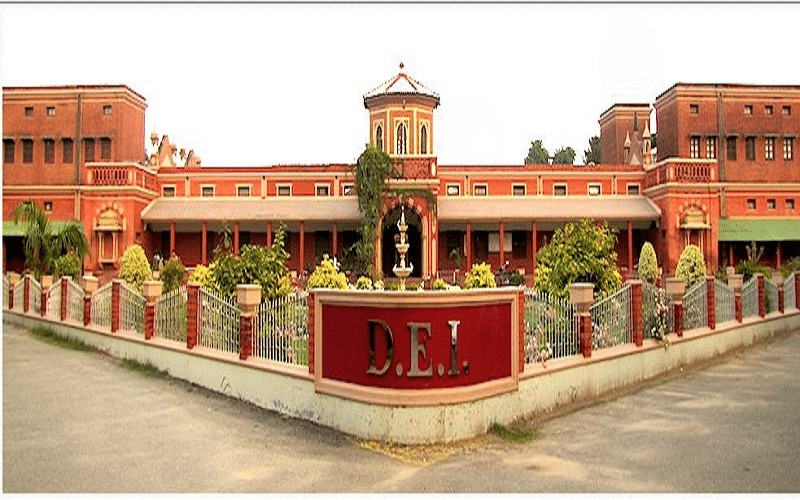
Introduction about Ph.D. in Banking Management at Dayalbagh Educational Institute
Dayalbagh Educational Institute (DEI), a Deemed University located in the serene environment of Agra, stands as a beacon of excellence in value-based education. Pursuing a Ph.D. in Banking Management at DEI is not just an academic endeavor; it is a journey towards becoming a thought leader in the rapidly evolving global financial landscape. In an era where digital transformation, fintech innovations, and complex regulatory frameworks redefine the essence of banking, a doctoral degree offers the intellectual rigor and specialized expertise required to navigate and lead this sector. DEI?s unique approach integrates spiritual and ethical values with modern management theories, ensuring that its researchers are not only technically proficient but also socially responsible leaders. For professionals seeking to transition from corporate roles to high-level consultancy or academic research, the program provides a robust platform for intellectual growth. To streamline your journey into this prestigious program, specialized PhD Admission Assistance can help you navigate the competitive process with confidence and clarity.
Ph.D Admission 2026-2027 & Writing Support Services by Shiksha Research
Eligibility Criteria for Ph.D. in Banking Management at Dayalbagh Educational Institute
Aspiring candidates for the Ph.D. program in Banking Management must meet stringent academic standards to ensure they are prepared for the rigors of high-level research. The primary requirement is a Master?s degree in a relevant field such as Management, Commerce, Economics, or Banking, from a recognized university. Candidates must have secured a minimum of 55% marks (or an equivalent grade) in their postgraduate studies. A relaxation of 5% is typically provided for candidates belonging to the SC/ST/OBC (non-creamy layer) and differently-abled categories, in accordance with UGC norms and DEI policies.
Furthermore, professional experience in the banking or financial services sector is highly encouraged. Professionals who have already demonstrated leadership in the industry often bring valuable practical perspectives to their research. DEI values candidates who exhibit a strong aptitude for research, analytical thinking, and a commitment to the institute's core philosophy of providing selfless service to society through education.
Entrance Exam for Ph.D. in Banking Management at Dayalbagh Educational Institute
The gateway to the Ph.D. program at DEI is the Research Entrance Test (RET). This examination is designed to assess the candidate's research aptitude, logical reasoning, and subject-specific knowledge in Banking Management. The RET typically consists of two parts: a general section focusing on research methodology and a subject-specific section covering advanced management and banking concepts. The test is comprehensive and demands a deep understanding of core principles.
Exemption from the written entrance exam is often granted to candidates who have qualified for national-level fellowships such as UGC-NET (including JRF), SLET, or GATE. However, all candidates, including those exempted from the written test, must participate in the Research Creative Ability Test and a personal interview. This rigorous selection process ensures that only the most dedicated and capable scholars are admitted to the program.
Fee Structure for Ph.D. in Banking Management at Dayalbagh Educational Institute
DEI is renowned for its affordable yet high-quality education. The fee structure for the Ph.D. in Banking Management is designed to be accessible to a wide range of students, ensuring that financial constraints do not hinder academic excellence. Below is an approximate breakdown of the fees associated with the program:
| Fee Component | Full-Time Ph.D. (Approx.) | Part-Time Ph.D. (Approx.) |
|---|---|---|
| Admission/Registration Fee | INR 2,500 | INR 2,500 |
| Tuition Fee (Per Semester) | INR 4,500 - 6,000 | INR 6,000 - 8,000 |
| Library & Lab Fee (Annual) | INR 1,500 | INR 1,500 |
| Examination/Thesis Submission Fee | INR 5,000 | INR 5,000 |
| Development Fund (Annual) | INR 2,000 | INR 2,000 |
Note: The fee structure is subject to change based on university notifications. Candidates should verify the latest details from the official DEI website.
Admission Process for Ph.D. in Banking Management at Dayalbagh Educational Institute
The admission process at DEI is transparent and merit-based. It begins with the release of the official admission notification, usually twice a year (March and September phases). Interested candidates must submit their application forms online along with the necessary documentation. After the application phase, eligible candidates are called for the Research Entrance Test (RET). Those who qualify for the RET or are exempted based on national level exams move to the next stage.
The second stage involves a Research Creative Ability Test, which evaluates the candidate's potential for original thought and creative problem-solving. This is followed by an interview before the Research Degree Committee (RDC). During the interview, candidates discuss their research interests and potential topics. To ensure your research design is robust from the start, utilizing PhD Topic Selection and Proposal Assistance can significantly increase your chances of securing a positive recommendation from the committee.
Ph.D. Subjects and Specializations in Banking Management at Dayalbagh Educational Institute
At DEI, the Ph.D. in Banking Management is not a one-size-fits-all program. It offers a diverse range of subjects and specializations designed to address the current needs of the banking industry. Scholars can delve into areas such as Corporate Governance in Banks, Digital Banking infrastructure, International Finance, and Risk Management frameworks. The curriculum is structured to provide a deep dive into advanced quantitative techniques and qualitative research methodologies.
Specializations also extend into Sustainable Banking and Green Finance, reflecting DEI?s commitment to ethical and environmental responsibility. Scholars are encouraged to integrate multidisciplinary approaches, combining management theories with technology and social sciences to develop holistic solutions for the banking sector's most pressing challenges.
Research Areas in Banking Management at Dayalbagh Educational Institute
DEI encourages research that is both theoretically sound and practically relevant. The faculty provides guidance across various cutting-edge research areas, including:
- Financial Inclusion: Studying mechanisms to provide banking services to the unbanked and under-banked populations.
- Fintech and AI: Investigating the impact of artificial intelligence and blockchain on modern banking operations.
- Non-Performing Assets (NPAs): Analyzing trends and developing strategies for better loan recovery and risk mitigation.
- Cybersecurity in Finance: Researching ways to protect financial digital assets from evolving cyber threats.
- Behavioral Finance: Examining how psychological factors influence the decision-making processes of bank customers and investors.
Documents Required for Ph.D. in Banking Management at Dayalbagh Educational Institute
Maintaining a complete set of documentation is crucial for a smooth admission process. The following documents are generally required:
- High School and Intermediate Certificates and Marksheets.
- Graduation and Post-Graduation Marksheets and Degree Certificates.
- Valid Scorecard of RET/NET/GATE/SET (if applicable).
- No Objection Certificate (NOC) from the employer (for working professionals).
- A well-drafted Research Proposal (Synopsis) outlining the intended study.
- Category Certificate (SC/ST/OBC/EWS) if applicable.
- Migration and Transfer Certificates from the last attended institution.
- Recent passport-sized photographs and valid ID proof (Aadhar/Passport).
Dayalbagh Educational Institute Ph.D. Syllabus for Banking Management
The coursework for the Ph.D. program is designed to build a strong foundation for independent research. The syllabus generally includes three key components: Research Methodology, Advanced Subject Knowledge, and a Seminar on Contemporary Issues in Banking. The Research Methodology module covers statistical analysis tools like SPSS, R, or Python, as well as qualitative research techniques. The advanced banking component dives deep into Basel III/IV norms, central banking policies, and financial modeling.
During the coursework, students are expected to review extensive literature and identify gaps in existing knowledge. To facilitate high-caliber academic writing and adherence to citation styles, many scholars utilize Research Publication Support to prepare their findings for journals indexed in Scopus or Web of Science, which is often a requirement for the successful completion of the doctorate.
How To Apply for Ph.D. in Banking Management at Dayalbagh Educational Institute
Applying for a Ph.D. at DEI is a structured process done through the university?s official admission portal. Start by visiting the website during the admission call dates. Register yourself and fill out the online application form with precise details. Ensure that you select "Banking Management" as your primary research field. You will need to upload scanned copies of your documents and pay the prescribed application fee via the secure payment gateway.
Following the submission, keep a regular check on the website for the announcement of the RET schedule. It is advisable to prepare your research proposal well in advance, focusing on a problem that has both academic and social relevance. The proposal should clearly define your research objectives, methodology, and the expected contribution to the field of banking management.
Career Scope and Job Opportunities After Ph.D. in Banking Management from Dayalbagh Educational Institute
Earning a Ph.D. in Banking Management opens doors to prestigious and high-impact career paths. In the academic sphere, graduates are qualified for positions as Assistant Professors and Researchers in top-tier business schools and universities worldwide. In the corporate world, doctoral degree holders are highly valued as Financial Analysts, Risk Management Consultants, and Strategic Planners within global investment banks and financial institutions.
Furthermore, opportunities exist in public policy and regulatory bodies like the RBI, SEBI, or the World Bank, where Ph.D. scholars contribute to financial stability and economic policy design. For those who innovate in financial technology or develop new financial models, Patent Filing and Support Services can help protect their intellectual property. In some cases, distinguished professionals might even be considered for Honorary Doctorate Programs due to their extensive lifelong contributions to the banking sector.
Scholarship for Ph.D. in Banking Management at Dayalbagh Educational Institute
DEI and the Government of India offer several financial aid options to support doctoral students. Full-time research scholars who have qualified for JRF are entitled to the UGC fellowship. Additionally, DEI provides its own merit-cum-means scholarships and research fellowships to deserving candidates who do not have external funding. These scholarships are intended to cover tuition fees and provide a monthly stipend to support living expenses, allowing researchers to focus entirely on their work.
Candidates from minority groups or economically weaker sections can also apply for various state and central government schemes. The university?s administrative office provides guidance on the application process for these financial aids, ensuring that merit is rewarded and financial hurdles are minimized.
FAQs Regarding Ph.D. in Banking Management at Dayalbagh Educational Institute
Q1: Can I pursue a Ph.D. in Banking Management while working?
A1: Yes, DEI offers a part-time Ph.D. option for working professionals, provided they can meet the residency requirements and obtain an NOC from their employer.
Q2: What is the duration of the Ph.D. program?
A2: The minimum duration is 3 years, including coursework, and the maximum is usually 6 years.
Q3: Is the RET mandatory for everyone?
A3: No, candidates with UGC-NET JRF or similar national fellowships are exempted from the written exam but must attend the interview.
Q4: Does DEI provide hostel facilities for Ph.D. scholars?
A4: Yes, limited hostel accommodation is available on a merit basis for full-time research scholars.
Q5: How important is the research proposal for admission?
A5: It is critical. The proposal demonstrates your ability to identify a research gap and your readiness to undertake independent scholarly work.








