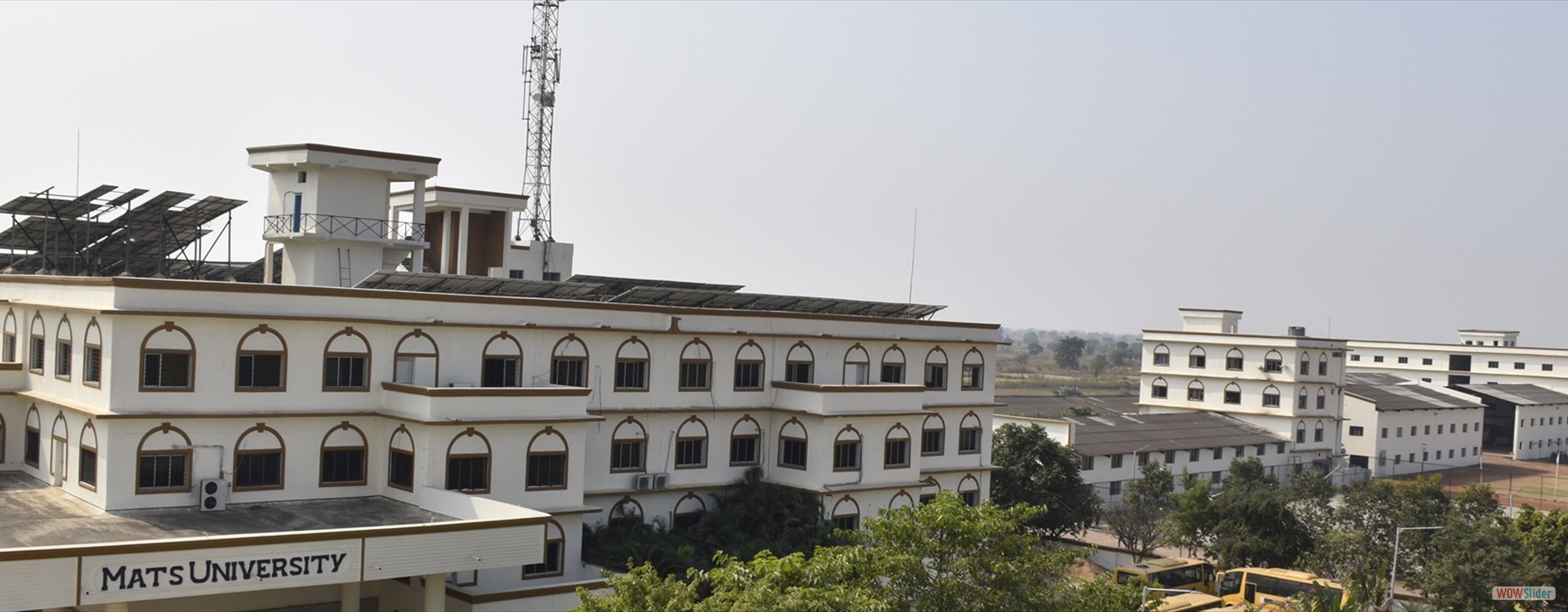
Ph.D. in Bengali from MATS University: Eligibility, Entrance Exam, Fee Structure, Admission Process, Subjects, Research Areas, Syllabus, Scholarship & Career Scope
Introduction about Ph.D. in Bengali at MATS University
Embarking on a Ph.D. in Bengali at MATS University is more than just an academic pursuit; it is a profound journey into the heart of one of the world?s most linguistically rich and culturally significant languages. For the professional scholar, this program offers a unique opportunity to contribute to the vast ocean of Bengali literature, linguistics, and cultural heritage. MATS University, located in Raipur, Chhattisgarh, has established itself as a premier institution dedicated to fostering an environment of intellectual curiosity and rigorous academic discipline. The Department of Languages at MATS is committed to preserving the classical roots of Bengali while simultaneously exploring its contemporary relevance in a globalized world.
Choosing MATS University for your doctoral research means joining a community of scholars who value innovation and critical thinking. The program is designed to transform passionate students into visionary researchers who can interpret the nuances of Rabindranath Tagore, Kazi Nazrul Islam, and the modern luminaries of Bengali prose and poetry. Whether you are interested in socio-linguistics, comparative literature, or the evolution of the Bengali script, MATS provides the resources and the mentorship required to excel. This journey is not just about earning a degree; it is about establishing a legacy of knowledge that bridges the past with the future.
Ph.D Admission 2026-2027 & Writing Support Services by Shiksha Research
Eligibility Criteria for Ph.D. in Bengali at MATS University
To ensure the highest standards of academic integrity and research quality, MATS University maintains specific eligibility criteria for its Ph.D. program in Bengali. Professionals seeking admission must possess a strong academic foundation. The primary requirements include:
- Master?s Degree: Candidates must hold a Master?s degree (M.A. in Bengali) or an equivalent degree from a recognized university.
- Minimum Marks: A minimum of 55% aggregate marks (or an equivalent grade in the point scale) is required. A relaxation of 5% is granted to candidates belonging to SC/ST/OBC (non-creamy layer) and differently-abled categories as per UGC guidelines.
- Professional Experience: While not mandatory, candidates with significant professional experience in teaching, translation, or creative writing are encouraged to apply.
- UGC Mandate: The eligibility is strictly aligned with the University Grants Commission (UGC) Minimum Standards and Procedure for Award of M.Phil./Ph.D. Degrees.
Entrance Exam for Ph.D. in Bengali at MATS University
Admission to the Ph.D. program is competitive and merit-based. MATS University conducts the MATS Entrance Test (MET) for Ph.D. aspirants. The entrance examination is designed to test the candidate?s research aptitude and subject-specific knowledge. It typically consists of two parts:
- Research Methodology: This section evaluates the candidate's understanding of research ethics, data collection, and analytical reasoning.
- Subject Specific (Bengali): This section covers the history of Bengali literature, philology, literary criticism, and major literary movements.
Candidates who have qualified for national-level examinations such as UGC-NET (including JRF), SLET, or GATE are often exempted from the university-level entrance test but must appear for the personal interview. This rigorous selection process ensures that only the most dedicated minds enter the research ecosystem of the university.
Fee Structure for Ph.D. in Bengali at MATS University
The investment in a Ph.D. is an investment in your future as a thought leader. MATS University offers a transparent and competitive fee structure designed to support long-term research efforts without financial strain. Below is an approximate breakdown of the fee components:
| Component | Estimated Amount (INR) | Frequency |
|---|---|---|
| Registration Fee | ?10,000 - ?15,000 | One-time |
| Coursework Fee | ?20,000 - ?25,000 | One-time |
| Tuition Fee (Annual) | ?50,000 - ?70,000 | Per Year |
| Thesis Submission Fee | ?15,000 - ?20,000 | At the time of submission |
| Caution Money (Refundable) | ?5,000 | One-time |
Note: The fees are subject to change based on university policy. It is recommended to contact the administrative office for the most updated schedule.
Admission Process for Ph.D. in Bengali at MATS University
The admission process at MATS University is streamlined and professional, ensuring clarity for all applicants. It follows a series of steps designed to identify the best research potential:
- Notification: Admissions are usually announced twice a year via the official university website and national newspapers.
- Application Submission: Interested candidates must fill out the application form online or offline, providing all necessary academic details.
- Entrance Test: Eligible candidates appear for the MET.
- Interview/Viva-voce: Shortlisted candidates are invited for an interview. During this stage, candidates discuss their research interests and the feasibility of their proposed topic before a Departmental Research Committee (DRC).
- Merit List: A final merit list is prepared based on the performance in the entrance test (70% weightage) and the interview (30% weightage).
- Registration: Selected candidates complete the documentation and pay the registration fees to begin their coursework.
Ph.D. Subjects and Specializations in Bengali at MATS University
The Bengali Ph.D. program at MATS University allows for a high degree of specialization, enabling scholars to delve deep into specific niches of the language and its artistic expressions. The subjects are designed to blend classical studies with modern critical theories. Common specializations include:
- Classical Bengali Literature: Exploring the 'Charyapada' and the 'Mangal-Kavyas'.
- Modernism in Bengali Poetry: Analyzing the works of Jibanananda Das and his contemporaries.
- Bengali Prose and Fiction: A study of the evolution of the novel from Bankim Chandra to the postmodern era.
- Linguistics and Philology: The scientific study of the morphology and phonology of the Bengali language.
- Folk Literature and Culture: Researching the oral traditions, Baul songs, and rural myths of Bengal.
Research Areas in Bengali at MATS University
MATS University encourages interdisciplinary research, allowing scholars to combine Bengali studies with other fields such as History, Sociology, or Digital Humanities. Potential research areas include Comparative Literature (Bengali and other languages), Post-colonial studies, Feminism in Bengali Literature, and Diaspora studies. To ensure the quality of their scholarly output, students often seek Research Paper Writing Services to help articulate their findings in high-impact journals. The university provides mentorship in exploring unexplored manuscripts and digitizing old Bengali texts, making it a hub for innovative archival research.
Documents Required for Ph.D. in Bengali at MATS University
A smooth admission process requires the submission of several verifyable documents. Professionals should ensure they have the following ready:
- High School and Higher Secondary Marksheets and Certificates.
- Graduation and Post-Graduation Degree Certificates.
- Caste Certificate (if applicable).
- No Objection Certificate (NOC) from the current employer (for working professionals).
- Transfer and Migration Certificates.
- Valid ID Proof (Aadhar Card/Passport).
- Six Recent Passport-sized Photographs.
- Research Proposal (Synopsis) outlines the intended study. In the early stages of proposal development, scholars often utilize Questionnaire Design and Development tools if their research involves field studies or sociological surveys within Bengali communities.
MATS University Ph.D. Syllabus for Bengali
The Ph.D. syllabus is divided into two distinct phases: Coursework and the Main Research Phase. The coursework is mandatory as per UGC guidelines and includes:
- Paper I: Research Methodology ? Focuses on qualitative and quantitative research methods, literary criticism, and computer applications in research.
- Paper II: Advanced Study of Bengali Literature ? Focuses on specialized topics chosen by the student based on their research interest.
- Paper III: Ethics and Publication ? Covers plagiarism issues, citation styles (MLA, APA), and research ethics.
Upon successful completion of the coursework, the scholar begins their intensive research. During the thesis drafting phase, many scholars find value in professional Thesis and Dissertation Writing Services to ensure their work meets global academic standards and is structurally sound.
How To Apply for Ph.D. in Bengali at MATS University
The application process for MATS University is designed to be user-friendly for busy professionals. Follow these steps:
- Visit the official website of MATS University.
- Navigate to the 'Admissions' or 'Research' section.
- Register your profile with an active email address and mobile number.
- Fill in the online application form for Ph.D. in Bengali meticulously.
- Upload scanned copies of the required documents and your research synopsis.
- Pay the application fee through the integrated online payment gateway.
- Download the confirmation page and keep a printout for the entrance exam date.
Career Scope and Job Opportunities After Ph.D. in Bengali from MATS University
A Ph.D. in Bengali opens doors to a plethora of prestigious career paths. Beyond traditional academia, the global demand for language experts and cultural analysts is rising. Doctoral graduates can explore:
- Academia: Work as Assistant Professors or Lecturers in prestigious colleges and universities.
- Translation and Interpretation: Serve as professional translators for international organizations or publishing houses.
- Content Curation: Lead editorial teams for Bengali media outlets, journals, and digital content platforms.
- Government Sector: Work in cultural departments, Sahitya Akademi, or as language officers in Indian Embassies.
- Social Research: Lead NGOs and research institutes focused on regional developments. For high-level sociological research, using professional Research Data Analysis Services can significantly enhance the impact of the findings.
Scholarship for Ph.D. in Bengali at MATS University
MATS University is committed to ensuring that financial barriers do not hinder academic excellence. Various scholarship schemes are available for Ph.D. candidates:
- University Merit Scholarship: Awarded to top performers in the MET and subsequent years of research.
- UGC JRF/SRF: Students who have qualified for the Junior Research Fellowship receive monthly stipends as per central government norms.
- State Government Fellowships: Scholarships for students belonging to reserved categories (SC/ST/OBC) through state-level welfare programs.
- Minority Scholarships: Special financial aid for students belonging to minority communities.
FAQs Regarding Ph.D. in Bengali at MATS University
Q1: Is the Ph.D. from MATS University valid for government jobs?
A: Yes, MATS University is a UGC-recognized private university, making its degrees valid for all state and central government recruitment processes.
Q2: Can I pursue a Ph.D. in Bengali part-time?
A: MATS University offers Ph.D. programs primarily in regular mode, but provisions exist for working professionals to manage their research alongside their careers, provided they complete the residency/coursework requirements.
Q3: How long does it take to complete a Ph.D. in Bengali?
A: The minimum duration is three years, including coursework, and the maximum is usually six years.
Q4: Is there a specific format for the research proposal?
A: Yes, the proposal should include an Introduction, Literature Review, Methodology, Objectives, and a Bibliography. Detailed guidelines are provided by the university's research cell.
Q5: Does the university provide hostel facilities for research scholars?
A: Yes, MATS University offers comprehensive hostel and library facilities tailored to meet the needs of doctoral students.








