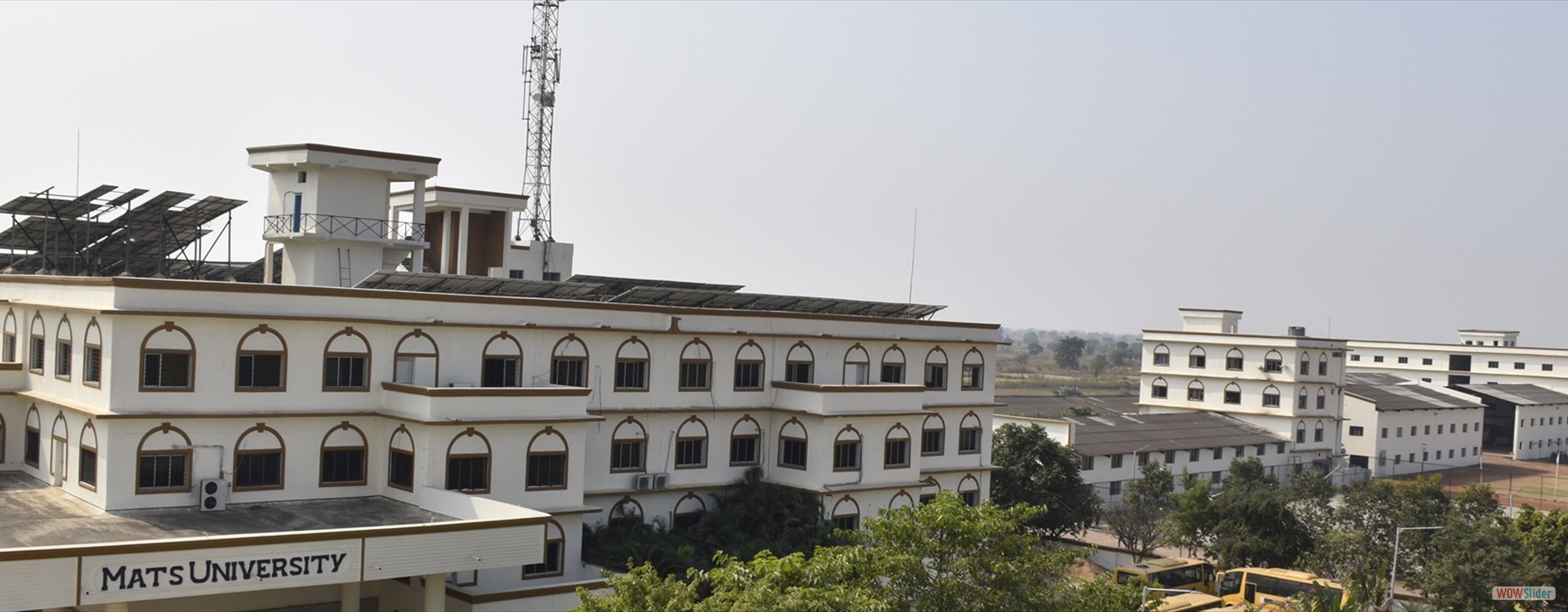
Ph.D. in Biotechnology Engineering at MATS University
Embarking on a doctoral journey in Biotechnology Engineering at MATS University opens the gateway to cutting‑edge research, industry collaboration, and leadership roles in a rapidly evolving biosciences landscape. With world‑class laboratories, interdisciplinary faculty, and a robust scholarship ecosystem, MATS University empowers professionals to transform scientific curiosity into groundbreaking innovations that address global health, sustainability, and food security challenges.
Eligibility Criteria for Ph.D. in Biotechnology Engineering at MATS University
Prospective candidates must satisfy the following minimum requirements:
- Master’s degree (M.Sc./M.Tech.) in Biotechnology, Bio‑Engineering, Molecular Biology, Genetic Engineering, or a closely related discipline with at least 55% aggregate marks (or equivalent CGPA of 6.5/10).
- Candidates holding a Bachelor’s degree with a minimum of 60% marks may also be considered if they have demonstrated research experience through publications or patents.
- Nationally recognized entrance scores (GATE, CSIR‑UGC NET, JEST, or equivalent) are preferred but not mandatory.
- English language proficiency – TOEFL/IELTS scores are required for international applicants.
- Age limit: No upper age restriction, though candidates should demonstrate the academic vigor required for doctoral research.
Entrance Exam for Ph.D. in Biotechnology Engineering at MATS University
MATS University conducts a two‑stage entrance assessment:
- Written Test (Online): 90‑minute objective‑type questionnaire covering Molecular Biology, Bioprocess Engineering, Genetic Manipulation, Bio‑informatics, and Research Methodology.
- Interview & Proposal Presentation: Candidates present a concise research proposal (15‑20 minutes) followed by a panel interview evaluating analytical thinking, literature awareness, and alignment with the university’s research priorities.
Holders of GATE, CSIR‑NET, or JEST scores with a percentile above 65 can secure a direct interview exemption.
Fee Structure for Ph.D. in Biotechnology Engineering at MATS University
| Fee Component | Amount (INR) | Notes |
|---|---|---|
| Admission Processing Fee | 15,000 | One‑time, non‑refundable |
| Annual Tuition & Lab Charges | 85,000 | Payable in two installments per academic year |
| Research Materials & Consumables | 30,000 (estimated) | Depends on project requirements |
| Library & Digital Resources | 5,000 | Includes e‑journal subscriptions |
| Health & Campus Welfare | 2,500 | Annual per‑student charge |
| Total (Approx.) | 1,37,500 |
Scholarships, fellowships, and research assistantships can offset up to 80% of the total cost for eligible candidates.
Admission Process for Ph.D. in Biotechnology Engineering at MATS University
The admission workflow follows a streamlined, transparent sequence:
- Online Application Submission: Fill the official portal form, upload academic transcripts, a statement of purpose, and two recommendation letters.
- Document Verification: The admissions office validates the authenticity of certificates and checks eligibility.
- Entrance Examination: Eligible candidates receive a test link; score computation occurs within 48 hours.
- Interview Scheduling: Shortlisted applicants are invited for a virtual interview and proposal defense.
- Final Selection & Offer Letter: Successful candidates receive an official admission letter with fee details and scholarship information.
- Enrollment & Orientation: Payment of the first semester fee, submission of signed agreements, and participation in a comprehensive orientation program.
Ph.D. Subjects and Specializations in Biotechnology Engineering at MATS University
The doctoral program offers the following specialization tracks:
- Genetic Engineering & Synthetic Biology
- Bioprocess & Fermentation Technology
- Biomedical Engineering & Tissue Engineering
- Environmental Biotechnology & Bioremediation
- Bioinformatics & Computational Genomics
- Pharmaceutical Biotechnology
Research Areas in Biotechnology Engineering at MATS University
MATS University hosts interdisciplinary research clusters that align with national and global priorities:
- CRISPR‑Cas9 based genome editing for disease resistance.
- Algal biofuel production and carbon capture technologies.
- Development of biodegradable polymeric scaffolds for tissue regeneration.
- Microbial consortia for wastewater treatment and heavy‑metal sequestration.
- Artificial intelligence driven drug discovery pipelines.
- Vaccinology and rapid diagnostic platform development.
To support rigorous research, students often engage with professional services such as Thesis and Dissertation Writing Services and Research Data Analysis Services.
Documents Required for Ph.D. in Biotechnology Engineering at MATS University
| Document | Format | Remarks |
|---|---|---|
| Academic Transcripts (M.Sc./M.Tech.) | PDF, certified copy | Include all semesters |
| Degree Certificate | PDF, attested | Original scan required |
| Statement of Purpose (SOP) | Word/PDF (max 1500 words) | Highlight research interests |
| Two Recommendation Letters | PDF, signed by referees | Preferably from academic supervisors |
| Entrance Exam Scorecard (if applicable) | GATE, CSIR‑NET, JEST etc. | |
| Proof of English Proficiency | TOEFL/IELTS for international candidates |
MATS University Ph.D. Syllabus for Biotechnology Engineering
The syllabus is structured into two major phases – Core Coursework (Year 1) and Research & Thesis (Years 2‑4):
- Core Courses: Advanced Molecular Genetics, Bioprocess Engineering, Bio‑informatics Algorithms, Biostatistics, Research Ethics, and Intellectual Property Management.
- Electives (choose any two): Synthetic Biology, Nano‑biotechnology, Pharmacogenomics, Environmental Biotechnology, Biomedical Imaging.
- Research Milestones: Literature Review, Methodology Design, Data Collection, Publication in peer‑reviewed journals, Thesis Draft, and Defense.
Students may seek assistance from Research Paper Writing Services to enhance manuscript quality.
How To Apply for Ph.D. in Biotechnology Engineering at MATS University
Follow these step‑by‑step instructions to submit a successful application:
- Visit the official MATS University admissions portal and create a user account.
- Complete the online application form – ensure all fields are accurately filled.
- Upload scanned copies of the required documents (see “Documents Required” table).
- Pay the non‑refundable processing fee via net banking or UPI.
- Schedule the entrance examination date after receiving the confirmation email.
- Prepare a 5‑page research proposal outlining objectives, methodology, and expected outcomes.
- Participate in the virtual interview and proposal defense.
- Upon receiving the admission offer, complete fee payment and registration.
Career Scope and Job Opportunities After Ph.D. in Biotechnology Engineering from MATS University
Graduates are equipped to assume high‑impact roles across academia, industry, and government:
- Assistant/Associate Professor & Research Scientist in premier universities and research institutes.
- Lead Scientist or R&D Manager in biotechnology firms, pharmaceutical companies, and agritech startups.
- Policy Analyst or Project Manager in national biotech councils and international NGOs.
- Entrepreneur – launching biotech ventures, bio‑incubators, or consultancy services.
- Intellectual Property Specialist focusing on biotech patents and regulatory affairs.
Professional support such as Questionnaire Design and Development can be valuable for researchers conducting large‑scale surveys or clinical studies.
Scholarship for Ph.D. in Biotechnology Engineering at MATS University
MATS University offers a suite of merit‑based and need‑based financial aids:
- MATS Merit Scholarship: 50% tuition waiver for candidates with a GPA ≥ 9.0/10.
- Government Fellowships: UGC‑JRF, CSIR‑








