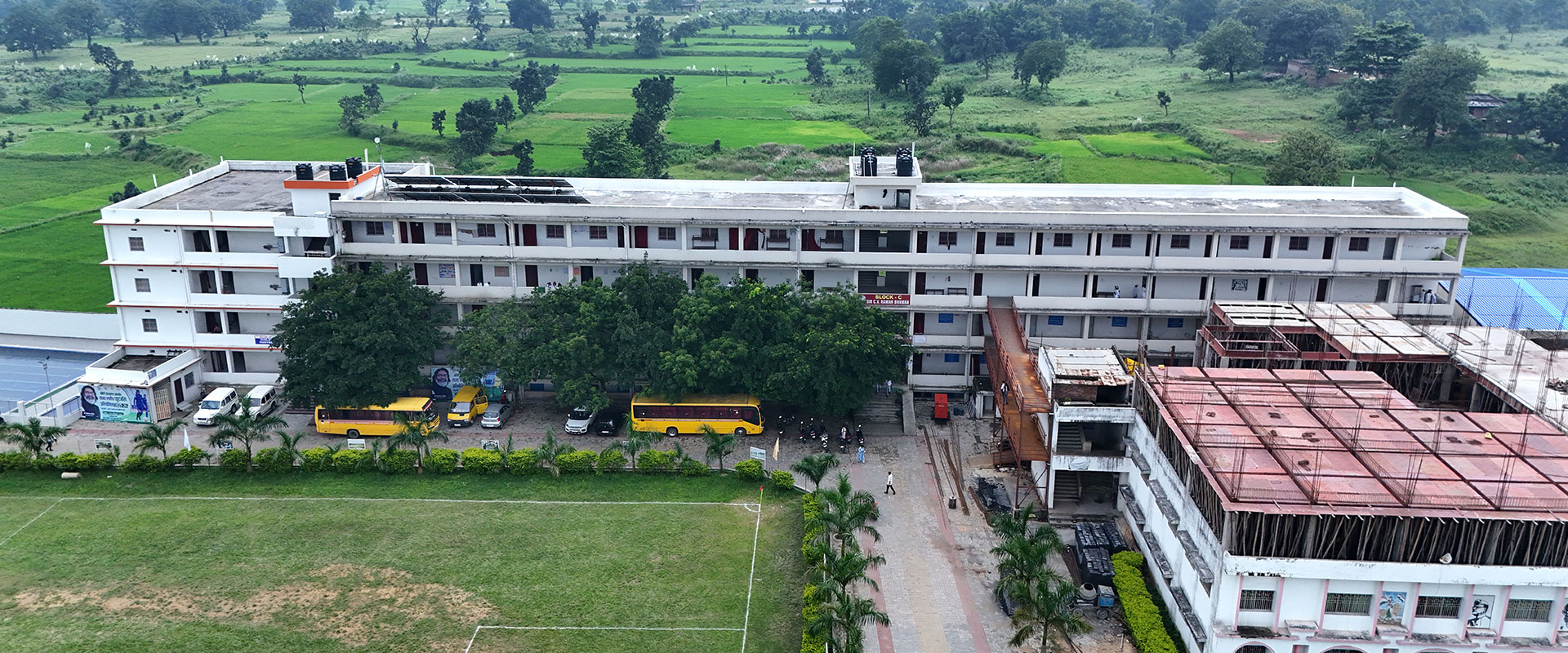
Introduction about Ph.D. in Biotechnology at Radha Govind University
The pursuit of a Ph.D. in Biotechnology at Radha Govind University (RGU) represents a transformative journey into the heart of biological innovation. As one of the most dynamic fields of the 21st century, Biotechnology merges the principles of biology with cutting-edge technology to solve some of the world's most pressing challenges?from healthcare and food security to environmental sustainability. Radha Govind University offers a rigorous research environment designed to foster intellectual growth, technical mastery, and visionary leadership among its scholars. By enrolling in this doctoral program, researchers are not just earning a degree; they are contributing to a legacy of scientific excellence that bridges the gap between laboratory discovery and real-world application.
Radha Govind University stands out for its commitment to interdisciplinary research and state-of-the-art infrastructure. The Ph.D. program is meticulously structured to provide scholars with the critical thinking skills and experimental precision necessary to excel in both academia and the biotech industry. Whether you are aiming to develop life-saving therapeutics or innovate in sustainable agriculture, the university provides the ideal ecosystem to nurture your ambitions. Success in this high-stakes environment often begins with a solid foundation, which is why many scholars seek PhD Topic Selection and Proposal Assistance to ensure their initial research blueprint is sound and competitive.
Ph.D Admission 2026-2027 & Writing Support Services by Shiksha Research
Eligibility Criteria for Ph.D. in Biotechnology at Radha Govind University
To maintain a high standard of academic excellence, Radha Govind University follows a stringent eligibility framework for its doctoral candidates. Prospective students must meet the following criteria to be considered for admission into the Ph.D. Biotechnology program:
- Educational Qualification: Candidates must possess a Master?s degree (M.Sc., M.Tech., or an equivalent professional degree) in Biotechnology, Microbiology, Biochemistry, Life Sciences, or a related discipline from a recognized university.
- Minimum Percentage: A minimum of 55% aggregate marks (or an equivalent grade 'B' in the UGC 7-point scale) is required for General and OBC category candidates.
- Relaxation: A relaxation of 5% marks (from 55% to 50%) is provided for candidates belonging to SC, ST, and differently-abled categories, as per government regulations.
- Final Year Students: Candidates appearing for their final year Master?s examination may also apply, provided they submit proof of meeting the eligibility criteria at the time of the interview.
Entrance Exam for Ph.D. in Biotechnology at Radha Govind University
Admission to the Ph.D. program is primarily based on the performance in the RGU Ph.D. Entrance Test. The examination is designed to evaluate the candidate?s research aptitude and subject-specific knowledge. The entrance exam typically includes two components:
- Part A: Research Methodology: This section assesses the candidate?s analytical skills, logical reasoning, and understanding of research ethics and statistical tools.
- Part B: Biotechnology Subject Knowledge: This section focuses on core concepts such as Molecular Biology, Immunology, Genetic Engineering, and Plant/Animal Biotechnology.
Candidates who have successfully cleared national-level examinations such as UGC-NET (including JRF), CSIR-NET (including JRF), GATE, or SLET are generally exempted from the university?s entrance test, though they must still participate in the personal interview round. Navigating these requirements can be complex, and many students utilize PhD Admission Assistance to streamline their application and documentation process.
Fee Structure for Ph.D. in Biotechnology at Radha Govind University
Radha Govind University aims to provide quality education at a competitive cost. The fee structure is transparent and covers various aspects of the doctoral journey, from registration to thesis submission. Below is an approximate breakdown of the costs involved:
| Particulars | Fee Amount (Approx.) | Frequency |
|---|---|---|
| Application & Entrance Test Fee | INR 2,000 - 3,000 | One-time |
| Coursework Fee | INR 20,000 - 30,000 | One-time |
| Annual Tuition Fee | INR 60,000 - 80,000 | Per Annum |
| Registration & Enrollment Fee | INR 10,000 - 15,000 | One-time |
| Thesis Submission & Evaluation Fee | INR 15,000 - 25,000 | At the time of submission |
Note: The fees mentioned above are indicative and subject to change as per university norms. Scholars are advised to check the official website for the most recent fee schedule.
Admission Process for Ph.D. in Biotechnology at Radha Govind University
The admission process at RGU is regularized and transparent, ensuring that only the most dedicated students are selected for research. The steps are as follows:
- Online Registration: Candidates must fill out the application form available on the official university portal.
- Entrance Testing: Eligible candidates (non-exempted) appear for the RGU Ph.D. Entrance Examination.
- Interview/Viva-Voce: Shortlisted candidates are called for an interview. During this stage, the Research Committee discusses the candidate's research interest and proposed area of study.
- Merit List Declaration: A final merit list is prepared based on the cumulative scores of the entrance test and the interview.
- Coursework Commencement: Selected candidates undergo mandatory six-month coursework covering research ethics and advanced biotechnology.
Ph.D. Subjects and Specializations in Biotechnology at Radha Govind University
The field of Biotechnology is vast, and Radha Govind University encourages scholars to specialize in niches that align with global scientific trends. Some of the core subjects and specializations available include:
- Medical Biotechnology: Focusing on drug discovery, vaccine development, and diagnostic tools.
- Agricultural Biotechnology: Researching genetically modified crops, bio-fertilizers, and pest resistance.
- Environmental Biotechnology: Studying bioremediation, waste management, and sustainable energy sources.
- Industrial Biotechnology: Innovations in enzyme technology, bioprocess engineering, and fermentation.
- Bioinformatics & Computational Biology: Utilizing big data and algorithms to solve biological problems.
Research Areas in Biotechnology at Radha Govind University
Research is the cornerstone of the Ph.D. program. RGU provides a platform for exploratory and applied research across various domains. Aspiring doctors can choose to work on projects related to:
- CRISPR and Gene Editing Technologies.
- Stem Cell Research and Regenerative Medicine.
- Microbial fuel cells and green energy.
- Metabolic engineering for secondary metabolite production.
- Nanobiotechnology in targeted drug delivery.
Innovation in these areas often leads to intellectual property. Scholars are encouraged to protect their findings using Patent Filing and Support Services to ensure their scientific breakthroughs are legally safeguarded.
Documents Required for Ph.D. in Biotechnology at Radha Govind University
To complete the admission and registration process, candidates must prepare a comprehensive dossier of documents:
- High School and Intermediate Certificates (10th & 12th).
- Undergraduate and Postgraduate Degree Marksheets and Certificates.
- Valid ID Proof (Aadhar Card, Passport, or Voter ID).
- Passport-sized photographs.
- Caste Certificate (if applicable for reservation).
- Transfer or Migration Certificate.
- A well-drafted Research Proposal (Synopsis).
- No Objection Certificate (NOC) if the candidate is currently employed.
Radha Govind University Ph.D. Syllabus for Biotechnology
The syllabus for the Ph.D. program is divided into two phases: Mandatory Coursework and Independent Research. The coursework is designed to equip students with the tools required for high-quality scientific inquiry. Key subjects include:
- Advanced Research Methodology: Data collection methods, experimental design, and hypothesis testing.
- Biostatistics: Application of statistical software in biological data analysis.
- Techniques in Biotechnology: Advanced microscopy, chromatography, sequencing, and spectroscopy.
- Research Ethics and IPR: Understanding plagiarism, ethical clearances in animal/human research, and intellectual property rights.
Once the coursework is complete, the focus shifts to thesis writing. To meet the rigorous standards of international journals, scholars often utilize Editing and Proofreading Services to refine their final manuscripts for clarity and impact.
How To Apply for Ph.D. in Biotechnology at Radha Govind University
Applying for a Ph.D. at Radha Govind University is a straightforward process, provided you follow the schedule published by the admissions office:
- Visit the Radha Govind University official website.
- Click on the 'Research/Ph.D. Admissions' section.
- Register with your email and mobile number to create a login ID.
- Fill in the personal, academic, and professional details in the online form.
- Upload the scanned copies of required documents and your research proposal.
- Pay the application fee via the integrated payment gateway.
- Download the confirmation page and hall ticket for the entrance exam (if applicable).
Career Scope and Job Opportunities After Ph.D. in Biotechnology from Radha Govind University
Earning a doctorate in Biotechnology opens doors to elite career paths. Ph.D. holders from RGU are highly sought after in several sectors:
- Academic Leadership: Roles as Assistant Professors, Researchers, and Department Heads in prestigious universities.
- Research & Development (R&D): Leading scientific teams in pharmaceutical, biotech, and food processing companies.
- Policy & Regulation: Advisors for government bodies like DBT, ICMR, or international organizations like WHO.
- Entrepreneurship: Founding biotech startups focused on diagnostics, agri-tech, or environmental solutions.
- Consultancy: Expert consulting for patent firms and clinical trial management organizations.
For those who achieve exceptional milestones in their careers later on, the university and global academic community often recognize such brilliance through Honorary Doctorate Programs, celebrating a lifetime of contribution to science.
Scholarship for Ph.D. in Biotechnology at Radha Govind University
RGU is dedicated to supporting talented researchers who may face financial constraints. Several scholarship avenues are available:
- University Fellowships: Awarded to top-performing entrance exam candidates.
- Government Fellowships: Guidance is provided to help students secure JRF (Junior Research Fellowship) through UGC or CSIR.
- Industry-sponsored Projects: Scholars working on specific industry-funded research may receive monthly stipends.
- Merit-cum-Means Scholarship: Financial aid for economically weaker students with high academic potential.
To enhance the chances of securing these competitive grants, having a track record of published work is essential. Utilizing Research Publication Support can significantly help scholars get their preliminary findings into indexed journals, boosting their profile for scholarship applications.
FAQs Regarding Ph.D. in Biotechnology at Radha Govind University
1. Can I pursue a Ph.D. in Biotechnology on a part-time basis?
Yes, Radha Govind University offers provision for part-time Ph.D. programs for working professionals, provided they meet the coursework attendance requirements and have an NOC from their employer.
2. What is the typical duration of the Ph.D. program?
The program duration is usually 3 to 5 years. A minimum of three years including coursework and a maximum of six years is the standard timeframe.
3. Is the Ph.D. from RGU UGC recognized?
Yes, Radha Govind University is recognized by the University Grants Commission (UGC), making its Ph.D. degrees valid for government jobs and academic positions across India.
4. Do I need to have a co-supervisor?
While not mandatory in all cases, having a co-supervisor from another department or industry is often encouraged for interdisciplinary research topics.
5. How often are the Ph.D. intake cycles?
RGU generally conducts its Ph.D. admission cycle twice a year, typically in the winter and summer sessions. Check the official website for exact dates.








