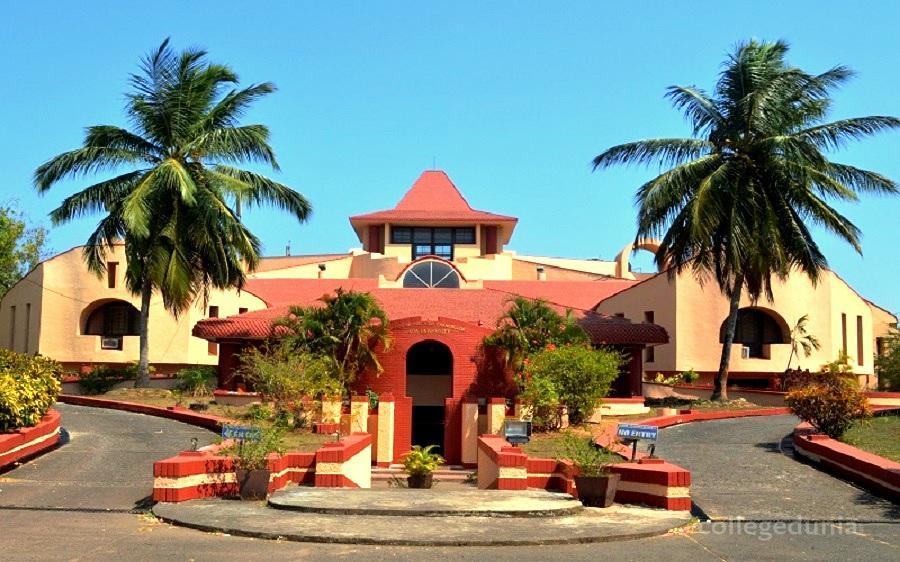
Ph.D. in Botany from Goa University: Eligibility, Entrance Exam, Fee Structure, Admission Process, Subjects, Research Areas, Syllabus, Scholarship & Career Scope
Introduction about Ph.D. in Botany at Goa University
Embarking on a doctoral journey in Botany at Goa University opens the door to a world where scientific curiosity meets the vibrant flora of the Western Ghats. The program is designed for seasoned professionals and researchers who aspire to deepen their expertise, contribute original knowledge, and become leaders in plant sciences. With state‑of‑the‑art laboratories, interdisciplinary collaborations, and a faculty renowned for ecological and molecular research, Goa University provides an inspiring ecosystem for scholarly excellence.
Eligibility Criteria for Ph.D. in Botany at Goa University
Prospective candidates must fulfill the following prerequisites:
- A Master’s degree in Botany, Plant Sciences, Agricultural Sciences, Biotechnology, or a related discipline with a minimum aggregate of 55 % (50 % for SC/ST candidates).
- Qualifying score in the university‑conducted Ph.D. entrance test or a national level exam such as UGC‑NET, GATE, JRF, or CSIR‑NET.
- For candidates holding an M.Phil., the entrance test may be waived provided the M.Phil. thesis is approved and the candidate has published at least one research paper in a peer‑reviewed journal.
- English language proficiency (if the medium of instruction during Master’s was not English) – TOEFL/IELTS scores are considered for foreign applicants.
Entrance Exam for Ph.D. in Botany at Goa University
The entrance examination evaluates both theoretical knowledge and research aptitude. The structure typically includes:
- Written Test (100 marks): Multiple‑choice and short answer questions covering Plant Morphology, Physiology, Genetics, Systematics, and Environmental Botany.
- Research Proposal Presentation (30 marks): Candidates present a concise research proposal before a panel of experts, demonstrating originality and feasibility.
- Interview (20 marks): A personal interview assesses motivation, analytical skills, and alignment with faculty interests.
Preparation resources, past question papers, and mock tests are available through the university’s official portal.
Fee Structure for Ph.D. in Botany at Goa University
| Fee Component | Indian Residents (INR) | International Residents (USD) |
|---|---|---|
| Application Processing Fee | ₹ 1,500 | USD 30 |
| Entrance Examination Fee | ₹ 2,000 | USD 40 |
| Annual Tuition & Laboratory Charges | ₹ 25,000 per annum | USD 600 per annum |
| Scholarship / Stipend (if awarded) | ₹ 15,000 – ₹ 25,000 per month | USD 350 – USD 500 per month |
| Miscellaneous (library, sports, etc.) | ₹ 3,000 | USD 80 |
All fees are subject to revision each academic year. Candidates are encouraged to verify the latest fee schedule on the official admissions portal.
Admission Process for Ph.D. in Botany at Goa University
The admission workflow is streamlined to ensure transparency:
- Online Application: Fill out the digital form on the university’s admissions website and upload academic transcripts, a research proposal, and two letters of recommendation.
- Payment of Application Fee: The non‑refundable fee must be cleared through net banking or credit card.
- Entrance Examination: Eligible candidates appear for the written test scheduled in the third week of June.
- Proposal Presentation & Interview: Shortlisted candidates are invited to present their research plans and undergo a personal interview.
- Final Selection & Admission Letter: Successful candidates receive an official offer letter with details on registration, fee payment, and orientation.
- Registration: Complete the registration formalities, submit original certificates, and enroll for the first semester.
Ph.D. Subjects and Specializations in Botany at Goa University
Students can tailor their doctoral studies to one of the following specializations, each backed by dedicated faculty and research facilities:
- Plant Systematics and Taxonomy
- Plant Molecular Biology and Genetics
- Plant Physiology and Biochemistry
- Ecology and Conservation of Tropical Forests
- Algal and Bryophyte Studies
- Plant Pathology and Phytopathogenic Interactions
- Ethnobotany and Medicinal Plant Research
- Biotechnology Applications in Crop Improvement
Research Areas in Botany at Goa University
The university’s research agenda aligns with global challenges and regional biodiversity. Key focus areas include:
- Conservation of Endemic Species: Mapping, genetic diversity assessment, and restoration strategies for Western Ghats endemics.
- Climate‑Resilient Crop Development: Genetic engineering for drought tolerance, salinity resistance, and disease immunity.
- Plant‑Microbe Interactions: Exploring symbiotic relationships for sustainable agriculture.
- Phytochemical Exploration: Isolation of bioactive compounds from medicinal plants for drug discovery.
- Forest Ecology and Carbon Sequestration: Quantifying carbon stocks and modeling ecosystem services.
- Algal Biotechnology: Biofuel production, wastewater treatment, and nutraceutical applications.
Documents Required for Ph.D. in Botany at Goa University
A comprehensive document checklist ensures a smooth application:
| Document | Format | Remarks |
|---|---|---|
| Completed Online Application Form | Signed electronically | |
| Academic Transcripts (M.Sc./M.Phil.) | PDF (scanned) | Attested copies |
| Research Proposal (max 1500 words) | DOCX/PDF | Include objectives, methodology, and expected outcomes |
| Two Letters of Recommendation | From academicians or industry experts | |
| Entrance Exam Scorecard | If applicable | |
| Proof of Identity (Aadhaar/Passport) | Government issued | |
| Passport‑Size Photograph | JPEG (300 dpi) | White background |
Goa University Ph.D. Syllabus for Botany
The doctoral curriculum blends coursework with intensive research. Core modules include:
- Advanced Plant Systematics
- Techniques in Molecular Plant Biology
- Plant Ecology and Environmental Assessment
- Statistical Methods for Biological Research
- Research Ethics and Scientific Writing
- Seminars and Journal Club Participation
Beyond the core, students enroll in electives aligned with their specialization and attend workshops on bioinformatics, CRISPR technology, and remote sensing for vegetation mapping.
How To Apply for Ph.D. in Botany at Goa University
Follow these step‑by‑step instructions to submit a successful application:
- Visit the official Goa University admissions portal and create a new user account.
- Download the Ph.D. Botany application form and fill in personal, academic, and research details.
- Upload the required documents (transcripts, proposal, recommendations) in the specified format.
- Pay the non‑refundable application fee using the integrated payment gateway.
- Submit the form and note the generated Application ID for future correspondence.
- Monitor email notifications for entrance exam dates, result announcements, and interview invitations.
For applicants seeking professional assistance, consider exploring Editing and Proofreading Services, PhD Topic Selection and Proposal Assistance, and PhD Admission Assistance to enhance the quality of your submission.
Career Scope and Job Opportunities After Ph.D. in Botany from Goa University
A doctorate in Botany unlocks a spectrum of high‑impact career trajectories:
- Academic Positions: Assistant Professor, Associate Professor, or Head of Department in leading universities and research institutes.
- Research Scientist: Roles in governmental labs (e.g., ICAR, CSIR), private R&D centers, and international biodiversity projects.
- Conservation Officer: Working with NGOs, forest departments, and wildlife sanctuaries on habitat restoration.
- Biotechnology Entrepreneur: Founding startups focused on plant‑based therapeutics, sustainable agriculture, or bio‑fuel production.
- Policy Advisor: Contributing to environmental legislation, climate policy, and agricultural strategies at national and global levels.
- Science Communicator: Writing, public outreach, and media engagement to promote plant science awareness.
Alumni have








