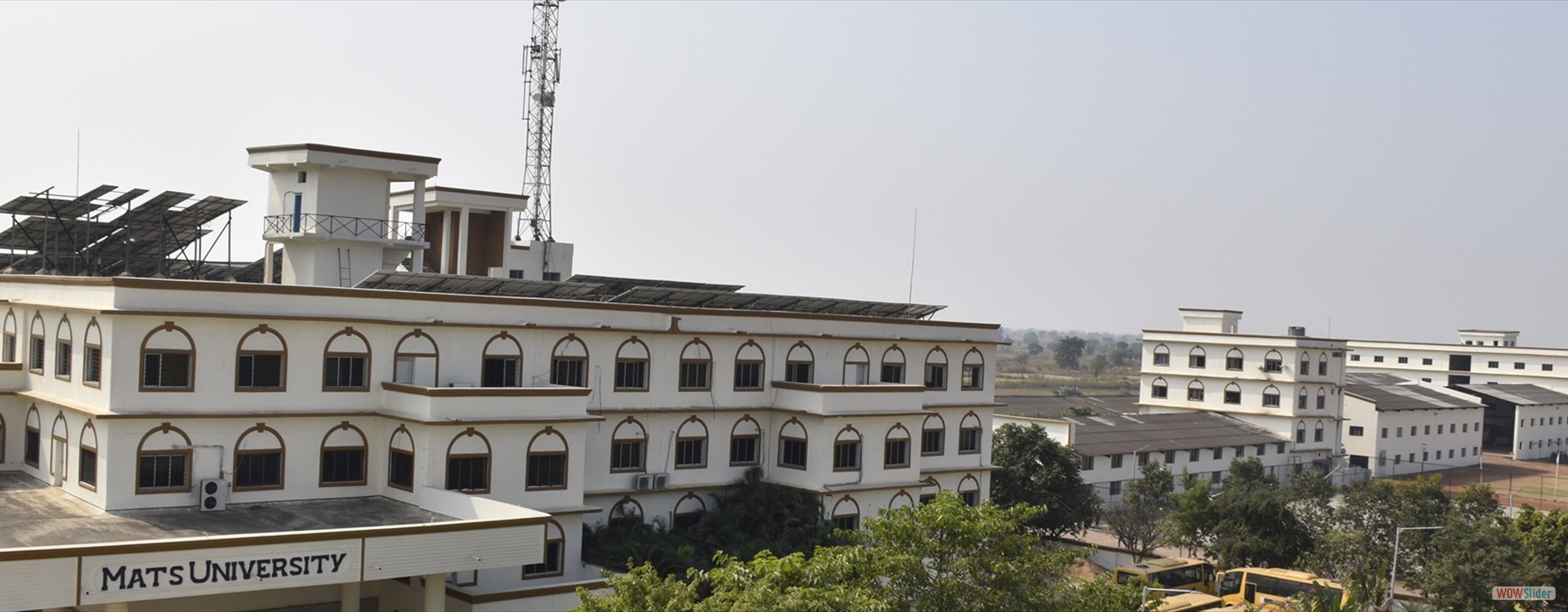
Ph.D. in Botany from MATS University: Eligibility, Entrance Exam, Fee Structure, Admission Process, Subjects, Research Areas, Syllabus, Scholarship & Career Scope
Introduction about Ph.D. in Botany at MATS University
The Doctor of Philosophy (Ph.D.) in Botany at MATS University is a research‑intensive programme designed for aspiring scientists who wish to deepen their expertise in plant biology, ecology, genetics, and biotechnology. With state‑of‑the‑art laboratories, a robust network of research collaborations, and a faculty of internationally recognised botanists, the programme empowers professionals to generate innovative solutions for global challenges such as climate change, food security, and biodiversity loss.
Eligibility Criteria for Ph.D. in Botany at MATS University
Prospective candidates must meet the following minimum standards:
- Master’s degree (M.Sc., M.Phil.) in Botany, Plant Sciences, Agriculture, Biotechnology, or a closely related discipline with at least 55% aggregate (or CGPA equivalent).
- Valid GATE/NET/CSIR score is preferred but not mandatory. Candidates without a valid score must appear for the university‑conducted entrance exam.
- Candidates with a minimum of two years of relevant research or industry experience are given priority during selection.
- English language proficiency (IELTS/TOEFL) for international applicants.
Entrance Exam for Ph.D. in Botany at MATS University
The university conducts a comprehensive written test covering:
- Fundamentals of Plant Morphology, Physiology and Biochemistry.
- Advanced topics such as Molecular Plant Genetics, Phytochemistry, and Plant Ecology.
- Research methodology, statistical analysis, and scientific writing.
Successful candidates are further evaluated through a personal interview to assess research aptitude, communication skills, and alignment with faculty research interests.
Fee Structure for Ph.D. in Botany at MATS University
| Category | Annual Fee (INR) | Notes |
|---|---|---|
| General Category | 85,000 | Includes tuition, lab usage, and library access. |
| SC/ST/PWD | 42,500 | 50% waiver as per government regulations. |
| International Students | 150,000 | Excludes scholarship benefits. |
| One‑time Registration Fee | 10,000 | Non‑refundable. |
Additional costs such as fieldwork, conference travel, and publication fees are borne by the student unless covered by research grants or scholarships.
Admission Process for Ph.D. in Botany at MATS University
- Online application submission through the university portal.
- Upload scanned copies of academic transcripts, degree certificates, and GATE/NET scores (if applicable).
- Pay the application fee (INR 2,000 for Indian applicants, USD 30 for foreign applicants).
- Shortlisting based on eligibility and entrance exam performance.
- Personal interview and research proposal presentation.
- Final admission offer and enrollment after fulfilling documentation requirements.
Ph.D. Subjects and Specializations in Botany at MATS University
Students can choose from a wide array of specializations, including:
- Plant Molecular Biology & Genomics
- Plant Systematics & Taxonomy
- Ecophysiology & Climate Change Biology
- Phytochemistry & Natural Product Research
- Agricultural Biotechnology & Crop Improvement
- Plant Pathology & Disease Management
- Conservation Genetics & Biodiversity Assessment
Research Areas in Botany at MATS University
The university’s research ecosystem encourages interdisciplinary projects in the following priority areas:
- Climate‑resilient crop development.
- Medicinal plant discovery and metabolic engineering.
- Plant‑microbe interactions and sustainable agriculture.
- Conservation of endangered flora and habitat restoration.
- Bioinformatics approaches to plant genomics.
- Phyto‑remediation and environmental monitoring.
Students are supported by cutting‑edge facilities, including next‑generation sequencing platforms, greenhouse complexes, and field stations across diverse ecosystems.
Documents Required for Ph.D. in Botany at MATS University
| Document | Details |
|---|---|
| Application Form | Completed online form with a digital signature. |
| Academic Transcripts | Certified copies of all postgraduate and undergraduate records. |
| Degree Certificates | Original degree certificates (M.Sc./M.Phil.) and passport‑size photograph. |
| Entrance Exam Scorecard | GATE/NET scorecard or university entrance test result. |
| Research Proposal | 2‑page synopsis outlining research objectives and methodology. |
| Identity Proof | Aadhar/PAN (for Indian candidates) or passport (for international candidates). |
| Experience Certificates | If applicable, letters from previous research or industry positions. |
MATS University Ph.D. Syllabus for Botany
The curriculum is structured into three phases:
- Coursework (Year 1) – Core modules on Advanced Plant Physiology, Research Methodology, Statistical Tools, and Ethics in Scientific Publication.
- Comprehensive Examination (End of Year 1) – Written and oral tests to evaluate theoretical depth.
- Research & Thesis (Years 2‑4) – Independent project work, regular progress seminars, and publication of at least two peer‑reviewed articles.
Elective courses can be selected from related departments such as Biotechnology, Environmental Science, and Agricultural Engineering to broaden interdisciplinary competence.
How To Apply for Ph.D. in Botany at MATS University
Applicants should follow these steps:
- Visit the official MATS University admissions portal.
- Register using a valid email address and create a secure password.
- Fill in personal, academic, and research details accurately.
- Upload the required documents (refer to the Documents Required table).
- Pay the non‑refundable application fee through the integrated payment gateway.
- Submit the application and note the generated application ID for future correspondence.
- Monitor email notifications for entrance exam dates, interview schedules, and admission decisions.
For assistance with proposal writing or data analysis, you may consider professional support such as Thesis and Dissertation Writing Services, Research Data Analysis Services, Research Paper Writing Services, or Questionnaire Design and Development.
Career Scope and Job Opportunities After Ph.D. in Botany from MATS University
Graduates enjoy a broad spectrum of career pathways, including:
- Tenured faculty positions in leading universities and research institutes.
- Senior research scientist roles in agro‑chemical, biotech, and pharmaceutical companies.
- Environmental consultancy and policy advisory for governmental and NGOs.
- Leadership positions in horticulture, seed production, and plant breeding programs.
- Entrepreneurship – launching start‑ups focused on sustainable agriculture, bio‑fertilizers, or plant‑based products.
According to recent industry surveys, the demand for plant scientists with a Ph.D. is projected to grow by 12% annually, reflecting the increasing importance of plant research in global food security and climate resilience.
Scholarship for Ph.D. in Botany at MATS University
MATS University offers a variety of merit‑based and need‑based financial aids:
- University Merit Scholarship: 50% tuition waiver for the first two years for candidates with a CGPA above 8.5/10.
- Research Assistantship: Stipends ranging from INR 18,000 to 25,000 per month for students involved in funded projects.
- External Fellowships: Support from agencies such as CSIR, ICAR, and DST (e.g., Junior Research Fellowship).
- Need‑Based Grants: Special provisions for economically disadvantaged students, including full tuition waiver and living allowance.
Applicants are encouraged to apply early, as scholarship allocations are competitive and based on academic performance and research proposal quality.
FAQs Regarding Ph.D. in Botany at MATS University
- What is the minimum duration to complete the Ph.D. in Botany?
- The programme is typically completed in 3‑4 years, depending on research progress and publication requirements.
- Can I pursue the Ph.D. part‑time while working?
- Yes, MATS University offers a flexible part‑time mode for working professionals, with extended timelines for coursework and thesis submission.
- Is teaching assistance mandatory?
- Teaching assistance is optional but highly recommended, as it provides valuable pedagogical experience and additional stipend.
- How many publications are required before thesis submission?
- At least two peer‑reviewed journal articles (or one article and one conference paper) must be accepted for publication prior to thesis filing.
- Do international students receive the same scholarships?
- International candidates are eligible for university merit scholarships and external fellowships, although the number of seats is limited.








