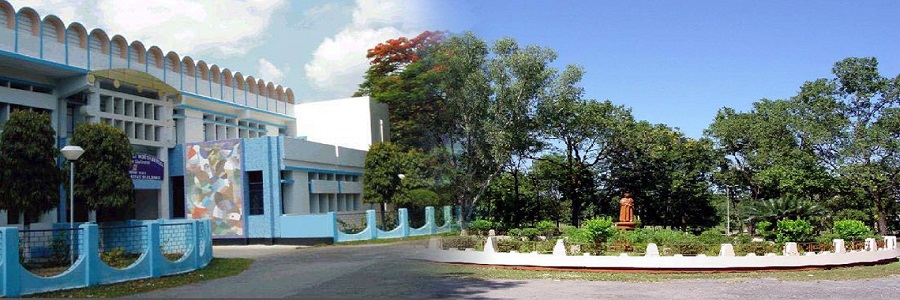
Introduction about Ph.D. in Botany at North Bengal University
North Bengal University (NBU) has emerged as a beacon for advanced botanical research in the eastern Himalayas. The university’s Ph.D. in Botany program empowers professionals—research scientists, horticulturists, environmental consultants, and academic scholars—to push the frontiers of plant science. With a curriculum that blends rigorous coursework, cutting‑edge laboratory work, and field investigations, candidates develop a deep understanding of plant taxonomy, physiology, genetics, and ecology, while contributing original research that can influence agriculture, conservation, and biotechnology.
Eligibility Criteria for Ph.D. in Botany at North Bengal University
- Master’s degree (M.Sc., M.A., M.Phil.) in Botany or a closely related discipline with a minimum of 55% aggregate (or equivalent grade).
- Valid GATE/UGC NET score is highly preferred but not mandatory.
- For candidates holding a Ph.D. in a different discipline, a supplementary qualifying exam may be required.
- Age limit: No upper age restriction; however, candidates must meet the minimum academic qualifications.
Entrance Exam for Ph.D. in Botany at North Bengal University
The entrance assessment comprises two stages:
- Written Test – A 2‑hour paper that evaluates core botanical concepts, research methodology, and analytical skills. Topics include Plant Systematics, Molecular Botany, Plant Biochemistry, and Statistical Tools.
- Interview & Proposal Presentation – Shortlisted candidates present a concise research proposal (max 10 minutes) followed by a viva‑voce with the department’s faculty panel.
Candidates scoring high in GATE/UGC NET may be exempted from the written test, subject to departmental approval.
Fee Structure for Ph.D. in Botany at North Bengal University
| Component | Amount (INR) | Notes |
|---|---|---|
| Application & Processing Fee | 1,500 | Non‑refundable, payable at time of online application |
| Coursework & Seminar Fees | 6,000 | Covers lab consumables, seminars, and workshops |
| Annual Tuition (if applicable) | 8,000 per year | Waived for candidates receiving university scholarships |
| Thesis Submission & Examination Fee | 3,000 | Includes plagiarism check and binding |
| Total Estimated Cost (3‑year program) | ≈ 30,500 INR | Subject to change based on policy revisions |
Admission Process for Ph.D. in Botany at North Bengal University
- Online Application – Submit the application form via the university portal, upload scanned copies of academic certificates, and pay the processing fee.
- Document Verification – The admission office verifies the authenticity of the submitted documents.
- Entrance Examination – Appear for the written test (or submit GATE/NET scores for exemption).
- Interview & Proposal Review – Qualified candidates are invited for a personal interview and to present their research proposal.
- Final Admission Letter – Successful candidates receive an official admission letter with details of registration and fee payment.
Ph.D. Subjects and Specializations in Botany at North Bengal University
The department offers a range of specialized research tracks, allowing candidates to tailor their doctoral journey:
- Plant Systematics & Taxonomy
- Molecular Genetics and Genomics
- Plant Physiology & Biochemistry
- Ecology and Environmental Botany
- Phytochemistry and Natural Product Research
- Agricultural Biotechnology
- Conservation Biology and Ethnobotany
Research Areas in Botany at North Bengal University
North Bengal’s unique agro‑ecological zones provide a living laboratory for diverse research themes, including:
- Alpine and Sub‑Alpine Plant Diversity of the Eastern Himalayas
- Climate‑Resilient Crop Varieties for Rain‑Fed Agriculture
- Medicinal Plant Metabolomics and Drug Discovery
- Plant-Microbe Interactions in Forest Soils
- Genetic Conservation of Endemic Flora
- Bio‑remediation Using Hyperaccumulator Species
Documents Required for Ph.D. in Botany at North Bengal University
| Document | Details |
|---|---|
| Academic Transcripts | Original marksheets and degree certificates (M.Sc. / M.Phil.) |
| GATE/UGC NET Scorecard | If applicable, latest valid scorecard |
| Research Proposal | 2‑3 page document outlining objectives, methodology, and expected outcomes |
| Curriculum Vitae (CV) | Professional experience, publications, and conference participation |
| Recommendation Letters | Two academic references (preferably from Ph.D. supervisors) |
| Identity Proof | Aadhaar / Passport copy |
North Bengal University Ph.D. Syllabus for Botany
The syllabus is structured into three phases:
- Coursework (Year 1) – Core modules such as Advanced Plant Systematics, Molecular Techniques, Biostatistics, and Research Ethics.
- Comprehensive Examination (End of Year 1) – Written and oral assessment covering all coursework.
- Thesis Research (Years 2‑3) – Independent research under the guidance of a faculty supervisor, culminating in a dissertation and defense.
How To Apply for Ph.D. in Botany at North Bengal University
Follow these step‑by‑step instructions to submit a successful application:
- Visit the official North Bengal University website and navigate to the Ph.D. Admissions section.
- Register using a valid email address to generate a unique application ID.
- Complete the online application form, ensuring all mandatory fields are filled accurately.
- Upload scanned copies of the required documents (as listed in the Documents table).
- Pay the non‑refundable processing fee through the secure payment gateway.
- Submit the form and note the confirmation number for future correspondence.
- Prepare for the entrance examination and interview by reviewing past question papers and refining your research proposal.
Career Scope and Job Opportunities After Ph.D. in Botany from North Bengal University
A doctorate in Botany opens doors to a spectrum of high‑impact careers:
- Academic Positions – Lecturer, Assistant Professor, or Research Fellow in universities and colleges.
- Research Scientist – Government research institutes (ICAR, CSIR), botanical gardens, and private R&D labs.
- Agricultural Biotechnology – Roles in seed companies, biotech startups, and agro‑chemical firms focusing on crop improvement.
- Conservation & Environmental Consulting – Positions with NGOs, forest departments, and international bodies like the IUCN.
- Policy & Regulatory Affairs – Advisory roles in ministries dealing with agriculture, forestry, and biodiversity.
- Entrepreneurship – Launching startups centered on plant‑based products, nutraceuticals, or eco‑tourism.
Graduates also benefit from a strong alumni network that facilitates collaborations, publications, and post‑doctoral fellowships worldwide.
Scholarship for Ph.D. in Botany at North Bengal University
North Bengal University offers several financial aid schemes to attract meritorious candidates:
- University Merit Scholarship – Covers tuition and a monthly stipend for candidates scoring above 75% in the entrance test.
- UGC Junior Research Fellowship (JRF) – Nationwide fellowship providing a monthly honorarium and contingency grant.
- State Government Scholarships – Reserved for candidates from economically weaker sections of the region.
- Project‑Based Funding – Sponsored by national and international research grants (e.g., DST, ICAR) linked to specific research themes.
FAQs Regarding Ph.D. in Botany at North Bengal University
- Q1: Can a candidate with a B.Sc. in Agriculture apply?
- A: Yes, provided the candidate has completed a relevant Master’s degree (M.Sc. Botany or M.Sc. Agriculture with a specialization in Botany) and meets the minimum percentage criteria.
- Q2: Is there any provision for part‑time Ph.D.?
- A: The department offers a part‑time mode for working professionals, subject to approval by the Academic Council and a minimum of 20 hours per week dedicated to research.
- Q3: How long does the selection process take?
- A: Typically, 6–8 weeks from the date of application submission to the issuance of the admission letter.
- Q4: Are industry collaborations encouraged?
- A: Absolutely. The university maintains MoUs with leading agro‑biotech firms, enabling joint research projects and internship opportunities.
- Q5: What language proficiency is required?
- A: English is the medium of instruction; candidates must demonstrate proficiency through prior academic work or a standardized test (IELTS/TOEFL) if their previous education was not in English.
Editing and Proofreading Services
PhD Topic Selection and Proposal Assistance<br








