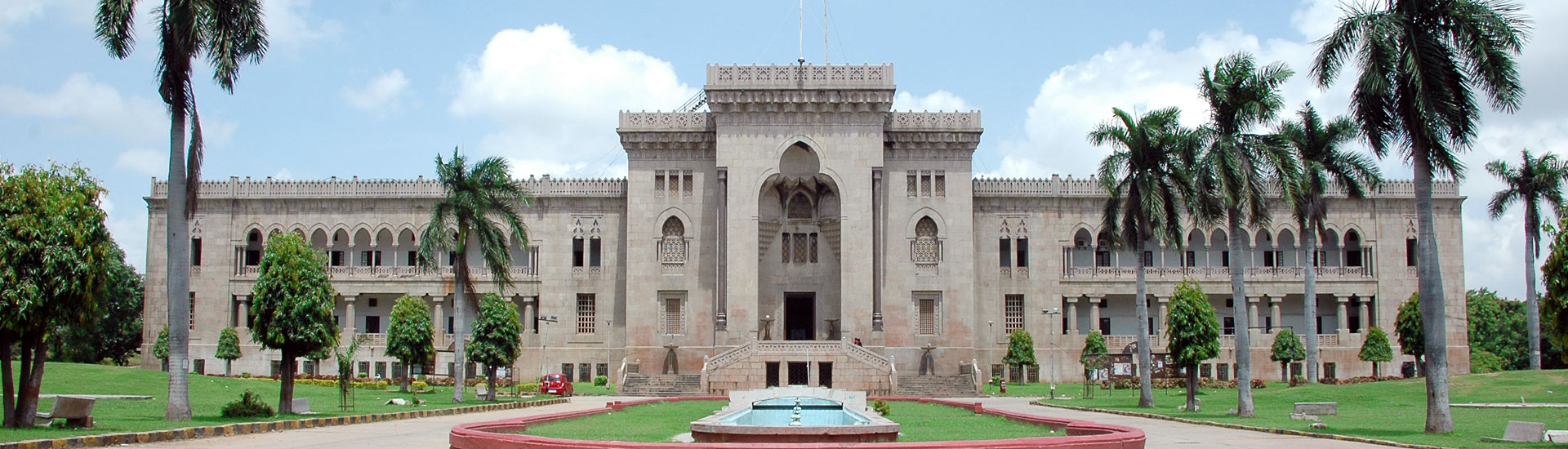
Ph.D. in Botany from Osmania University: Eligibility, Entrance Exam, Fee Structure, Admission Process, Subjects, Research Areas, Syllabus, Scholarship & Career Scope
Introduction about Ph.D. in Botany at Osmania University
Osmania University, a premier institution in Hyderabad, offers a rigorous Ph.D. program in Botany that blends classical plant science with cutting‑edge biotechnology, ecology, and molecular biology. The program is designed for research‑driven professionals aiming to contribute to sustainable agriculture, climate‑resilient ecosystems, and innovative plant‑based solutions. With state‑of‑the‑art laboratories, a rich herbarium, and collaborations with leading research centres, Osmania University nurtures scholars who aspire to become thought leaders in plant sciences.
Ph.D Admission 2026-2027 & Writing Support Services by Shiksha Research
Eligibility Criteria for Ph.D. in Botany at Osmania University
To qualify for the doctoral programme, candidates must satisfy the following criteria:
- A Master’s degree (M.Sc.) in Botany, Plant Biology, Agricultural Sciences or a related discipline with a minimum of 55% aggregate (or 5.0 CGPA on a 10‑point scale).
- National Eligibility Test (NET) qualification in Botany or an equivalent UGC‑approved test (e.g., GATE, CSIR).
- For candidates holding a Ph.D. in a closely related field, an internal eligibility assessment may replace NET.
- Proficiency in English (both written and spoken) to facilitate research dissemination.
Entrance Exam for Ph.D. in Botany at Osmania University
The university conducts a two‑stage selection process:
- Written Test: A 60‑minute objective paper covering Plant Physiology, Genetics, Systematics, Ecology, and Research Methodology.
- Interview & Presentation: Candidates present a research proposal, followed by a viva‑voce to assess depth of knowledge, analytical skills, and suitability for advanced research.
Candidates who have cleared NET/GATE are exempted from the written test but must still attend the interview.
Fee Structure for Ph.D. in Botany at Osmania University
| Fee Component | Annual Amount (INR) | Notes |
|---|---|---|
| Admission & Registration Fee | 5,000 | One‑time payment at the time of admission |
| Tuition & Laboratory Charges | 12,000 | Includes access to labs, herbarium, and digital databases |
| Examination & Evaluation Fee | 3,500 | Covering internal assessments and thesis evaluation |
| Library & Resource Fee | 1,500 | Unlimited access to journals and e‑resources |
| Miscellaneous (Printing, Field Work, etc.) | 2,000 | Estimated yearly cost |
| Total Approximate Annual Fee | 24,000 |
PhD Admission Assistance – Let experts guide you through every step of the application, from document preparation to interview coaching.
Admission Process for Ph.D. in Botany at Osmania University
- Online Application: Submit the application through the university’s portal with scanned copies of academic certificates.
- Upload Supporting Documents: Include NET/GATE scorecard, research proposal, and letters of recommendation.
- Pay the Application Fee: A non‑refundable fee of INR 2,000 is required.
- Selection Process: Appear for the written test (if applicable) followed by the interview.
- Final Admission: Receive the admission letter, register, and commence coursework and research.
Ph.D. Subjects and Specializations in Botany at Osmania University
The doctoral programme offers a wide range of specializations, allowing candidates to align their research with global trends:
- Plant Molecular Genetics and Biotechnology
- Plant Ecology and Conservation
- Plant Pathology and Disease Management
- Phytochemistry and Medicinal Plants
- Crop Physiology and Stress Biology
- Systematics, Taxonomy, and Evolutionary Botany
Research Areas in Botany at Osmania University
Faculty members and research groups focus on several high‑impact domains:
- Genetic engineering for drought tolerance
- Conservation of endemic flora of the Deccan Plateau
- Bioprospecting of traditional medicinal plants
- Integrated pest management using botanical extracts
- Carbon sequestration and plant-soil interactions
- Omics approaches (genomics, transcriptomics, metabolomics) in plant research
Documents Required for Ph.D. in Botany at Osmania University
| Document | Format | Remarks |
|---|---|---|
| Application Form (online) | PDF/Online entry | Completed with accurate personal details |
| Academic Transcripts (M.Sc.) | Scanned PDF (color) | Must be attested by the issuing university |
| NET/GATE Scorecard | Original scorecard or official copy | |
| Research Proposal (5–7 pages) | DOCX or PDF | Include objectives, methodology, and expected outcomes |
| Letters of Recommendation (2) | From professors or industry experts | |
| Identity Proof (Aadhaar / Passport) | Valid government‑issued ID |
Osmania University Ph.D. Syllabus for Botany
The syllabus is organized into three phases: Coursework, Research & Thesis Writing.
- Coursework (Year 1): Advanced Plant Physiology, Molecular Botany, Statistical Methods for Biological Research, Research Ethics, and a Seminar series.
- Comprehensive Exams (End of Year 1): Written test covering all core modules.
- Research Phase (Years 2–4): Laboratory work, field studies, data analysis, and regular progress reviews.
- Thesis Submission & Defense: Compilation of original research, publication in peer‑reviewed journals, and oral defense before a panel of experts.
How To Apply for Ph.D. in Botany at Osmania University
Follow these step‑by‑step instructions to ensure a smooth application:
- Visit the official Osmania University admissions portal and register a new account.
- Fill in the personal and academic details, and upload the required documents (see the Documents Required table).
- Pay the non‑refundable application fee via net banking or credit/debit card.
- Submit the completed application and note the application reference number.
- Monitor your email for the call‑letter for the written test or interview.
- Prepare for the written test using past papers and recommended reading lists.
- Attend the interview, present your research proposal, and answer faculty questions confidently.
- Upon selection, complete the registration formalities, pay the admission fee, and enroll in the first‑year coursework.
Career Scope and Job Opportunities After Ph.D. in Botany from Osmania University
Graduates enjoy a versatile career path across academia, industry, and government sectors:
- Academic Positions: Assistant Professor, Associate Professor, or Research Fellow at universities and research institutes.
- R&D in Agribusiness: Roles in seed companies, agro‑chemical firms, and biotechnology startups focusing on crop improvement.
- Government Services: Scientist positions in CSIR, ICAR, and state agricultural departments.
- Environmental Consulting: Ecologists, biodiversity managers, and conservation planners for NGOs and private consultancies.
- Intellectual Property: Patent analyst or consultant for plant‑based inventions (link with Patent Filing and Support Services).
- Science Communication: Technical writers, journal editors, and policy advisors.
Scholarship for Ph.D. in Botany at Osmania University
The university, in partnership with the UGC and various research councils, offers several financial aids:
- UGC Junior Research Fellowship (JRF): Annual stipend of INR 31,000 plus contingency grant.
- University Merit Scholarships: Based on academic performance and research proposal quality.
- Industry‑Sponsored Projects: Funding for collaborative research with agro‑technology firms.
- External Grants: Opportunities to apply for fellowships from CSIR, DST, and international bodies.
Need assistance with writing a winning proposal? Explore PhD Topic Selection and Proposal Assistance for expert guidance.








