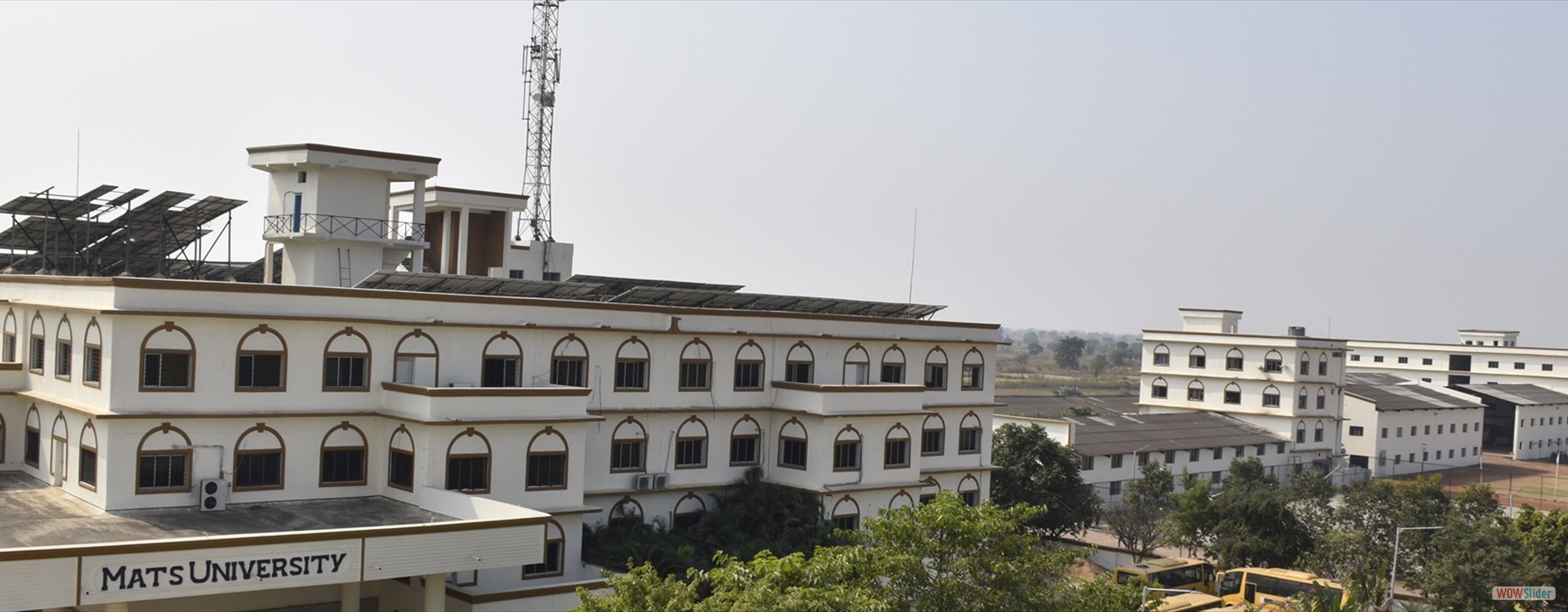
Ph.D. in Built Environment from MATS University: Eligibility, Entrance Exam, Fee Structure, Admission Process, Subjects, Research Areas, Syllabus, Scholarship & Career Scope
Introduction about Ph.D. in Built Environment at MATS University
The Doctor of Philosophy (Ph.D.) in Built Environment at MATS University is a research‑intensive program designed for professionals seeking to become thought leaders in urban planning, sustainable architecture, construction management, and related disciplines. The curriculum blends advanced theoretical frameworks with practical research methodologies, empowering candidates to shape resilient cities and innovative infrastructure systems.
Ph.D Admission 2026-2027 & Writing Support Services by Shiksha Research
Eligibility Criteria for Ph.D. in Built Environment at MATS University
- A Master’s degree (M.Sc., M.Tech., M.Arch., or equivalent) with a minimum of 55% aggregate marks (or CGPA 6.0/10).
- Relevant research background in architecture, civil engineering, urban planning, environmental design, or related fields.
- Qualifying national or university‑level entrance test scores (if applicable).
- Proficiency in English (IELTS ≥ 6.0 or TOEFL ≥ 80 for international candidates).
- Clear academic record with no pending disciplinary actions.
Entrance Exam for Ph.D. in Built Environment at MATS University
The university conducts a specialized entrance examination to assess candidate’s research aptitude, analytical skills, and subject expertise. The exam comprises:
- Objective section – Quantitative & verbal reasoning.
- Subject‑specific section – Topics covering urban theory, sustainable design, construction technology, and research methodology.
- Interview – A panel interview to evaluate research proposal feasibility and motivation.
Candidates may also be admitted based on national eligibility tests (NET, GATE, UGC‑CSIR) exempting the university‑level exam.
Fee Structure for Ph.D. in Built Environment at MATS University
| Component | Annual Fee (INR) | Notes |
|---|---|---|
| Tuition & Examination Fee | 45,000 | Includes access to labs and libraries. |
| Research Guidance & Project Materials | 20,000 | Supplies, software licences, and field‑work costs. |
| Administrative & Registration Charges | 5,000 | One‑time payment at admission. |
| Scholarship Deduction (if applicable) | -15,000 | Based on merit or financial aid. |
| Total Approximate Annual Cost | 55,000 | Subject to change as per university notification. |
Admission Process for Ph.D. in Built Environment at MATS University
- Online Application: Submit the digital application form via the university portal.
- Document Upload: Attach academic transcripts, degree certificates, research proposal, and proof of English proficiency.
- Entrance Examination: Appear for the university‑level test or submit qualifying national test scores.
- Interview & Proposal Review: Appear for a personal interview and have your research proposal evaluated by the department faculty.
- Final Admission Offer: Receive the official admission letter with fee details and scholarship information.
- Enrollment: Complete fee payment, submit original documents for verification, and register for the first semester.
Ph.D. Subjects and Specializations in Built Environment at MATS University
- Urban Planning and Policy Analysis
- Sustainable Architecture and Green Building
- Construction Management and Project Engineering
- Environmental Impact Assessment
- Smart Cities and Digital Infrastructure
- Heritage Conservation and Adaptive Reuse
Research Areas in Built Environment at MATS University
Faculty and doctoral candidates collaborate on cutting‑edge research, including:
- Climate‑responsive urban design.
- Renewable energy integration in built structures.
- Resilient infrastructure for disaster‑prone regions.
- Life‑cycle assessment of construction materials.
- IoT‑enabled smart building systems.
- Socio‑economic impacts of urban regeneration.
Documents Required for Ph.D. in Built Environment at MATS University
| Document | Format | Remarks |
|---|---|---|
| Application Form | PDF (online) | Completed and signed. |
| Academic Transcripts & Degree Certificates | Scanned PDF | All qualifying degrees. |
| Research Proposal (5‑10 pages) | Clearly defined objectives and methodology. | |
| Curriculum Vitae | Professional experience and publications. | |
| English Proficiency Certificate | IELTS/TOEFL (if required). | |
| Entrance Exam Scorecard | University test or NET/GATE score. |
MATS University Ph.D. Syllabus for Built Environment
The syllabus is structured into three phases:
- Phase I – Core Foundations (Year 1): Research methodology, advanced statistics, sustainability theory, and ethics in research.
- Phase II – Specialized Modules (Year 2): Electives based on chosen specialization (e.g., Smart Cities, Green Architecture).
- Phase III – Thesis Development (Year 3‑4): Original research, data collection, analysis, publication, and defense.
How To Apply for Ph.D. in Built Environment at MATS University
Prospective candidates should follow these steps:
- Visit the official MATS University portal and navigate to the "Ph.D. Admissions" section.
- Create a user account and fill in personal and academic details.
- Upload the required documents listed in the Documents Required section.
- Pay the non‑refundable application fee of INR 2,000 through the secured payment gateway.
- Submit the application and note the reference number for future correspondence.
- Prepare for the entrance exam (if applicable) and schedule the interview.
- Upon receiving the admission offer, complete the enrollment formalities within the stipulated deadline.
Career Scope and Job Opportunities After Ph.D. in Built Environment from MATS University
Graduates enjoy a broad spectrum of career pathways, such as:
- Senior Urban Planner or Policy Analyst in government ministries.
- Director of Sustainable Design at leading architectural firms.
- Research Scientist in national laboratories or international think‑tanks.
- Professor or Dean in universities offering built environment programs.
- Consultant for smart city projects, ESG compliance, and climate‑resilient infrastructure.
- Entrepreneurial ventures in green construction technologies.
According to industry reports, the demand for Ph.D. holders in the built environment sector is projected to grow by 12% annually over the next decade.
Scholarship for Ph.D. in Built Environment at MATS University
MATS University provides merit‑based and need‑based scholarships covering up to 30% of tuition fees. Additional funding options include:
- UGC‑SERB Research Fellowships.
- Industry‑sponsored project grants.
- International scholarships (e.g., Commonwealth, DAAD).
Eligibility for scholarships requires a minimum of 70% academic performance and a robust research proposal.
FAQs Regarding Ph.D. in Built Environment at MATS University
- Q1: Can I pursue the Ph.D. part‑time while working?
- Yes. MATS University offers a flexible part‑time mode with evening seminars and remote supervision.
- Q2: How long does it take to complete the Ph.D.?
- The typical duration is 4 years, but exceptional candidates may finish in 3 years.
- Q3: Is there any provision for publishing my research during the program?
- Students are encouraged to publish in indexed journals; the university provides open‑access support and funding for conference participation.
- Q4: What is the minimum qualifying score in the entrance exam?
- A candidate must secure at least 50% overall and 55% in the subject‑specific section.
- Q5: Are there collaborations with industry for doctoral research?
- Yes, the Built Environment department maintains MoUs with leading construction firms, real‑estate developers, and smart‑city initiatives for joint research projects.
Thesis and Dissertation Writing Services
Research Data Analysis Services
Research Paper Writing Services
Questionnaire Design and Development








