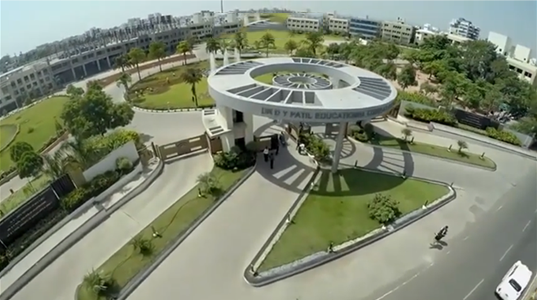
Introduction about Ph.D. in Cell and Tissue Engineering at D Y Patil International University
The pursuit of groundbreaking discoveries in regenerative medicine, biomaterials, and cellular therapeutics begins with a rigorous doctoral program. D Y Patil International University (DYPIU) offers a Ph.D. in Cell and Tissue Engineering that blends interdisciplinary research, state‑of‑the‑art laboratories, and mentorship from internationally acclaimed faculty. Designed for professionals aiming to become thought leaders, the program empowers scholars to translate laboratory insights into real‑world healthcare solutions, fostering a culture of innovation and societal impact.
Eligibility Criteria for Ph.D. in Cell and Tissue Engineering at D Y Patil International University
Candidates must possess a Master’s degree (M.Sc., M.Tech., M.Pharm., or equivalent) in Biotechnology, Biomedical Engineering, Molecular Biology, or a closely related discipline with a minimum aggregate of 55% (or CGPA 6.0/10). Applicants with a background in engineering, life sciences, or medical sciences are encouraged. Additionally, a valid GATE or NET score in a relevant subject can strengthen the application, though it is not mandatory. International students must meet the university’s English proficiency standards (IELTS ≥ 6.5 or TOEFL ≥ 80).
Entrance Exam for Ph.D. in Cell and Tissue Engineering at D Y Patil International University
DYPIU conducts its own entrance examination comprising three parts: (1) a written test assessing core concepts in cell biology, tissue mechanics, and biofabrication; (2) a research aptitude section evaluating critical thinking and literature review skills; and (3) an interview with subject experts to gauge motivation and research alignment. The exam is held twice a year, and candidates receive detailed feedback within two weeks.
Fee Structure for Ph.D. in Cell and Tissue Engineering at D Y Patil International University
| Component | Indian Residents (INR) | International Residents (USD) |
|---|---|---|
| Application Processing Fee | ₹2,500 | $100 |
| Annual Tuition & Lab Charges | ₹95,000 | $3,800 |
| Research Materials & Consumables (estimated) | ₹30,000 | $1,200 |
| Annual Examination & Evaluation | ₹10,000 | $400 |
| Total per Year | ₹1,37,500 | $5,500 |
The total program duration is typically 3–4 years, and fee payment can be made in two installments per academic year. Scholarship opportunities and research grants can offset a substantial portion of these costs.
Admission Process for Ph.D. in Cell and Tissue Engineering at D Y Patil International University
- Complete the online application form and upload all supporting documents.
- Pay the non‑refundable processing fee.
- Qualify for the university entrance test or submit a valid GATE/NET score.
- Participate in the interview and discuss your proposed research topic with faculty.
- Receive the admission offer letter and enroll for the first semester.
Ph.D. Subjects and Specializations in Cell and Tissue Engineering at D Y Patil International University
The doctoral curriculum offers multiple specialization tracks, allowing candidates to tailor their research focus:
- Stem Cell Biology and Regenerative Medicine
- Biomaterials Design and Nanofabrication
- 3D Bioprinting and Tissue Constructs
- Cellular Mechanobiology
- Drug Delivery Systems using Tissue Models
- Computational Modeling of Cell‑Matrix Interactions
Research Areas in Cell and Tissue Engineering at D Y Patil International University
Faculty members lead cutting‑edge projects in:
- Organ‑on‑chip platforms for disease modeling.
- Engineered cardiac patches for myocardial regeneration.
- Smart hydrogels for controlled release of growth factors.
- Gene‑edited stem cell lines for personalized therapies.
- Biomechanical stimulation of tissue scaffolds.
- Artificial extracellular matrices for tumor microenvironment studies.
To support research activities, the university collaborates with leading biotech firms and offers access to Research Data Analysis Services that streamline large‑scale omics data interpretation.
Documents Required for Ph.D. in Cell and Tissue Engineering at D Y Patil International University
| Document | Details |
|---|---|
| Academic Transcripts | Certified copies of Bachelor’s and Master’s degree marksheets. |
| Entrance Exam Scorecard | GATE/NET scorecard or university entrance test result. |
| Research Proposal | 1500‑word outline of intended research, objectives, and methodology. |
| Curriculum Vitae (CV) | Professional experience, publications, patents, and presentations. |
| Letters of Recommendation | Two academic references from supervisors or senior researchers. |
| English Proficiency Proof | IELTS/TOEFL scores for non‑native speakers. |
D Y Patil International University Ph.D. Syllabus for Cell and Tissue Engineering
The syllabus blends core coursework, lab rotations, and dissertation research:
- Advanced Cell Biology and Signal Transduction
- Principles of Tissue Engineering and Scaffold Design
- Biomaterials Characterization Techniques
- Regulatory Aspects of Regenerative Therapies
- Statistical Methods for Biomedical Research
- Ethics and Intellectual Property in Biotechnology
- Doctoral Seminar Series (guest lectures & industry talks)
How To Apply for Ph.D. in Cell and Tissue Engineering at D Y Patil International University
Prospective scholars should follow these steps:
- Visit the official university portal and click on “Apply for Ph.D.”
- Register with a valid email address and create a password.
- Fill in personal, academic, and professional details.
- Upload scanned copies of all required documents (PDF, max 2 MB each).
- Pay the processing fee through the secure payment gateway.
- Submit the application and note the generated reference number.
- Monitor the email inbox for entrance test schedules and interview invitations.
For assistance in preparing a compelling research proposal, consider leveraging Thesis and Dissertation Writing Services.
Career Scope and Job Opportunities After Ph.D. in Cell and Tissue Engineering from D Y Patil International University
Graduates emerge as highly sought‑after experts in both academia and industry. Typical career pathways include:
- Assistant/Associate Professor or Principal Investigator in top‑tier universities.
- R&D Scientist in biotech, pharmaceutical, and medical device companies.
- Lead Scientist for tissue‑engineered product development.
- Regulatory affairs specialist focusing on cellular therapeutics.
- Consultant for translational research and technology transfer.
- Entrepreneur launching startups in regenerative medicine.
To enhance publication impact, many alumni use Research Paper Writing Services for manuscript preparation and journal submission.
Scholarship for Ph.D. in Cell and Tissue Engineering at D Y Patil International University
DYPIU offers merit‑based scholarships covering up to 75% of tuition fees for candidates with outstanding academic records. Additionally, industry‑sponsored fellowships are available for research projects aligned with corporate partners. Female scholars can apply for the “Women in STEM” grant, which includes a monthly stipend and travel allowance for conferences.
FAQs Regarding Ph.D. in Cell and Tissue Engineering at D Y Patil International University
- Q: What is the typical duration of the Ph.D. program?
- A: The program usually spans 3‑4 years, depending on the progress of the research work.
- Q: Can I pursue the degree part‑time while working?
- A: Yes, the university offers a flexible part‑time option with evening lab access and extended submission deadlines.
- Q: Is there provision for publishing my research in high‑impact journals?
- A: Absolutely. The university maintains collaborations with leading journals and provides editorial support. For additional guidance, many students opt for Questionnaire Design and Development services to structure their surveys before manuscript preparation.
- Q: Are there opportunities for international exposure?
- A: Students can apply for joint‑supervision programs, exchange visits, and funded conferences across Europe, North America, and Asia.
- Q: How is the final evaluation conducted?
- A: Evaluation consists of a comprehensive thesis defense before a panel of experts, followed by a written viva‑voce.








