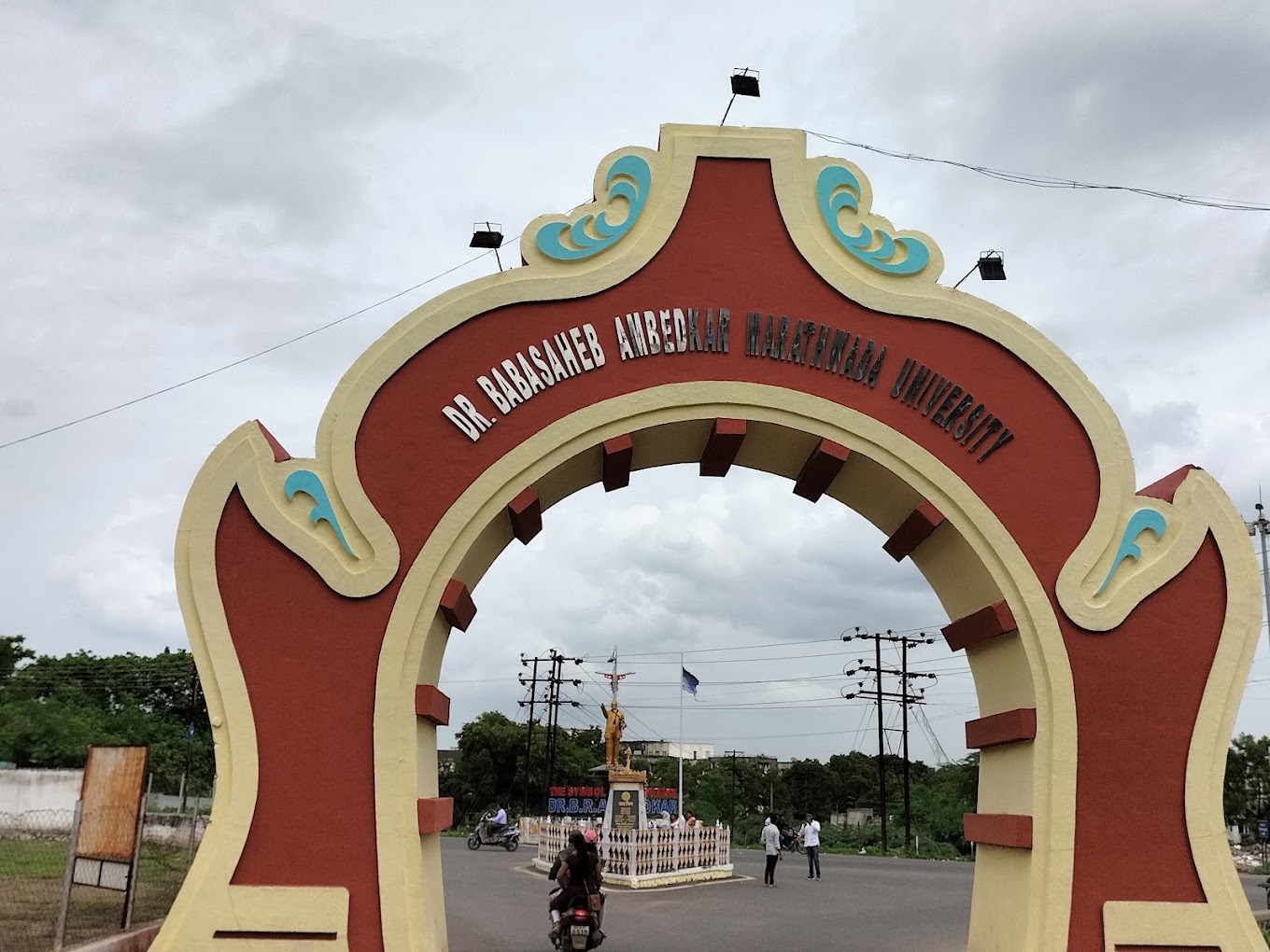
Introduction about Ph.D. in Chemistry at Dr. Babasaheb Ambedkar Marathwada University
Embarking on a Ph.D. in Chemistry at Dr. Babasaheb Ambedkar Marathwada University opens a gateway to cutting‑edge research, interdisciplinary collaboration, and a rewarding academic career. The university’s Department of Chemistry boasts state‑of‑the‑art laboratories, eminent faculty, and a vibrant research ecosystem that nurtures scientific curiosity and innovation. Whether you aim to explore organic synthesis, materials science, environmental chemistry, or computational modeling, this doctoral programme equips you with the expertise to become a leader in the chemical sciences.
Ph.D Admission 2026-2027 & Writing Support Services by Shiksha Research
Eligibility Criteria for Ph.D. in Chemistry at Dr. Babasaheb Ambedkar Marathwada University
Prospective candidates must satisfy the following minimum requirements:
- A Master’s degree (M.Sc. Chemistry, M.Sc. Applied Chemistry, or equivalent) with at least 55% marks (or 5.5 CGPA) from a recognized university.
- For candidates with a B.E./B.Tech in Chemical Engineering or related fields, a minimum of 60% marks is required.
- Qualified candidates must have cleared the university’s Ph.D. entrance examination or possess a valid NET/JRF or GATE score in Chemistry.
- English proficiency is essential; a minimum of 6.0 IELTS or equivalent is preferred for international applicants.
- Applicants should be able to demonstrate research aptitude through a statement of purpose and academic references.
Entrance Exam for Ph.D. in Chemistry at Dr. Babasaheb Ambedkar Marathwada University
The university conducts a comprehensive Ph.D. entrance test designed to evaluate both theoretical knowledge and analytical skills:
- Written Test – 100 multiple‑choice questions covering Physical Chemistry, Organic Chemistry, Inorganic Chemistry, and Analytical Chemistry. Duration: 2 hours.
- Viva‑Voce – Candidates who clear the written test attend an interview with the department’s faculty to assess research proposal, motivation, and subject mastery.
- Applicants holding a valid NET/JRF or GATE score are exempted from the written test but must appear for the viva‑voce.
Preparation resources such as past question papers, topic‑wise study guides, and subject coaching can significantly boost success rates.
Fee Structure for Ph.D. in Chemistry at Dr. Babasaheb Ambedkar Marathwada University
| Fee Component | Amount (INR) | Frequency |
|---|---|---|
| Application Processing Fee | 1,500 | One‑time |
| Registration & Tuition Fee | 25,000 | Per Semester |
| Laboratory & Equipment Charges | 8,000 | Per Semester |
| Library & Digital Resources | 2,500 | Per Semester |
| Examination & Evaluation Fee | 3,000 | Per Semester |
| Annual Student Services Fee | 4,000 | Per Year |
Note: Scholarships, fellowships, and research grants can offset a substantial portion of the above fees.
Admission Process for Ph.D. in Chemistry at Dr. Babasaheb Ambedkar Marathwada University
The admission journey is streamlined into distinct phases:
- Online Application – Submit the completed form via the university’s portal, upload scanned documents, and pay the processing fee.
- Document Verification – The admissions office verifies academic transcripts, degree certificates, and qualifying exam scores.
- Entrance Examination – Appear for the written test (or submit NET/JRF score) as per the announced schedule.
- Interview & Proposal Review – Qualified candidates present a research proposal and undergo a faculty interview.
- Final Selection & Offer Letter – Successful candidates receive an admission letter outlining registration deadlines and fee payment instructions.
- Enrollment – Complete registration, attend the orientation program, and commence research under the guidance of a designated supervisor.
For seamless navigation through this process, many aspirants opt for professional PhD Admission Assistance to avoid common pitfalls.
Ph.D. Subjects and Specializations in Chemistry at Dr. Babasaheb Ambedkar Marathwada University
The programme offers a wide array of specializations, allowing candidates to tailor their research to emerging scientific challenges:
- Organic Synthesis and Medicinal Chemistry
- Physical Chemistry and Molecular Spectroscopy
- Inorganic Materials and Coordination Chemistry
- Analytical Chemistry and Environmental Monitoring
- Polymer Chemistry and Nanomaterials
- Theoretical and Computational Chemistry
- Biochemistry and Enzymology
Research Areas in Chemistry at Dr. Babasaheb Ambedkar Marathwada University
Faculty members are actively engaged in high‑impact research across several domains:
| Research Domain | Key Projects | Industry Collaboration |
|---|---|---|
| Renewable Energy Materials | Development of metal‑organic frameworks for hydrogen storage. | Partnership with Indian Oil Corporation. |
| Green Chemistry | Design of biodegradable polymers using plant‑based monomers. | Collaboration with Tata Chemicals. |
| Pharmaceutical Chemistry | Synthesis of novel anticancer agents. | Joint research with Sun Pharma. |
| Environmental Toxicology | Trace metal analysis in water bodies. | Support from the Maharashtra Pollution Control Board. |
| Computational Modelling | Quantum chemical simulations of reaction mechanisms. | Funding from the Department of Science & Technology. |
Documents Required for Ph.D. in Chemistry at Dr. Babasaheb Ambedkar Marathwada University
| Document | Details |
|---|---|
| Academic Transcripts | Certified copies of B.Sc. and M.Sc. mark sheets. |
| Degree Certificates | Original or notarized copies of bachelor's and master's degrees. |
| Qualifying Exam Scorecard | NET/JRF/GATE scorecard (if applicable). |
| Research Proposal | 2–3 page document outlining objectives, methodology, and expected outcomes. |
| Curriculum Vitae (CV) | Academic CV highlighting publications, projects, and awards. |
| Letters of Recommendation | Two academic referees (PDF format). |
| Identity Proof | Aadhaar card, passport, or driver’s license. |
| Passport‑Size Photograph | Recent color photograph (4×6 cm). |
Dr. Babasaheb Ambedkar Marathwada University Ph.D. Syllabus for Chemistry
The syllabus is structured to cover foundational concepts and advanced topics, ensuring a robust knowledge base for original research:
- Core Modules – Physical Chemistry, Organic Chemistry, Inorganic Chemistry, Analytical Chemistry.
- Advanced Electives – Spectroscopic Techniques, Computational Chemistry, Materials Science, Environmental Chemistry.
- Research Methodology – Literature review, experimental design, data analysis, scientific writing.
- Seminars & Workshops – Presentation skills, ethics in research, patent filing basics.
- Thesis Submission – Compilation of research findings, peer‑reviewed publications, and defense preparation.
How To Apply for Ph.D. in Chemistry at Dr. Babasaheb Ambedkar Marathwada University
Follow these step‑by‑step instructions to submit a successful application:
- Visit the official university admissions portal and create a user account.
- Fill in personal, academic, and contact details in the online application form.
- Upload scanned copies of all required documents (as listed above) in PDF format.
- Pay the non‑refundable processing fee via net banking or UPI.
- Submit the completed application before the deadline (usually 30 days prior to the entrance exam).
- Monitor your email for admit card, exam schedule, and further instructions.
- After clearing the entrance test, upload the interview invitation and confirm attendance.
- Upon selection, complete the enrollment formalities and register for the first semester.
If you need assistance fine‑tuning your research proposal or polishing your academic writing, consider a professional Editing and Proofreading Services to ensure clarity and impact.
Career Scope and Job Opportunities After Ph.D. in Chemistry from Dr. Babasaheb Ambedkar Marathwada University
A doctorate in Chemistry equips you with versatile skills applicable across academia, industry, and government sectors:
- Academic Positions – Assistant Professor








