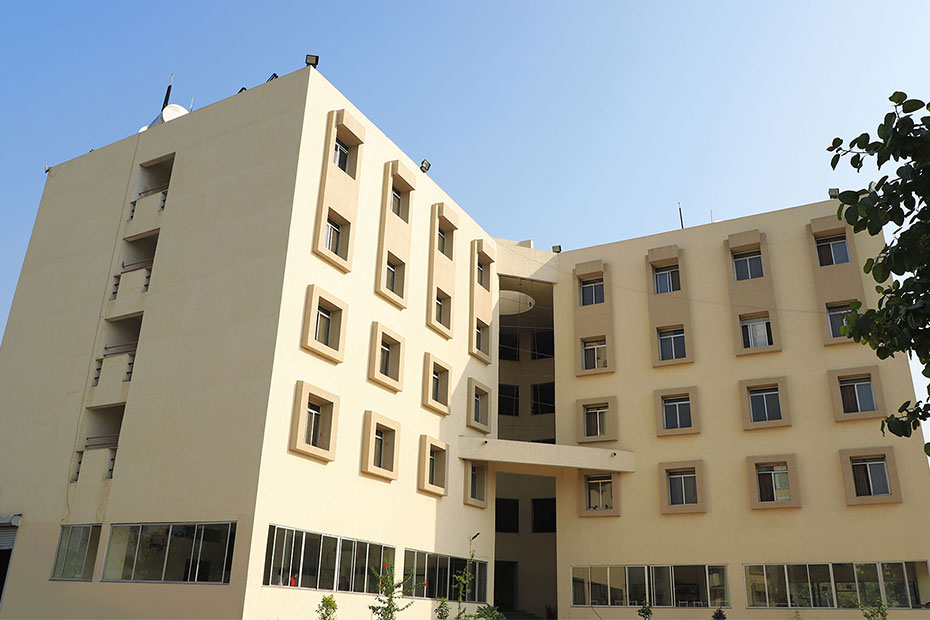
Introduction about Ph.D. in Chemistry at Indus University
Embarking on a Ph.D. in Chemistry at Indus University is more than just an academic pursuit; it is a commitment to pioneering discovery and contributing to the global scientific community. Nestled in the vibrant educational hub of Ahmedabad, Indus University has established itself as a premier destination for higher education, particularly for professionals seeking to push the boundaries of chemical sciences. The Ph.D. program is designed to foster critical thinking, technical proficiency, and innovative research that addresses real-world challenges in fields like sustainability, healthcare, and material science. To achieve this level of excellence, many scholars also explore Honorary Doctorate Programs to recognize lifetime achievements in leadership and research.
At Indus University, the Doctoral program in Chemistry provides an intellectually stimulating environment where students work alongside seasoned mentors. The university?s state-of-the-art laboratories and collaborative ecosystem ensure that your research journey is backed by the resources necessary for success. Whether you are aiming for high-impact journals or looking to revolutionize industrial processes, the foundation laid here serves as a catalyst for your professional evolution.
Ph.D Admission 2026-2027 & Writing Support Services by Shiksha Research
Eligibility Criteria for Ph.D. in Chemistry at Indus University
To maintain the high standards of its research output, Indus University follows a rigorous selection criterion for its Ph.D. applicants. Aspiring candidates must ensure they meet the following benchmarks before applying:
- Master?s Degree: Candidates must hold a Master?s degree (M.Sc.) in Chemistry or a related discipline from a UGC-recognized university.
- Minimum Marks: A minimum of 55% aggregate marks (or an equivalent grade 'B' in the UGC 7-point scale) is required. A relaxation of 5% is typically provided to SC/ST/OBC (non-creamy layer) and PwD candidates.
- Professional Background: While not mandatory, candidates with industrial experience or previous research publications are highly encouraged to apply, as their practical insights add significant value to the research cohort.
- Consistently Strong Academic Record: From secondary education through post-graduation, a history of academic diligence is preferred.
Entrance Exam for Ph.D. in Chemistry at Indus University
The gateway to the Ph.D. program is the Indus University Research Aptitude Test (IURAT). This entrance examination is specifically designed to assess a candidate's aptitude for research and their depth of knowledge in the field of chemistry. The exam structure generally covers:
- Research Methodology: Covering qualitative and quantitative research techniques, data interpretation, and ethics.
- Subject-Specific Content: Comprehensive questions spanning Organic, Inorganic, Physical, and Analytical Chemistry at the postgraduate level.
Exemptions: Candidates who have successfully cleared national-level examinations such as UGC-NET (including JRF), CSIR-NET (including JRF), GATE, or SLET are generally exempted from the university-specific entrance exam and may proceed directly to the interview round.
Fee Structure for Ph.D. in Chemistry at Indus University
Indus University offers a transparent and competitive fee structure designed to support long-term research without financial ambiguity. Below is an overview of the estimated costs involved in the Ph.D. journey:
| Component | Estimated Cost (INR) | Frequency |
|---|---|---|
| Application & Registration Fee | ?1,500 - ?2,500 | One-time |
| Admission/Enrollment Fee | ?10,000 - ?15,000 | One-time |
| Tuition Fee | ?40,000 - ?60,000 | Per Semester |
| Thesis Submission & Evaluation | ?15,000 - ?25,000 | At the time of submission |
| Caution Deposit (Refundable) | ?5,000 - ?10,000 | One-time |
| Other Charges (Library, IT) | ?5,000 - ?8,000 | Per Annum |
Note: The fees mentioned are indicative and subject to university amendments. Students are advised to check the official university portal for the latest updates.
Admission Process for Ph.D. in Chemistry at Indus University
The admission journey at Indus University is streamlined to identify the most passionate and capable minds. It follows a system recognized for its integrity and focus on research potential. If you navigate through the complexities of enrollment, seeking professional PhD Admission Assistance can significantly simplify the documentation and preparation steps.
- Online Application: Interested candidates must fill out the application form available on the official Indus University website, uploading all necessary transcripts.
- Entrance Test (IURAT): Shortlisted candidates appear for the entrance test.
- Interview & Presentation: Successful test candidates (and those exempted) are invited for a personal interview. Here, you are expected to discuss your research interests and a tentative research plan before a departmental committee.
- Merit List & Enrollment: Based on the combined performance in the entrance test (50% weightage) and the interview (50% weightage), a merit list is declared.
- Guide Allocation: Upon admission, scholars are paired with a research supervisor whose expertise aligns with the student?s proposed topic.
Ph.D. Subjects and Specializations in Chemistry at Indus University
Chemistry is a vast ocean, and Indus University allows scholars to dive deep into specialized niches. The doctoral program encourages interdisciplinary approaches, ensuring that your work remains relevant to modern industrial and environmental needs. Popular specializations include:
- Organic Chemistry: Focusing on synthetic methodologies, natural products, and medicinal chemistry.
- Inorganic Chemistry: Researching organometallic compounds, catalysis, and coordination chemistry.
- Physical Chemistry: Exploring thermodynamics, kinetics, and computational modeling.
- Analytical Chemistry: Mastering advanced instrumentation for trace analysis and material characterization.
- Green Chemistry: Developing sustainable chemical processes to minimize environmental hazards.
Research Areas in Chemistry at Indus University
Research at Indus University is characterized by its rigor and societal impact. The university provides a fertile ground for exploring uncharted territories in chemical science. Choosing the right niche is critical for a successful career, and experts often recommend PhD Topic Selection and Proposal Assistance to ensure your research problem is viable and innovative.
Key research focus areas include:
- Nanomaterials and Nanotechnology: Synthesizing novel materials for electronics and biomedical applications.
- Drug Discovery and Pharmacology: Searching for new chemical entities for treating chronic diseases.
- Polymer Science: Developing biodegradable plastics and high-performance polymers.
- Environmental Chemistry: Focus on water purification and carbon capture technologies.
- Catalysis: Engineering new catalysts for efficient industrial transformations.
Furthermore, the university encourages scholars to protect their innovations through Patent Filing and Support Services, ensuring that intellectual property is legally secured during the research phase.
Documents Required for Ph.D. in Chemistry at Indus University
Preparation of a comprehensive application folder is essential for a smooth admission experience. Ensure you have the following documents ready:
- Educational Transcripts: Mark sheets and certificates from Class 10th through post-graduation.
- Provisional/Degree Certificates: Specifically for your Master?s and Bachelor?s degrees.
- Identity Proof: Aadhar Card, Passport, or Voter ID.
- Research Proposal: A brief write-up (Statement of Purpose) outlining your intended research area.
- Entrance Scorecards: NET/GATE/SLET certificates (if applicable).
- Experience Letters: If you are applying as a working professional.
- Passport-Sized Photographs: Recent color photographs as per the specified format.
- NOC: No Objection Certificate from the current employer (for part-time PhD candidates).
Indus University Ph.D. Syllabus for Chemistry
The Ph.D. journey starts with 'Coursework,' which is mandatory as per UGC guidelines. This phase ensures that the scholar possesses the foundational tools to conduct independent research. During this stage, maintaining high-quality academic writing is vital, and many students utilize Editing and Proofreading Services to refine their coursework assignments and preliminary reports.
The syllabus generally includes:
- Unit 1: Research Methodology: Ethics in research, literature survey techniques, citation styles, and intellectual property rights.
- Unit 2: Advanced Chemistry: In-depth study of modern chemical theories and recent breakthroughs in your chosen sub-discipline.
- Unit 3: Instrumentation Techniques: Practical training in NMR, FTIR, XRD, SEM, and HPLC analysis.
- Unit 4: Quantitative Techniques: Statistical software application and data modeling in chemistry research.
- Unit 5: Seminar & Literature Review: Critical analysis of existing research papers and presentation skills.
How To Apply for Ph.D. in Chemistry at Indus University
Applying to Indus University is a systematic process. Follow these steps to ensure your application is successful:
- Visit the Portal: Go to the official Indus University admission page.
- Registration: Create a user ID by providing your email and phone number.
- Fill out the Form: Enter academic details and choose 'Chemistry' as your department.
- Upload Documents: Ensure all scanned copies are clear and in the required file format.
- Payment: Pay the non-refundable application fee via credit card, debit card, or net banking.
- Submission: Review the form carefully before the final submission. Keep a copy of the acknowledgment for future reference.
Career Scope and Job Opportunities After Ph.D. in Chemistry from Indus University
A Ph.D. in Chemistry from Indus University opens doors to some of the most prestigious and lucrative career paths in science. The degree acts as a hallmark of expertise, empowering you to lead projects and mentor the next generation of scientists. For those aiming for high-impact careers, obtaining Research Publication Support during your PhD is essential to build a strong profile for global opportunities.
Key career avenues include:
- Academician: Professor or Lecturer in top-tier universities and colleges.
- R&D Scientist: Leading innovation in pharmaceutical, chemical, and petrochemical industries.
- Government Researcher: Career opportunities in organizations like CSIR, BARC, and ISRO.
- Quality Control Manager: Overseeing chemical standards in manufacturing plants.
- Environmental Consultant: Advising firms on sustainability and waste management.
- Scientific Writer/Editor: Crafting scientific content for journals and major research houses.
Scholarship for Ph.D. in Chemistry at Indus University
Indus University and the Indian government provide various avenues for financial aid to ensure that talented researchers are not hindered by financial constraints. Scholars can avail of:
- University Research Fellowships: Provided to meritorious full-time scholars based on their performance in the entrance test and interview.
- CSIR-JRF/UGC-JRF: Candidates who have cleared national fellowships receive monthly stipends and contingency grants directly from the government.
- Project Fellowships: If a scholar is working on a specific industry-funded project with their guide, they may receive a salary through the project budget.
- State Government Scholarships: Financial support for candidates belonging to specific reserved categories as per state norms.
FAQs Regarding Ph.D. in Chemistry at Indus University
1. Can I pursue a Ph.D. in Chemistry while working?
Yes, Indus University offers a part-time Ph.D. track for working professionals, provided they submit a No Objection Certificate (NOC) from their employer.
2. What is the typical duration of the Ph.D. program?
The minimum duration is 3 years, including coursework, and the maximum is usually 6 years. Extensions are granted only under exceptional circumstances.
3. Is the IURAT entrance exam difficult?
The exam is designed to test your core conceptual clarity. If you have a strong grasp of your Master?s curriculum and basic research methodology, you can qualify with diligent preparation.
4. Does the university provide lab facilities for advanced material testing?
Indus University boasts sophisticated lab facilities equipped with high-end analytical instruments like HPLC and Spectrometers, which are crucial for advanced chemical research.
5. How often can I publish my research findings?
Indus University encourages scholars to publish in high-indexed journals (Scopus, Web of Science, etc.). Most students aim for at least two major publications before their final thesis submission.








