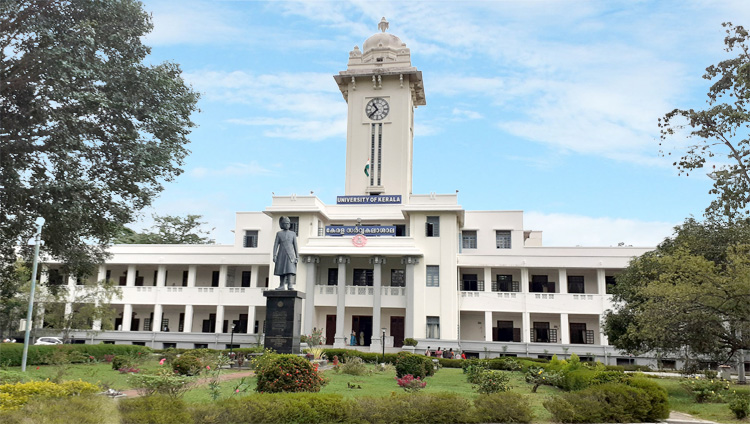
Introduction about Ph.D. in Chemistry at Kerala University
Kerala University, one of the oldest and most respected institutions in South India, offers a distinguished Ph.D. in Chemistry program designed for aspiring researchers, academicians, and industry specialists. The programme blends rigorous coursework with cutting?edge research, enabling candidates to explore molecular design, organic synthesis, material science, environmental chemistry, and more. By completing this doctorate, graduates become innovators who can drive scientific breakthroughs and elevate India?s research landscape.
Eligibility Criteria for Ph.D. in Chemistry at Kerala University
- Master?s degree (M.Sc., M.Phil., or equivalent) in Chemistry or a closely related discipline with a minimum of 55% aggregate (50% for SC/ST candidates).
- Valid GATE score in Chemistry (or related subjects) is highly preferred but not mandatory.
- Candidates must possess a valid score in the university?conducted entrance test or clear the interview stage.
- Foreign nationals must provide equivalence certificates from the Association of Indian Universities (AIU).
Entrance Exam for Ph.D. in Chemistry at Kerala University
The entrance assessment comprises two stages:
- Written Test: A 2?hour paper evaluating core concepts, analytical reasoning, and research aptitude.
- Interview & Presentation: Candidates present a research proposal and undergo a viva?voce conducted by the department faculty.
Preparation tips include revisiting undergraduate textbooks, practicing past papers, and staying updated with recent publications in major chemistry journals.
Fee Structure for Ph.D. in Chemistry at Kerala University
| Component | Annual Fee (INR) | Notes |
|---|---|---|
| Tuition & Laboratory Charges | 15,000 | Includes access to core labs and instrumentation. |
| Examination & Evaluation Fee | 5,000 | Paid once per semester. |
| Library & Resource Fee | 2,000 | Covers digital and physical resources. |
| Miscellaneous (Student Services) | 3,000 | Student?union, sports, and welfare activities. |
| Total Approximate Cost per Year | 25,000 | Subject to yearly revisions by the university. |
Admission Process for Ph.D. in Chemistry at Kerala University
The admission journey follows a systematic workflow:
- Online application submission through the university portal.
- Upload of academic transcripts, GATE score (if any), and research proposal.
- Payment of the non?refundable application fee.
- Shortlisting based on eligibility and proposal merit.
- Invitation for the entrance exam and subsequent interview.
- Final admission offer and enrollment.
For applicants seeking assistance with proposal formatting or document polishing, professional Editing and Proofreading Services can be invaluable.
Ph.D. Subjects and Specializations in Chemistry at Kerala University
- Organic Chemistry & Synthesis
- Inorganic Chemistry & Materials
- Physical Chemistry & Computational Modelling
- Analytical Chemistry & Instrumental Techniques
- Environmental Chemistry & Green Technologies
- Biophysical Chemistry & Molecular Interactions
Research Areas in Chemistry at Kerala University
Faculty members lead projects in high?impact domains such as:
- Nanomaterials for energy storage and conversion.
- Green synthetic pathways for pharmaceuticals.
- Advanced spectroscopy for biomolecular analysis.
- Computational drug design and molecular docking.
- Pollutant remediation and sustainable waste management.
- Quantum chemical simulations of reaction mechanisms.
Documents Required for Ph.D. in Chemistry at Kerala University
| Document | Format | Remarks |
|---|---|---|
| Academic Transcripts (M.Sc./M.Phil.) | PDF (Scanned) | Original and attested copies. |
| GATE Score Card (if applicable) | Valid for the current admission cycle. | |
| Research Proposal (2,000?3,000 words) | DOCX | Include objectives, methodology, and expected outcomes. |
| Letter of Recommendation (2) | From academic supervisors or industry mentors. | |
| Identity Proof (Aadhaar/Passport) | Government?issued with photograph. | |
| Statement of Purpose | DOCX | Explain career goals and research interests. |
Applicants may also benefit from PhD Topic Selection and Proposal Assistance to craft compelling research outlines.
Kerala University Ph.D. Syllabus for Chemistry
The syllabus is split into two phases:
- Coursework (First Year): Advanced Physical Chemistry, Modern Spectroscopy, Computational Chemistry, Research Methodology, and a Seminar series.
- Research Phase (Second & Third Year): Laboratory work, data analysis, publication of research papers, and thesis writing.
How To Apply for Ph.D. in Chemistry at Kerala University
Follow these step?by?step instructions:
- Visit the official Kerala University admissions portal.
- Create a new user account and verify your email.
- Fill in personal details and select ?Ph.D. ? Chemistry?.
- Upload the required documents (refer to the Documents table).
- Pay the application fee via net banking or credit card.
- Submit the application and note the registration number.
- Monitor your email for exam invitations and interview schedules.
For a seamless experience, consider using PhD Admission Assistance services.
Career Scope and Job Opportunities After Ph.D. in Chemistry from Kerala University
A doctorate in Chemistry opens doors to diverse career paths:
- Academia: Lecturer, Assistant Professor, or Research Faculty in universities and colleges.
- Industry R&D: Senior scientist roles in pharmaceuticals, agro?chemicals, petrochemicals, and material science firms.
- Government & Public Sector: Positions in CSIR, DST, DRDO, and state research councils.
- Entrepreneurship: Start?ups focused on green chemistry, nano?technology, or analytical services.
- Intellectual Property: Patent analyst or consultant for chemical inventions.
To protect innovations, candidates can leverage Patent Filing and Support Services for guidance on patentability and filing procedures.
Scholarship for Ph.D. in Chemistry at Kerala University
The university, in partnership with government agencies and private firms, offers several financial aid options:
- UGC Junior Research Fellowship (JRF): Monthly stipend of INR 31,000 plus contingency grants.
- Kerala State Council of Science, Technology & Environment (KSCSTE) Scholarship: Research grant up to INR 2 lakh per annum.
- Industry?Sponsored Fellowships: Companies like Indian Oil, Tata Chemicals, and others sponsor projects with stipends and lab resources.
- Merit?Based Scholarships: Awarded to candidates with exceptional academic records (above 75%).
FAQs Regarding Ph.D. in Chemistry at Kerala University
- 1. How long does it take to complete the Ph.D.?
- Typically 3?4 years, depending on research progress and publication requirements.
- 2. Is a GATE score mandatory?
- No, but a valid GATE score strengthens the application and may waive the written test in some cases.
- 3. Can I pursue the Ph.D. part?time while working?
- Yes, Kerala University offers a part?time mode for working professionals, subject to faculty approval.
- 4. What is the language of instruction?
- English is the medium for both coursework and research documentation.
- 5. Are there opportunities for international collaboration?
- Absolutely. The department has MoUs with several global universities, facilitating joint projects and exchange programs.
Embark on a transformative journey with a Ph.D. in Chemistry from Kerala University and become a catalyst for scientific innovation.








