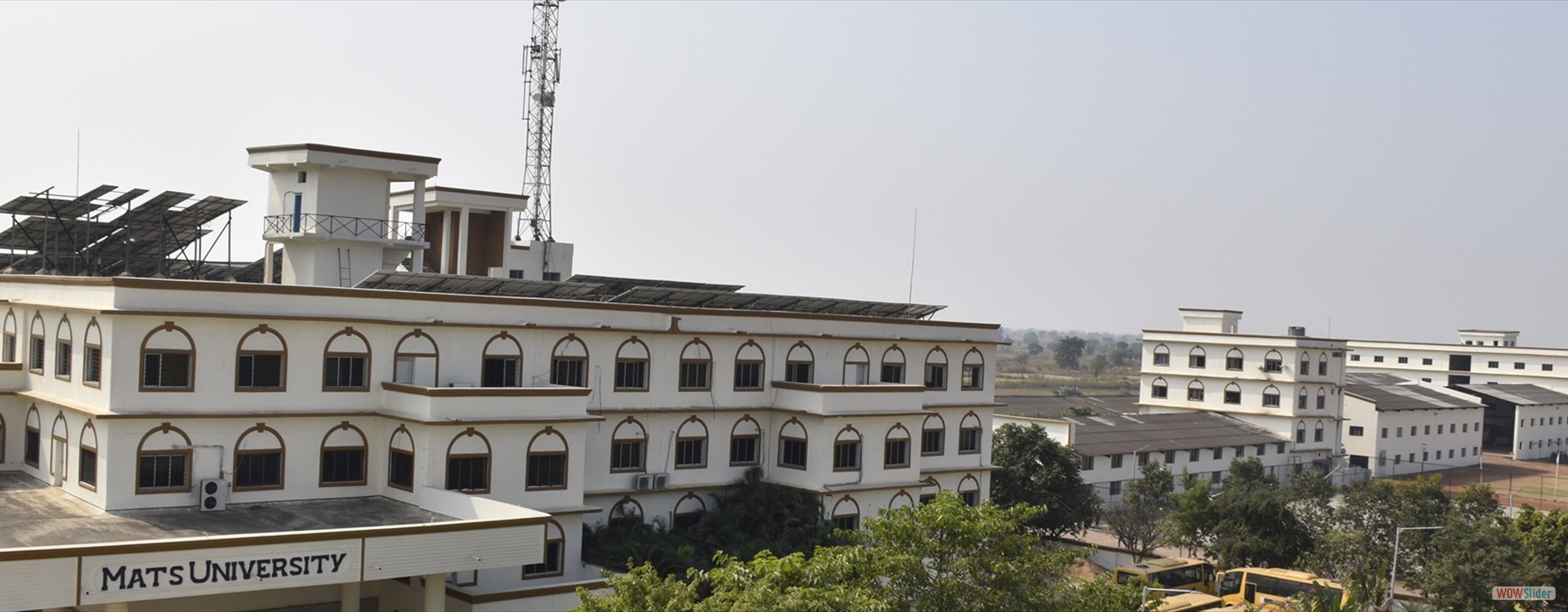
Ph.D. in Chemistry from MATS University: Eligibility, Entrance Exam, Fee Structure, Admission Process, Subjects, Research Areas, Syllabus, Scholarship & Career Scope
Introduction about Ph.D. in Chemistry at MATS University
Embarking on a Ph.D. in Chemistry at MATS University opens doors to pioneering research, global collaborations, and a rewarding academic career. Recognized for its state‑of‑the‑art laboratories, industry‑linked projects, and a faculty comprising world‑renowned chemists, MATS University empowers professionals to transform scientific curiosity into impactful innovations.
Eligibility Criteria for Ph.D. in Chemistry at MATS University
Prospective candidates must meet the following minimum requirements:
- Master’s degree (M.Sc., M.Tech., or equivalent) in Chemistry or a closely related discipline with a minimum of 55% aggregate (or CGPA 6.5/10).
- Valid GATE/UGC NET score is advantageous but not mandatory.
- For international applicants, a recognized equivalent qualification and English proficiency (IELTS ≥ 6.5 or TOEFL ≥ 80) are required.
- Applicants should possess a strong foundation in core chemistry subjects and a clear research motivation.
Entrance Exam for Ph.D. in Chemistry at MATS University
MATS University conducts a two‑stage selection process:
- Written Test: A 100‑mark objective‑type examination covering Inorganic, Organic, Physical, and Analytical Chemistry, as well as Research Methodology.
- Interview & Presentation: Candidates present a research proposal, discuss prior work, and answer subject‑specific queries evaluated by a panel of experts.
The written test is scheduled twice a year (January and July). Registration is online through the university portal.
Fee Structure for Ph.D. in Chemistry at MATS University
| Component | Annual Fee (INR) | Notes |
|---|---|---|
| Tuition & Laboratory Charges | 75,000 | Includes access to all core labs and workshops. |
| Research Project Grant | 30,000 | Allocated for consumables and minor equipment. |
| Library & Digital Resources | 5,000 | Unlimited access to journals, e‑books, and databases. |
| Exam & Administration Charges | 10,000 | Covering seminar, conference, and evaluation fees. |
| Total Approximate Cost (per year) | 120,000 | Subject to revision each academic session. |
Admission Process for Ph.D. in Chemistry at MATS University
The streamlined admission workflow ensures transparency and efficiency:
- Online Application: Submit the completed form along with academic transcripts, research proposal, and pay the non‑refundable application fee (₹2,000).
- Document Verification: The admissions office validates credentials and shortlists candidates for the written test.
- Written Examination: Conducted at designated test centers; results released within two weeks.
- Interview & Presentation: Shortlisted candidates appear before the Faculty Selection Committee.
- Final Offer Letter: Successful aspirants receive an official admission letter with enrollment details.
- Enrollment: Pay the first year’s fee and complete the registration formalities.
Ph.D. Subjects and Specializations in Chemistry at MATS University
MATS University offers a diverse array of research streams, allowing scholars to align their dissertation with emerging scientific challenges:
- Organic Synthesis and Catalysis
- Physical Chemistry and Spectroscopy
- Inorganic Materials and Nanostructures
- Analytical Chemistry and Instrumentation
- Computational Chemistry and Molecular Modeling
- Environmental Chemistry and Green Technologies
- Pharmaceutical Chemistry and Drug Design
Research Areas in Chemistry at MATS University
Key research hubs and collaborative projects include:
- Nanomaterials for Energy Storage: Development of high‑performance batteries and supercapacitors.
- Green Catalysis: Designing eco‑friendly catalysts for sustainable chemical processes.
- Bio‑Analytical Sensors: Fabrication of portable devices for clinical diagnostics.
- Computational Drug Discovery: In‑silico screening of novel therapeutic candidates.
- Atmospheric Chemistry: Studying pollutant dynamics and mitigation strategies.
Documents Required for Ph.D. in Chemistry at MATS University
| Document | Format | Remarks |
|---|---|---|
| Academic Transcripts (M.Sc. / M.Tech.) | PDF (Certified) | Include mark sheets and degree certificate. |
| Research Proposal (2,000–3,000 words) | Highlight objectives, methodology, and expected outcomes. | |
| Curriculum Vitae | Emphasize publications, conferences, and patents. | |
| GATE / UGC NET Scorecard (optional) | Provides additional merit points. | |
| Proof of Identity (Aadhaar / Passport) | Scanned Image | Valid government‑issued ID. |
| English Proficiency Certificate (for NRI/International) | IELTS/TOEFL scores. |
MATS University Ph.D. Syllabus for Chemistry
The structured syllabus ensures a balanced blend of theory and hands‑on research:
- Semester 1: Advanced Organic Chemistry, Research Methodology, Scientific Writing.
- Semester 2: Physical Chemistry & Spectroscopic Techniques, Data Analysis (link to Research Data Analysis Services), Lab Safety & Ethics.
- Semester 3: Inorganic Chemistry, Computational Modelling, Seminar Presentation.
- Semester 4: Thesis Work, Publication Process, Defense Preparation.
How To Apply for Ph.D. in Chemistry at MATS University
Follow these step‑by‑step instructions for a smooth application:
- Visit the official admissions portal of MATS University.
- Create a new user account using your email address.
- Fill in personal details, academic background, and upload the required documents.
- Enter a concise research proposal (max 3,000 words).
- Pay the application fee via net banking or credit card.
- Submit the form and note the application reference number.
- Monitor email notifications for exam dates and interview schedules.
Career Scope and Job Opportunities After Ph.D. in Chemistry from MATS University
Graduates are equipped to excel in both academia and industry:
- Academic Positions: Assistant Professor, Post‑Doctoral Fellow, Research Scientist.
- Industry Roles: R&D Manager, Process Development Chemist, Quality Assurance Lead.
- Government & Public Sector: Scientist (CSIR, DRDO), Policy Analyst, Patent Examiner.
- Entrepreneurship: Start‑ups in biotech, nanotech, or chemical manufacturing.
- Consultancy: Environmental impact assessments, analytical services, scientific communication.
Scholarship for Ph.D. in Chemistry at MATS University
MATS University offers merit‑based and need‑based financial assistance:
- University Merit Scholarship: Up to 50% tuition waiver for top 10% rankers.
- Research Grant Fellowship: INR 40,000 per annum for project‑related expenses.
- External Fellowships: Opportunities through CSIR‑NET, UGC‑JRF, and industry-sponsored programs.
- Women Scholars Scheme: Additional INR 20,000 stipend.
FAQs Regarding Ph.D. in Chemistry at MATS University
- 1. What is the minimum duration to complete the Ph.D. program?
- Typically 3‑4 years, subject to research progress and timely submission of the thesis.
- 2. Can I register for a part‑time Ph.D. while working?
- Yes, MATS University offers a flexible part‑time mode for working professionals with a maximum duration of 6 years.
- 3. Are there opportunities for collaborative research with industry?
- Absolutely. The university maintains MOUs with leading chemical firms, enabling joint projects, internships, and funded research.
- 4. Is publishing in peer‑reviewed journals mandatory?
- At least two publications in recognized journals are required for thesis evaluation.
- 5. How does the university support language and writing skills?
- Workshops on scientific writing, presentation skills, and a dedicated Thesis and Dissertation Writing Services partner are available for all Ph.D. candidates.
Embark on your journey of discovery with a Ph.D. in Chemistry at MATS University—where scientific excellence meets transformative career opportunities.
For additional research support, explore our trusted partners:








