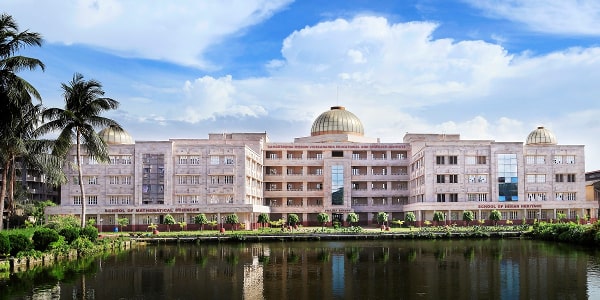
Ph.D. in Chemistry from Ravenshaw University: Eligibility, Entrance Exam, Fee Structure, Admission Process, Subjects, Research Areas, Syllabus, Scholarship & Career Scope
Introduction about Ph.D. in Chemistry at Ravenshaw University
Ravenshaw University, a premier institution in Odisha, offers a rigorous Ph.D. in Chemistry designed for professionals who aspire to lead innovative research, teach at the university level, or shape industry practices. The program blends advanced theoretical concepts with cutting‑edge laboratory work, fostering an environment where curiosity meets academic excellence. Whether you aim to explore nanomaterials, environmental chemistry, or pharmaceutical synthesis, Ravenshaw University equips you with the expertise, resources, and mentorship needed to make a lasting impact.
Eligibility Criteria for Ph.D. in Chemistry at Ravenshaw University
Prospective candidates must meet the following baseline requirements:
- A Master’s degree in Chemistry or a closely related discipline with at least 55% marks (or equivalent CGPA) from a recognized university.
- For candidates holding a four-year integrated M.Sc. degree, a minimum of 60% marks is mandatory.
- Qualifying the Ravenshaw University Ph.D. entrance test or any national-level test such as UGC NET, GATE, or CSIR-JRF.
- Research experience (publications, conference presentations, or project work) is highly advantageous but not compulsory.
Entrance Exam for Ph.D. in Chemistry at Ravenshaw University
The entrance examination assesses the candidate’s depth of knowledge, analytical skills, and research potential. The exam structure typically includes:
- Written Test (90 minutes) – Objective and descriptive questions covering Physical, Organic, Inorganic, and Analytical Chemistry.
- Interview & Presentation (30 minutes) – Evaluation of past research, statement of purpose, and proposed research topic.
- Eligibility for waiver: Candidates who have qualified UGC NET, CSIR-JRF, or GATE in Chemistry are exempted from the written test.
Preparation tips: Review recent journal articles, focus on problem‑solving techniques, and practice presentation skills to convey research ideas confidently.
Fee Structure for Ph.D. in Chemistry at Ravenshaw University
The fee schedule is designed to be affordable while maintaining high‑quality academic support. All fees are payable in Indian Rupees (INR).
| Fee Component | Annual Amount (INR) | Notes |
|---|---|---|
| Tuition & Examination Fee | 12,000 | Payable at the start of each academic year. |
| Laboratory & Infrastructure Charges | 8,000 | Covers access to central labs, instrumentation, and consumables. |
| Library & E‑Resources Subscription | 2,500 | Includes digital journal access and inter‑library loan. |
| Miscellaneous (Sports, Cultural, Student Welfare) | 1,500 | Optional but recommended for holistic development. |
| Total Approximate Annual Fee | 24,000 | Subject to revision each academic session. |
Scholarships, teaching assistantships, and research grants can significantly offset these costs.
Admission Process for Ph.D. in Chemistry at Ravenshaw University
The admission journey follows a systematic, transparent pathway:
- Online Application – Submit the completed application form through the university’s portal along with scanned certificates.
- Document Verification – The admissions office validates academic transcripts, entrance test scores, and identity proof.
- Entrance Examination – Appear for the written test (or submit qualified national test scores).
- Interview & Research Proposal Review – A panel of senior faculty evaluates the candidate’s research plan and suitability.
- Final Offer Letter – Successful applicants receive an admission offer with fee details and scholarship information.
- Registration & Orientation – Enroll in the university system, obtain a student ID, and attend the orientation program.
Typical timelines: Application windows open in June, entrance exams in August, and admissions finalized by October.
Ph.D. Subjects and Specializations in Chemistry at Ravenshaw University
Ravenshaw University offers a broad spectrum of specializations, allowing candidates to tailor their research to personal interests and industry demand:
- Physical Chemistry – Quantum mechanics, spectroscopy, thermodynamics.
- Organic Chemistry – Synthesis of natural products, medicinal chemistry, polymer science.
- Inorganic Chemistry – Coordination compounds, solid‑state chemistry, catalysis.
- Analytical Chemistry – Sensor development, chromatography, mass spectrometry.
- Environmental Chemistry – Pollution remediation, green chemistry, water quality analysis.
- Computational Chemistry – Molecular modeling, drug design, cheminformatics.
Research Areas in Chemistry at Ravenshaw University
The university’s research ecosystem is anchored by state‑of‑the‑art laboratories and collaborations with national research institutes. Key research domains include:
- Nanostructured materials for energy storage and conversion.
- Bio‑inorganic chemistry focusing on metal‑based therapeutics.
- Advanced analytical techniques for forensic and environmental analysis.
- Organic synthesis of heterocyclic compounds with pharmaceutical relevance.
- Computational studies on reaction mechanisms and catalyst design.
- Sustainable chemistry initiatives such as biomass conversion and waste minimization.
Students are encouraged to publish in high‑impact journals and present findings at international conferences.
Documents Required for Ph.D. in Chemistry at Ravenshaw University
A comprehensive document checklist ensures a smooth application process. The following table outlines mandatory and optional items:
| Document | Requirement | Remarks |
|---|---|---|
| Academic Transcripts (M.Sc./Integrated M.Sc.) | Original & certified copy | Include mark sheets for each semester. |
| Entrance Test Scorecard (UGC NET, GATE, CSIR‑JRF) | If applicable | Valid for the last 2 years. |
| Research Proposal (2‑3 pages) | Mandatory | Outline objectives, methodology, and expected outcomes. |
| Curriculum Vitae (CV) | Mandatory | Highlight publications, projects, and work experience. |
| Identity Proof (Aadhaar/Passport) | Mandatory | Self‑attested copy. |
| Letter of Recommendation (2) | Optional but recommended | Preferably from academic supervisors. |
Ravenshaw University Ph.D. Syllabus for Chemistry
The syllabus is structured to balance coursework, research methodology, and thesis work. Core modules include:
- Advanced Topics in Physical Chemistry
- Contemporary Organic Synthesis Strategies
- Instrumentation and Analytical Techniques
- Research Methodology & Scientific Writing
- Seminar Series – Guest lectures by industry experts
- Thesis Research – Original contribution under faculty supervision
Periodic assessments, project presentations, and a final viva‑voce ensure rigorous academic standards.
How To Apply for Ph.D. in Chemistry at Ravenshaw University
Follow these step‑by‑step instructions to submit a successful application:
- Visit the official Ravenshaw University Admission Portal and create a new user account.
- Fill in personal details, academic background, and upload scanned copies of required documents.
- Enter your research proposal and attach a PDF version of your CV.
- Pay the non‑refundable application fee of INR 2,000 via online banking or credit card.
- Submit the application and note the generated application ID for future correspondence.
- Monitor the portal for updates on entrance exam dates, interview invitations, and admission status.
Applicants are advised to keep a backup of all files and ensure that PDFs are under 2 MB for smooth uploading.
Career Scope and Job Opportunities After Ph.D. in Chemistry from Ravenshaw University
A Ph.D. in Chemistry opens a multitude of career pathways. Graduates can pursue:
- Academic positions – Assistant Professor, Research Fellow, Department Head.
- Industrial R&D roles – Formulation chemist, process development scientist, analytical lead.
- Government research labs – Scientist positions in CSIR, DRDO, ISRO.








