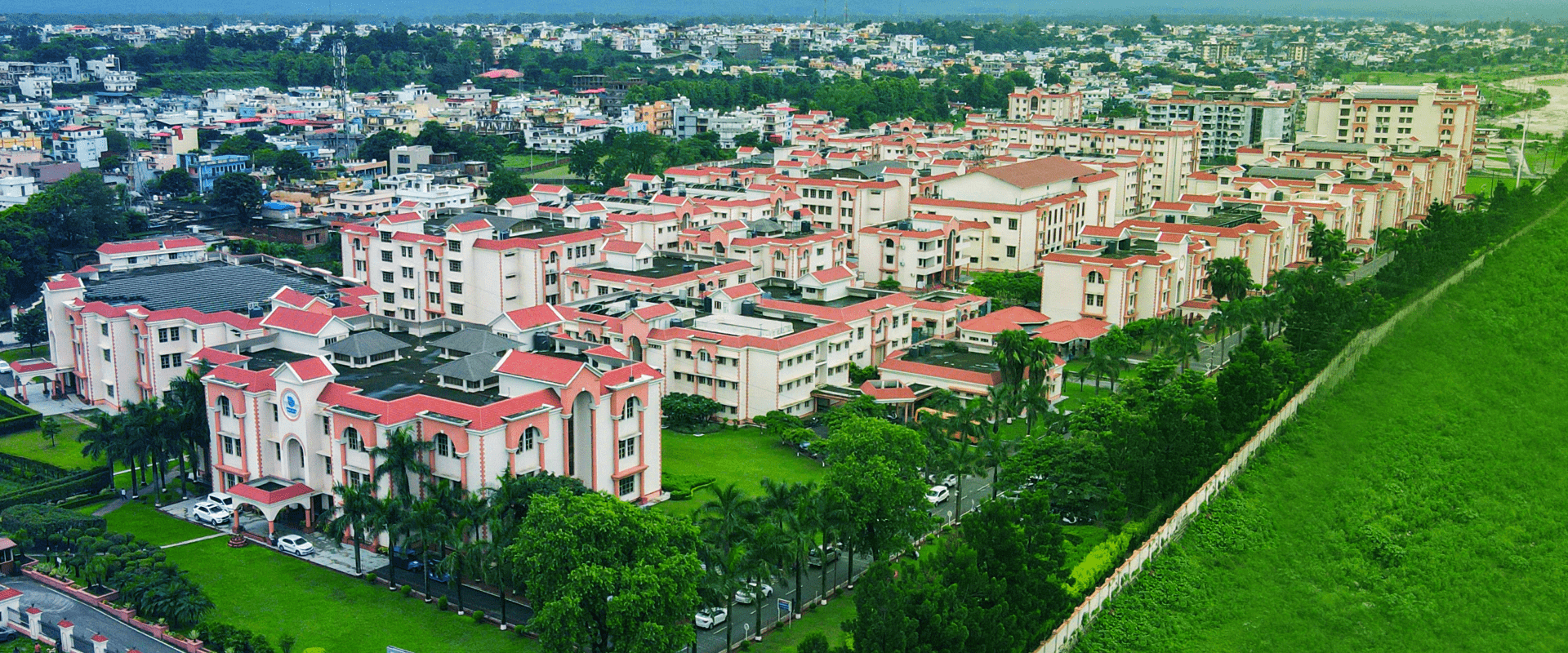
Ph.D. in Chemistry at Uttaranchal University
Introduction about Ph.D. in Chemistry at Uttaranchal University
Uttaranchal University, nestled in the foothills of the Himalayas, has emerged as a hub for cutting‑edge chemical research and interdisciplinary collaboration. The Doctor of Philosophy (Ph.D.) program in Chemistry is designed for ambitious professionals who seek to push the boundaries of molecular science, develop innovative materials, and contribute to sustainable solutions for global challenges. With state‑of‑the‑art laboratories, seasoned faculty, and industry‑linked projects, the university offers an inspiring environment where curiosity is nurtured, and breakthroughs are celebrated.
Eligibility Criteria for Ph.D. in Chemistry at Uttaranchal University
Candidates aspiring to enrol in the Ph.D. in Chemistry must meet the following minimum requirements:
- A Master’s degree (M.Sc., M.Pharma, M.Tech) in Chemistry or a closely related discipline with at least 55% aggregate marks (or equivalent CGPA).
- Graduates holding a Bachelor’s degree (B.Sc.) in Chemistry may apply if they have secured a minimum of 65% and have been awarded a valid GATE (Graduate Aptitude Test in Engineering) score in Chemistry or a related field.
- Applicants possessing a recognized professional qualification (e.g., Ph.D. in a complementary discipline) may be considered on a case‑by‑case basis.
- English language proficiency (IELTS/TOEFL) is required for international candidates.
Entrance Exam for Ph.D. in Chemistry at Uttaranchal University
The university conducts its own entrance examination to assess the candidate’s foundational knowledge and research aptitude. The exam comprises:
- Written Test (100 marks): Topics cover Physical Chemistry, Organic Chemistry, Inorganic Chemistry, Analytical Chemistry, and recent advances in Chemical Research.
- Viva‑voce Interview (50 marks): Candidates present a research proposal, discuss previous work, and demonstrate critical thinking.
GATE or CSIR‑NET scores are accepted as qualifying criteria, and holders of these scores may be exempted from the written test.
Fee Structure for Ph.D. in Chemistry at Uttaranchal University
| Component | Annual Fee (INR) | Notes |
|---|---|---|
| Tuition & Laboratory Charges | 45,000 | Includes access to all core and specialized labs. |
| Research Project Grant | 30,000 | Allocated for consumables, reagents, and minor equipment. |
| Semester Examination & Evaluation Fee | 10,000 | Applicable each semester. |
| Library & Digital Resource Subscription | 5,000 | Access to journals, patents, and e‑books. |
| Miscellaneous (Sports, Activities, etc.) | 3,000 | Optional but recommended for holistic development. |
| Total Approximate Annual Cost | 93,000 | Subject to revision each academic year. |
Admission Process for Ph.D. in Chemistry at Uttaranchal University
The admission journey is streamlined into five clear steps:
- Online Application: Fill the web‑based form and upload scanned copies of academic certificates.
- Document Verification: The university’s admission office reviews eligibility and authenticity.
- Entrance Examination: Appear for the university‑conducted written test or submit valid GATE/CSIR‑NET scores.
- Interview & Research Proposal Review: Present a concise research proposal and discuss it with the faculty panel.
- Final Admission Offer: Successful candidates receive an official admission letter and fee payment instructions.
Ph.D. Subjects and Specializations in Chemistry at Uttaranchal University
While the core program is titled “Ph.D. in Chemistry,” candidates can specialize in one of the following cutting‑edge domains:
- Nanomaterials & Nanochemistry
- Organic Synthesis & Medicinal Chemistry
- Environmental Chemistry & Green Technologies
- Physical Chemistry & Computational Modelling
- Analytical Chemistry & Instrumental Techniques
- Polymer Chemistry & Sustainable Polymers
Research Areas in Chemistry at Uttaranchal University
The university’s research ecosystem encourages interdisciplinary collaboration. Prominent research avenues include:
- Design of novel catalysts for energy‑efficient reactions.
- Development of biodegradable polymers for packaging.
- Advanced spectroscopic methods for real‑time monitoring.
- Quantum chemical simulations of reaction pathways.
- Eco‑friendly wastewater treatment using metal‑organic frameworks.
- Pharmacophore modeling for drug discovery.
Documents Required for Ph.D. in Chemistry at Uttaranchal University
| Document | Format | Remarks |
|---|---|---|
| Completed Online Application Form | PDF/Word | Signed and dated. |
| Academic Transcripts & Degree Certificates | Scanned PDF (max 2 MB each) | Include M.Sc., B.Sc., and any additional qualifications. |
| GATE/CSIR‑NET Score Card (if applicable) | Valid for the current admission cycle. | |
| Research Proposal (2,000 words) | Outline objectives, methodology, and expected outcomes. | |
| Curriculum Vitae (CV) | Highlight publications, patents, and conference presentations. | |
| Letter of Recommendation (2) | From academic supervisors or industry mentors. | |
| Proof of English Proficiency (IELTS/TOEFL) | Required for foreign nationals. |
Uttaranchal University Ph.D. Syllabus for Chemistry
The curriculum is structured to blend rigorous coursework with independent research. Core modules (mandatory) include:
- Advanced Physical Chemistry
- Modern Organic Synthesis Strategies
- Materials Characterization Techniques
- Computational Chemistry and Molecular Modelling
- Research Methodology & Scientific Writing
- Ethics in Chemical Research
In addition to the core, students select elective courses aligned with their specialization, such as “Green Chemistry”, “Nanostructured Materials”, or “Pharmaceutical Chemistry”.
How To Apply for Ph.D. in Chemistry at Uttaranchal University
Follow these precise steps to submit a successful application:
- Visit the official university admissions portal and create a new user account.
- Complete the application form, ensuring all mandatory fields are filled accurately.
- Upload the required documents (as listed above) in the prescribed format.
- Pay the non‑refundable application fee of INR 2,500 via net banking or UPI.
- Submit the application and note the generated reference number for future correspondence.
- Monitor email notifications for entrance exam dates or interview schedules.
Career Scope and Job Opportunities After Ph.D. in Chemistry from Uttaranchal University
Graduates emerge as experts ready to lead in academia, industry, and research institutions. Typical career trajectories include:
- Assistant/Associate Professor in premier universities and research institutes.
- Senior Research Scientist in pharmaceutical, petrochemical, or materials‑based corporations.
- R&D Manager overseeing innovative product pipelines.
- Scientific Consultant for governmental agencies and NGOs focusing on environmental policies.
- Entrepreneur launching start‑ups in green chemicals or analytical services.
- Post‑doctoral fellowships at international laboratories for further specialization.
According to recent industry reports, the demand for chemists with doctoral expertise is projected to grow by 12% over the next five years, especially in sustainable technologies and advanced materials.
Scholarship for Ph.D. in Chemistry at Uttaranchal University
To attract top talent, the university offers a range of financial aids:
- Merit‑Based Scholarships: Up to 50% waiver of tuition for candidates with >75% aggregate in their master’s program.
- Research Assistantship: Stipend of INR 15,000 per month for students working on funded projects.
- Industry‑Sponsored Fellowships: Collaboration with leading chemical firms offering project‑specific funding.
- Government Scholarships: Eligibility for scholarships such as UGC‑JRF, CSIR‑NET, and DST‑INSPIRE.
FAQs Regarding Ph.D. in Chemistry at Uttaranchal University
- Q1: Can I enroll in the Ph.D. program without a Master’s degree?
- A: Yes, candidates with a B.Sc. in Chemistry who have secured a minimum of 65% and possess a valid GATE score are eligible for direct admission.
- Q2: How long does it take to complete the Ph.D. in Chemistry?
- A: The typical duration is 3‑4 years, subject to timely








