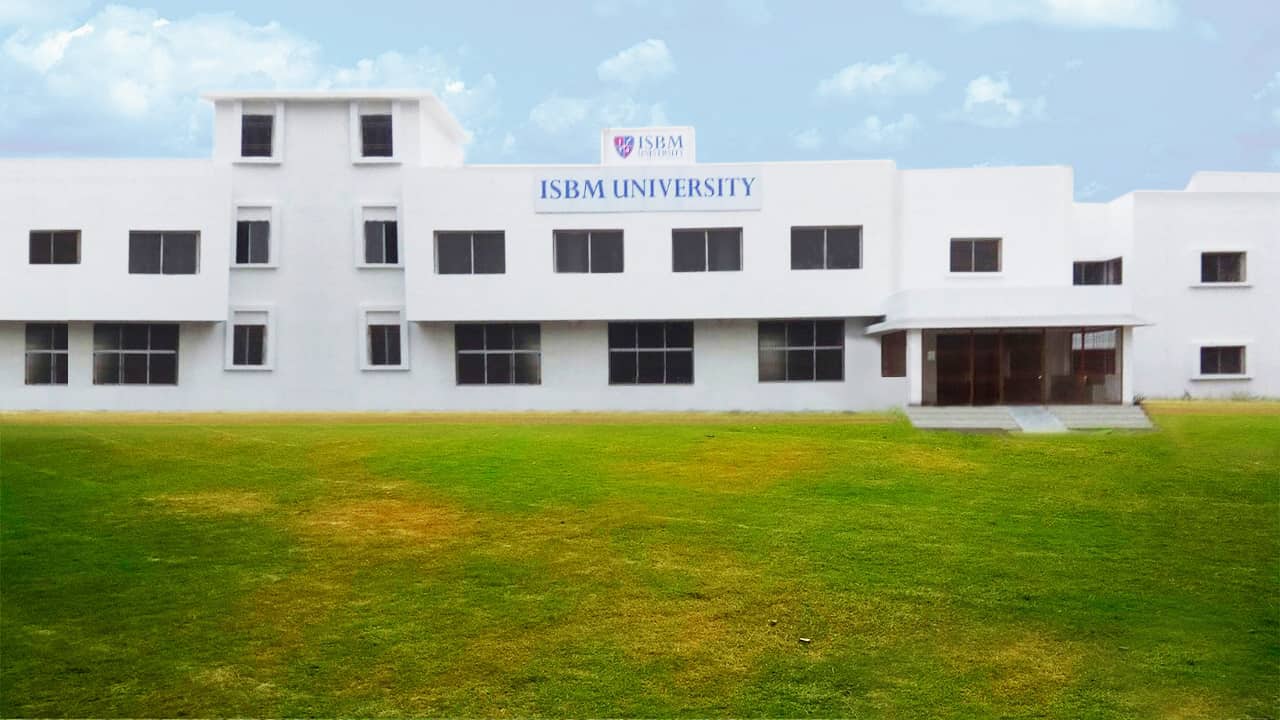
Ph.D. in Civil Engineering from ISBM University
Introduction about Ph.D. in Civil Engineering at ISBM University
Embarking on a doctoral journey in civil engineering at ISBM University empowers ambitious professionals to drive innovation in infrastructure, sustainability, and urban development. The program blends rigorous research methodology with real‑world engineering challenges, providing a platform to transform theoretical insights into practical solutions that shape skylines and communities worldwide.
Eligibility Criteria for Ph.D. in Civil Engineering at ISBM University
Prospective candidates must satisfy the following minimum requirements:
- Master’s degree (M.Tech/M.Sc.) in Civil Engineering or a closely related discipline with a minimum aggregate of 55% (or CGPA 5.5/10).
- Valid GATE/NET/UGC‑JS score or equivalent national-level entrance examination.
- For candidates without a qualifying exam score, ISBM University conducts its own entrance test.
- English proficiency (IELTS/TOEFL) for international applicants.
Entrance Exam for Ph.D. in Civil Engineering at ISBM University
The university’s entrance examination evaluates both theoretical knowledge and research aptitude. The test format includes:
- Paper‑I: Subject‑Specific (Structural Analysis, Geotechnics, Transportation, etc.) – 100 marks.
- Paper‑II: Research Methodology & Aptitude – 50 marks.
- Oral Interview – 50 marks.
Successful candidates are shortlisted based on cumulative scores, and the interview assesses their proposed research topics, communication skills, and analytical thinking.
Fee Structure for Ph.D. in Civil Engineering at ISBM University
| Component | Amount (INR) | Notes |
|---|---|---|
| Application Processing Fee | 2,500 | Non‑refundable, payable online. |
| Annual Tuition & Laboratory Charges | 75,000 | Includes access to research labs and libraries. |
| Research Material & Publication Support | 15,000 | Subsidized for students with conference travel. |
| Miscellaneous (Health, Sports, Campus Activities) | 5,000 | Optional, varies each year. |
| Total Estimated Annual Fee | 97,500 |
Scholarships, research assistantships, and industry‑sponsored grants can substantially reduce the financial burden.
Admission Process for Ph.D. in Civil Engineering at ISBM University
- Online Application: Fill the web‑based form and upload required documents.
- Entrance Examination: Appear for the university‑conducted test or submit a valid GATE/NET score.
- Interview & Proposal Review: Present a concise research proposal; faculty panel evaluates feasibility.
- Final Selection: Merit list issued; successful candidates receive an admission offer letter.
- Enrollment: Pay the initial fee, complete verification, and register for the semester.
Ph.D. Subjects and Specializations in Civil Engineering at ISBM University
Students can select from a wide range of specializations aligned with emerging industry trends:
- Structural Engineering & Seismic Design
- Geotechnical Engineering & Soil Mechanics
- Transportation Engineering & Smart Mobility
- Water Resources & Environmental Engineering
- Construction Management & Sustainable Building Materials
- Computational Modeling & BIM Integration
Research Areas in Civil Engineering at ISBM University
ISBM University encourages interdisciplinary research that tackles global challenges. Current focal areas include:
- Resilient Infrastructure for Climate‑Adapted Cities
- High‑Performance Concrete and Eco‑friendly Materials
- Smart Sensors and IoT for Structural Health Monitoring
- Advanced Geotechnical Solutions for Offshore Foundations
- Traffic Flow Optimization using AI and Machine Learning
- Water‑Sensitive Urban Planning and Flood Mitigation Strategies
Students frequently collaborate with industry leaders, government agencies, and international research consortia.
Documents Required for Ph.D. in Civil Engineering at ISBM University
| Document | Format | Remarks |
|---|---|---|
| Academic Transcripts (10+2, B.E./B.Tech, M.E./M.Tech) | PDF (Scanned) | Originals to be presented during verification. |
| GATE/NET Score Card (if applicable) | Valid for the current admission cycle. | |
| Research Proposal (2,000‑3,000 words) | DOCX or PDF | Must outline objectives, methodology, and expected outcomes. |
| Curriculum Vitae (CV) | Highlight publications, projects, and professional experience. | |
| Letter of Recommendation (2) | From academic supervisors or industry mentors. | |
| Proof of Identity (Aadhar/Passport) | Government‑issued, with photograph. |
ISBM University Ph.D. Syllabus for Civil Engineering
The doctoral syllabus is structured around core modules and research milestones:
- Advanced Research Methodology (Credits: 3)
- Statistical Tools for Engineering (Credits: 2)
- Specialization‑Specific Advanced Topics (Credits: 4)
- Seminars & Workshops (Credits: 2)
- Publication Requirement: Minimum 2 peer‑reviewed papers before thesis submission.
- Thesis Writing & Defense (Credits: 6)
Students may also enroll in elective courses such as Thesis and Dissertation Writing Services to enhance their scholarly writing skills.
How To Apply for Ph.D. in Civil Engineering at ISBM University
Follow these step‑by‑step instructions to submit a successful application:
- Visit the official ISBM University website and navigate to the “Post‑Graduate Admissions” portal.
- Create a user account with a valid email address and mobile number.
- Complete the online application form, ensuring all fields are accurately filled.
- Upload scanned copies of the required documents (see the Documents Required table).
- Pay the non‑refundable application fee using the integrated payment gateway.
- Submit the research proposal and wait for the examination schedule.
- Participate in the entrance exam and subsequent interview as per the communicated timeline.
- Upon selection, download the admission offer, pay the first year’s tuition, and enroll for semester courses.
Career Scope and Job Opportunities After Ph.D. in Civil Engineering from ISBM University
The doctoral degree opens a plethora of high‑impact career paths:
- Academic Leadership: Faculty positions (Assistant/Associate/Full Professor) in premier universities.
- Research Scientist: Roles in national laboratories, R&D divisions of construction giants, and international think‑tanks.
- Consultancy: Expert consultant for infrastructure projects, disaster‑resilient design, and sustainability assessments.
- Policy & Planning: Advisory positions with municipal corporations, ministries, and global agencies like the World Bank.
- Entrepreneurship: Founding startups focused on smart construction technologies, green building materials, or data‑driven infrastructure services.
According to industry surveys, Ph.D. holders in civil engineering command an average salary increment of 30‑45% over their master’s counterparts.
Scholarship for Ph.D. in Civil Engineering at ISBM University
ISBM University offers merit‑based and need‑based scholarships, including:
- ISBM Research Excellence Scholarship: Covers 100% tuition for top 10% rankers.
- Industry Sponsored Fellowship: Partnered firms provide stipends and project funding.
- Government Grants: Eligible candidates may apply for UGC‑NGS, CSIR, and Ministry of Education scholarships.
- Special Support: For candidates availing Research Data Analysis Services or Research Paper Writing Services, the university may waive publication fees.
FAQs Regarding Ph.D. in Civil Engineering at ISBM University
- Q1: What is the minimum duration to complete the Ph.D. program?
- The standard duration is 3 years, which can be extended up to 5 years based on research progress and publication requirements.
- Q2: Can I pursue the Ph.D. part‑time while working?
- Yes, ISBM University offers a flexible part‑time mode for working professionals, subject to a minimum of 10 hours per week dedicated to research.
- Q3: Is there any provision for interdisciplinary research?
- Absolutely. Students can collaborate with departments such as Architecture, Environmental Science, and Computer Engineering for joint projects.
- Q4: How many publications are required before thesis submission?
- At least two articles in indexed peer‑reviewed journals or conference proceedings are mandatory.
- Q5: Are there any support services for questionnaire design?
- Yes, candidates can access Questionnaire Design and Development assistance through the university’s research support cell.








