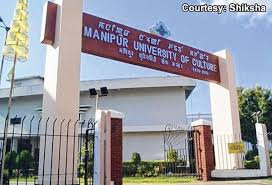
Introduction about Ph.D. in Civil Engineering at Manipur University
Manipur University has emerged as a hub for advanced research in structural dynamics, transportation engineering, and water resources management. The Ph.D. in Civil Engineering program offers a rigorous blend of theoretical foundations and practical applications, designed for professionals who aspire to become thought‑leaders in academia, industry, or government. With state‑of‑the‑art laboratories, collaborations with national research institutes, and a supportive faculty, candidates can delve deep into cutting‑edge topics such as sustainable infrastructure, smart cities, and disaster‑resilient construction.
Eligibility Criteria for Ph.D. in Civil Engineering at Manipur University
- Master’s degree in Civil Engineering or a closely related discipline with a minimum of 55% marks (or equivalent grade) from a recognized university.
- Nationally accepted entrance test score (MANU PGET, UGC NET, CSIR NET, GATE, or equivalent) with qualifying marks as per university norms.
- For candidates holding an M.Phil., the entrance test may be waived provided the research proposal meets departmental standards.
- Candidates must possess a valid PhD Admission Assistance endorsement if they are international students.
Entrance Exam for Ph.D. in Civil Engineering at Manipur University
The entrance examination evaluates the candidate’s research aptitude, subject mastery, and analytical skills. The exam pattern typically includes:
- Written Test (100 marks): Objective and descriptive questions covering structural analysis, geotechnical engineering, transportation systems, and environmental engineering.
- Interview (30 marks): Assessment of research proposal, motivation, and alignment with faculty expertise.
- Candidates who have cleared UGC NET, CSIR NET, GATE, or other national-level tests are exempted from the written component but must attend the interview.
Fee Structure for Ph.D. in Civil Engineering at Manipur University
| Fee Component | Amount (INR) | Notes |
|---|---|---|
| Application Processing Fee | 1,500 | Non‑refundable, payable online |
| Annual Tuition & Laboratory Fee | 12,000 | Charged per academic year |
| Thesis Submission Fee | 3,000 | One‑time payment after final defense |
| Library & Resource Access | 1,200 | Includes digital journal subscriptions |
| Total Approx. Cost (3‑Year Programme) | 45,600 | Excludes scholarships and stipends |
Admission Process for Ph.D. in Civil Engineering at Manipur University
The streamlined admission workflow ensures transparency and efficiency:
- Online Application: Fill the digital form on the university portal, upload academic transcripts, research proposal, and requisite certificates.
- Document Verification: The Admissions Committee validates authenticity and eligibility.
- Entrance Examination & Interview: Schedule dates are announced after preliminary screening.
- Selection & Offer Letter: Successful candidates receive an official admission letter with fee details.
- Enrollment & Orientation: Payment of the first-year fee, allocation of supervisor, and participation in a research orientation program.
Ph.D. Subjects and Specializations in Civil Engineering at Manipur University
Students can tailor their research across the following specializations:
- Structural Engineering & Earthquake‑Resistant Design
- Geotechnical Engineering & Soil‑Structure Interaction
- Transportation Engineering & Traffic Management Systems
- Hydrology, Water Resources & Flood Modelling
- Environmental Engineering & Sustainable Construction Materials
- Construction Management & BIM Technologies
Research Areas in Civil Engineering at Manipur University
The university’s research ecosystem focuses on high‑impact domains that align with regional and national priorities:
| Research Domain | Key Topics | Potential Funding Sources |
|---|---|---|
| Smart Infrastructure | IoT‑enabled monitoring, AI‑driven maintenance | MSME, DST, ISRO |
| Disaster‑Resilient Design | Seismic retrofitting, landslide mitigation | NRSC, NHAI |
| Green Building Materials | Fly‑ash concrete, nano‑engineered composites | MoEFCC, BARC |
| Urban Transport Planning | Multi‑modal integration, emission reduction | MoHUA, World Bank |
| Water Resources Management | Rainwater harvesting, catchment area modelling | ICAR, IWRM |
Documents Required for Ph.D. in Civil Engineering at Manipur University
- Completed application form (online)
- Scanned copies of academic certificates (B.Tech, M.Tech/M.E.)
- Mark sheets with minimum required percentages
- Qualified entrance test scorecard (UGC NET, GATE, etc.)
- Research proposal (max 1500 words)
- Curriculum Vitae highlighting publications and projects
- Two academic reference letters
- Proof of identity (Aadhaar/PAN) and address
- Bank statement for fee payment
- For foreign nationals: Passport copy and OCI/PIO card
Manipur University Ph.D. Syllabus for Civil Engineering
The syllabus is structured into core modules, research methodology, and specialization electives:
- Core Modules (60 credits)
- Advanced Structural Analysis
- Geotechnical Engineering Principles
- Transportation Systems Engineering
- Hydrology & Water Resources Engineering
- Environmental Impact Assessment
- Research Methodology (30 credits)
- Statistical Techniques for Engineering
- Qualitative & Quantitative Research Methods
- Scientific Writing & Publication Ethics
- Specialization Electives (30 credits)
- Smart Cities & Urban Planning
- Sustainable Construction Materials
- Disaster Risk Reduction
- Thesis (120 credits) – Original research leading to a defended dissertation.
How To Apply for Ph.D. in Civil Engineering at Manipur University
Follow these step‑by‑step instructions to submit a successful application:
- Visit the official Manipur University website and navigate to the Post‑Graduate Admissions portal.
- Create a user account and fill in the personal and academic details.
- Upload scanned documents (certificates, scorecards, proposal) ensuring each file is under 2 MB and in PDF format.
- Pay the non‑refundable application fee using net banking or UPI.
- Submit the application and note the generated application number for future correspondence.
- Monitor email for call‑letter regarding the entrance examination schedule.
- Prepare for the written test and interview by reviewing past papers and aligning your proposal with faculty interests.
Career Scope and Job Opportunities After Ph.D. in Civil Engineering from Manipur University
Graduates enjoy diverse pathways:
- Academic Positions: Assistant Professor, Associate Professor, and research faculty roles in premier institutes.
- Research Institutions: Scientist/Engineer at CSIR‑CEERI, NITs, IITs, and international labs.
- Government Agencies: Planning & Development Officer, Senior Engineer (MoHUA, MoEFCC, NHAI).
- Industry Leadership: R&D Manager, Project Director in construction conglomerates, consultancy firms, and smart‑city ventures.
- Entrepreneurship: Start‑up ventures focusing on green construction technologies, BIM solutions, or disaster‑resilient infrastructure.
Scholarship for Ph.D. in Civil Engineering at Manipur University
Financial support is available through multiple channels:
- University Merit Scholarship: Full tuition waiver and a monthly stipend of INR 7,500 for top‑ranked candidates.
- UGC Junior Research Fellowship (JRF): Annual stipend of INR 31,000 plus contingency allowance.
- DST‑SERB Funding: Project‑based grants for researchers undertaking innovative civil engineering projects.
- Corporate Sponsored Fellowships: Partnerships with firms like L&T and Tata Projects for industry‑aligned research.
Prospective scholars are encouraged to consult the Editing and Proofreading Services team for assistance in polishing research proposals and scholarship applications.
FAQs Regarding Ph.D. in Civil Engineering at Manipur University
- What is the minimum duration to complete the Ph.D.?
- The programme is designed for a minimum of three years, subject to satisfactory progress and thesis submission.
- Can a working professional enroll part‑time?
- Yes, the university offers a part‑time mode with flexible class schedules and extended submission timelines.
- Is there a provision for joint supervision with other universities?
- Joint supervision is permitted with prior approval from both institutions, especially for interdisciplinary research.
- How many publications are required before thesis submission?
- While there is no strict rule, at least two papers in indexed journals are highly recommended to strengthen the dissertation.
- Are there any language proficiency requirements for international candidates?
- Non‑English speakers must provide IELTS








