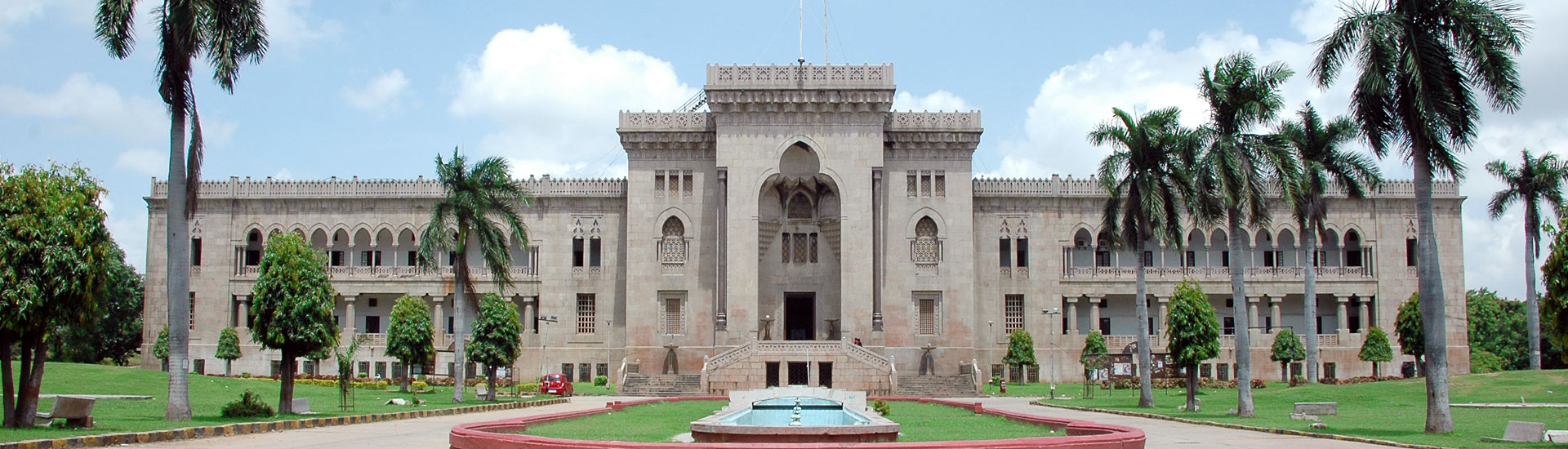
Introduction about Ph.D. in Civil Engineering at Osmania University
Embarking on a Ph.D. in Civil Engineering at the prestigious Osmania University is more than just an academic pursuit; it is a commitment to engineering the future. Established in 1917, Osmania University stands as a beacon of intellectual excellence in India, particularly known for its Faculty of Engineering. A doctorate here empowers professionals to transition from practitioners to visionary researchers, addressing global challenges such as sustainable urban development, smart infrastructure, and environmental resilience. For high-achieving professionals, this program provides the rigorous environment necessary to cultivate deep expertise and lead innovative breakthroughs that shape the physical world.
Ph.D Admission 2026-2027 & Writing Support Services by Shiksha Research
Eligibility Criteria for Ph.D. in Civil Engineering at Osmania University
To maintain the highest standards of scholarly output, Osmania University mandates stringent eligibility criteria for its doctoral candidates. Prospective students must possess a Master?s degree in Civil Engineering (M.E. or M.Tech.) or a related technical discipline from a recognized university. A minimum aggregate of 55% marks (or an equivalent CGPA) is generally required, with a relaxation of 5% for candidates belonging to SC/ST/OBC (non-creamy layer)/Differently-abled categories. Professional experience in research and development or high-level industrial projects is often viewed favorably by the admissions committee, reflecting the university's focus on practical yet advanced engineering solutions.
Entrance Exam for Ph.D. in Civil Engineering at Osmania University
Admission into the doctoral program is primarily facilitated through the OU Ph.D. Entrance Test. This examination is designed to evaluate both the candidate's core engineering knowledge and their aptitude for scientific research. Candidates who have successfully cleared national-level examinations such as GATE, UGC-NET, or CSIR-NET within the valid period are often exempted from the university's entrance test, though they must still undergo the departmental interview process. Preparing for this exam requires a strategic approach, and many candidates seek PhD Admission Assistance to navigate the complexities of the application and testing phase.
Fee Structure for Ph.D. in Civil Engineering at Osmania University
Osmania University offers an affordable fee structure compared to private institutions, ensuring that financial constraints do not hinder intellectual growth. The fees vary slightly for regular and part-time scholars.
| Fee Category | Estimated Amount (Per Annum) | Description |
|---|---|---|
| Tuition Fee | INR 10,000 - 15,000 | Variable based on residency and category. |
| Library & Laboratory Fee | INR 5,000 | Access to state-of-the-art facilities. |
| Registration & Recognition Fee | INR 2,000 - 3,000 | One-time payment at the start. |
| Examination & Thesis Submission | INR 10,000 - 12,000 | Payable during the final phases of research. |
| Miscellaneous Deposits | INR 2,000 | Refundable caution deposits. |
Admission Process for Ph.D. in Civil Engineering at Osmania University
The journey toward a Ph.D. at Osmania University begins with a formal notification issued by the university's Directorate of Admissions. After qualifying for the entrance exam (or providing proof of exemption), candidates must submit a detailed research proposal. This is a critical juncture where many professionals utilize PhD Topic Selection and Proposal Assistance to ensure their research idea is both feasible and original. Following the proposal submission, candidates are called for an interview with the Departmental Research Committee (DRC), where their technical depth, research alignment, and commitment are thoroughly assessed.
Ph.D. Subjects and Specializations in Civil Engineering at Osmania University
The Department of Civil Engineering at Osmania University offers a diverse range of specializations catering to modern industrial needs. Scholars can choose to focus on:
- Structural Engineering: Focusing on advanced materials, seismic resistance, and structural dynamics.
- Geotechnical Engineering: Exploring soil-structure interaction, foundation engineering, and ground improvement techniques.
- Water Resources Engineering: Investigating hydrology, irrigation management, and urban drainage systems.
- Transportation Engineering: Studying traffic flow models, pavement design, and smart mobility solutions.
- Environmental Engineering: Concentrating on waste management, air quality, and sustainable water treatment.
Research Areas in Civil Engineering at Osmania University
Osmania University encourages interdisciplinary research that bridges the gap between theoretical engineering and real-world application. Current research thrust areas include the use of Artificial Intelligence in structural health monitoring, the development of green building materials to reduce carbon footprints, and climate change adaptation strategies for coastal infrastructure. Researchers are expected to contribute original knowledge to the field. For those aiming for high-tier journal placements, securing Research Publication Support is vital to meeting the university's stringent graduation requirements.
Documents Required for Ph.D. in Civil Engineering at Osmania University
Maintaining an organized record of credentials is essential for a smooth admission experience. The following documents are typically required:
- Postgraduate Degree Certificate and Marksheets (M.E./M.Tech).
- Undergraduate Degree Certificate and Marksheets (B.E./B.Tech).
- Valid GATE/NET Scorecard (if applicable).
- Transfer Certificate and Migration Certificate.
- Caste/Category Certificate (if claiming reservation).
- Detailed Research Proposal/Synopsis.
- No Objection Certificate (NOC) from the current employer for part-time candidates.
- Passport-sized photographs and Identity Proof (Aadhar/Passport).
Osmania University Ph.D. Syllabus for Civil Engineering
The Ph.D. journey at Osmania University is structured into two main phases: Coursework and Independent Research. The coursework usually spans the first two semesters and covers:
- Research Methodology: Techniques for data collection, statistical analysis, and ethical research practices.
- Advanced Engineering Mathematics: Complex numerical methods and modeling tools relevant to engineering.
- Depth Elective: A specialized subject directly related to the candidate's chosen research area.
- Seminar/Review of Literature: Critical analysis of existing research to identify gaps.
During the thesis writing stage, ensuring the quality of the language and structure is paramount. Many scholars benefit from professional Editing and Proofreading Services to refine their final submission for the examiners.
How To Apply for Ph.D. in Civil Engineering at Osmania University
Applying for a Ph.D. involves a meticulous multi-step process:
- Check Notification: Regularly visit the official Osmania University website (Directorate of Admissions) for the Ph.D. admission notification.
- Online Registration: Fill out the application form accurately and pay the prescribed application fee online.
- Upload Documents: Upload scanned copies of all necessary academic and professional documents.
- Entrance Exam: Download the hall ticket and appear for the entrance test.
- Interview Prep: Prepare a compelling presentation for the interview/viva-voce after qualifying the entrance stage.
- Counseling: Attend the counseling session for final guide allotment and admission confirmation.
Career Scope and Job Opportunities After Ph.D. in Civil Engineering from Osmania University
A Ph.D. from a legacy institution like Osmania University opens doors to elite career paths. Graduates are often recruited for high-level positions in academia as Professors and Deans. In the corporate sector, they lead R&D departments in global construction firms, consultancy companies, and government organizations like ISRO, DRDO, or the Indian Railways. Furthermore, for those who innovate new technologies during their research, Patent Filing and Support Services can help in commercializing their inventions, fostering an entrepreneurial spirit.
Scholarship for Ph.D. in Civil Engineering at Osmania University
Financial support is available to meritorious and eligible candidates through several channels. GATE-qualified students often receive stipends directly from the AICTE. The university also facilitates various state government scholarships for reserved categories and minority students. Furthermore, Senior Research Fellowships (SRF) and Junior Research Fellowships (JRF) from agencies like the UGC or CSIR provide substantial monthly financial aid, allowing scholars to focus entirely on their groundbreaking research without financial distractions.
FAQs Regarding Ph.D. in Civil Engineering at Osmania University
Q1: Can I pursue a Ph.D. part-time while working?
Yes, Osmania University offers a part-time Ph.D. program for working professionals, provided they submit a No Objection Certificate (NOC) from their employer.
Q2: What is the average duration to complete a Ph.D. at OU?
The minimum duration is typically three years, while the maximum period allowed is six years, subject to university extensions.
Q3: Is the Ph.D. from Osmania University recognized globally?
Absolutely. Osmania University is a Category-I university as per UGC, and its degrees are recognized and respected worldwide in both academic and industrial circles.
Q4: Do I need to have a Master's degree to apply?
Yes, a Master?s degree in a relevant field of engineering (M.E./M.Tech) is a mandatory requirement for admission into the Civil Engineering doctoral program.
Q5: Are there any programs for distinguished leaders in the field?
While the Ph.D. is a research-based academic degree, professionals with extraordinary lifetime contributions to the field may occasionally be considered for Honorary Doctorate Programs awarded by the university for exceptional merit.








