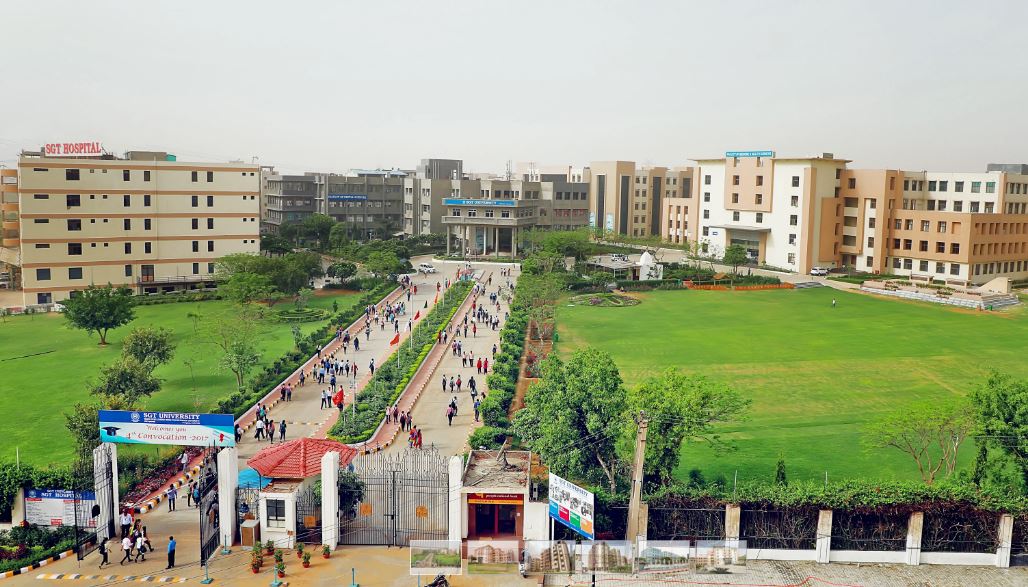
Ph.D. in Civil Engineering from Shree Guru Gobind Singh Tricentenary University: Eligibility, Entrance Exam, Fee Structure, Admission Process, Subjects, Research Areas, Syllabus, Scholarship & Career Scope
Introduction about Ph.D. in Civil Engineering at Shree Guru Gobind Singh Tricentenary University
The Ph.D. in Civil Engineering offered by Shree Guru Gobind Singh Tricentenary University is a research?intensive programme designed for engineers, academicians, and professionals who aspire to become thought leaders in infrastructure development, sustainable construction, and advanced structural analysis. With state?of?the?art laboratories, collaborations with industry giants, and a faculty comprising internationally?published scholars, the university fosters an environment where innovative ideas are transformed into impactful solutions for real?world challenges.
Eligibility Criteria for Ph.D. in Civil Engineering at Shree Guru Gobind Singh Tricentenary University
Prospective candidates must meet the following minimum requirements:
- Master?s degree (M.E., M.Tech., or equivalent) in Civil Engineering or a closely related discipline with at least 55% aggregate (or CGPA 6.5/10).
- Valid GATE score in Civil Engineering (optional but preferred) or equivalent national-level test.
- Research aptitude demonstrated through published papers, project work, or professional experience.
- English proficiency (IELTS/TOEFL) for international students.
Applicants holding a Bachelor?s degree with a strong research background may also be considered on a case?by?case basis.
Entrance Exam for Ph.D. in Civil Engineering at Shree Guru Gobind Singh Tricentenary University
The university conducts its own Ph.D. entrance examination, which evaluates:
- Fundamental concepts of Structural Mechanics, Geotechnical Engineering, and Water Resources.
- Research methodology, data analysis, and academic writing skills.
- A viva?voce interview to assess the candidate?s research proposal and motivation.
Preparation resources, sample papers, and previous year question sets are regularly uploaded on the university?s portal.
Fee Structure for Ph.D. in Civil Engineering at Shree Guru Gobind Singh Tricentenary University
| Component | Annual Fee (INR) | Notes |
|---|---|---|
| Tuition & Laboratory Charges | 1,20,000 | Includes access to labs, software licenses, and library resources. |
| Research Project Funding (Optional) | 50,000 | Provides material costs and field?work allowances. |
| Administration & Examination Fees | 20,000 | Covers registration, evaluation, and certification. |
| Scholarship/Assistantship Deduction | -30,000 | Applicable for selected teaching/research assistants. |
| Total Approximate Cost | 1,60,000 | Subject to yearly revisions. |
Admission Process for Ph.D. in Civil Engineering at Shree Guru Gobind Singh Tricentenary University
The admission workflow is streamlined into the following steps:
- Online Application: Fill the web?based form and upload academic transcripts, a detailed CV, and a research proposal (maximum 1500 words).
- Document Verification: The admissions office validates authenticity of certificates and scores.
- Entrance Examination: Sit for the university?conducted test or submit a valid GATE/NET score.
- Interview: Personal interview conducted by the department?s research committee.
- Final Offer Letter: Successful candidates receive an admission letter with fee details and scholarship options.
Ph.D. Subjects and Specializations in Civil Engineering at Shree Guru Gobind Singh Tricentenary University
Students can choose from a diverse range of specializations aligned with emerging industry demands:
- Structural Dynamics and Earthquake Engineering
- Advanced Geotechnical Engineering and Soil?Structure Interaction
- Water Resources Management and Hydraulic Modelling
- Transportation Planning and Intelligent Infrastructure
- Construction Materials, Nanotechnology, and Sustainable Building
- Smart Cities, Urban Resilience, and GIS?Based Planning
Research Areas in Civil Engineering at Shree Guru Gobind Singh Tricentenary University
The university?s research ecosystem encourages interdisciplinary projects. Current focus areas include:
- Seismic Retrofitting of Heritage Structures
- High?Performance Concrete and Green Cement
- AI?Driven Structural Health Monitoring
- Climate?Resilient Water Distribution Networks
- Modelling of Traffic Flow Using Big Data Analytics
- Life?Cycle Assessment of Infrastructure Projects
Documents Required for Ph.D. in Civil Engineering at Shree Guru Gobind Singh Tricentenary University
| Document | Requirement |
|---|---|
| Academic Transcripts (10+2, B.E./B.Tech, M.E./M.Tech) | Original & certified copies |
| GATE/NET Scorecard (if applicable) | Official score report |
| Research Proposal | Maximum 1500 words, outlining objectives, methodology, and expected outcomes |
| Curriculum Vitae | Highlight publications, projects, and professional experience |
| Letter of Recommendation (2) | From academic supervisors or industry mentors |
| Identity Proof (Aadhaar/Passport) | Scanned copy |
Shree Guru Gobind Singh Tricentenary University Ph.D. Syllabus for Civil Engineering
The doctoral syllabus is structured around three core pillars:
- Core Coursework (12 Credits): Advanced Structural Analysis, Research Methodology, Computational Mechanics, and Sustainable Design.
- Seminars & Workshops (6 Credits): Guest lectures by industry leaders, hands?on software training (e.g., SAP2000, PLAXIS), and scientific writing workshops.
- Thesis Research (Variable Credits): Original investigation culminating in a dissertation evaluated by an external panel of experts.
Students are encouraged to supplement their learning with Thesis and Dissertation Writing Services for professional guidance during the writing phase.
How To Apply for Ph.D. in Civil Engineering at Shree Guru Gobind Singh Tricentenary University
Follow the step?by?step application guide:
- Visit the official university portal and click on ?Apply for Ph.D.?
- Register using a valid email address; an application ID will be generated.
- Complete the personal and academic sections, upload the required documents, and pay the non?refundable application fee of INR 2,500.
- Submit the application and note the confirmation email for further updates.
- Prepare for the entrance exam; downloadable mock tests are available on the website.
For assistance in data handling and statistical analysis of research findings, students can access Research Data Analysis Services.
Career Scope and Job Opportunities After Ph.D. in Civil Engineering from Shree Guru Gobind Singh Tricentenary University
Graduates enjoy a wide spectrum of career paths:
- Senior Research Scientist in national labs (e.g., CSIR, IITs)
- Lead Structural Engineer or Project Manager in multinational construction firms
- University Professor or Associate Professor with tenure?track opportunities
- Policy Analyst for government ministries focusing on urban development and disaster mitigation
- Consultant for global agencies such as World Bank, UN?Habitat, and Asian Development Bank
Industry collaborations often translate into funded research projects, patents, and entrepreneurial ventures.
Scholarship for Ph.D. in Civil Engineering at Shree Guru Gobind Singh Tricentenary University
The university offers merit?based and need?based scholarships, including:
- UGC?JRF Fellowship: Full tuition waiver and a monthly stipend of INR 31,000.
- University Excellence Scholarship: 50% tuition reduction for top 10% of applicants.
- Industry Sponsored Assistantships: Part?time teaching/research roles with stipend and project funding.
Applicants can also benefit from Research Paper Writing Services to enhance publication prospects.
FAQs Regarding Ph.D. in Civil Engineering at Shree Guru Gobind Singh Tricentenary University
- 1. What is the minimum duration to complete the Ph.D.?
- The programme is designed for completion within 3?4 years, subject to research progress and publication requirements.
- 2. Can working professionals enroll part?time?
- Yes, the university offers a flexible part?time track for industry practitioners, with evening seminars and remote access to labs.</








