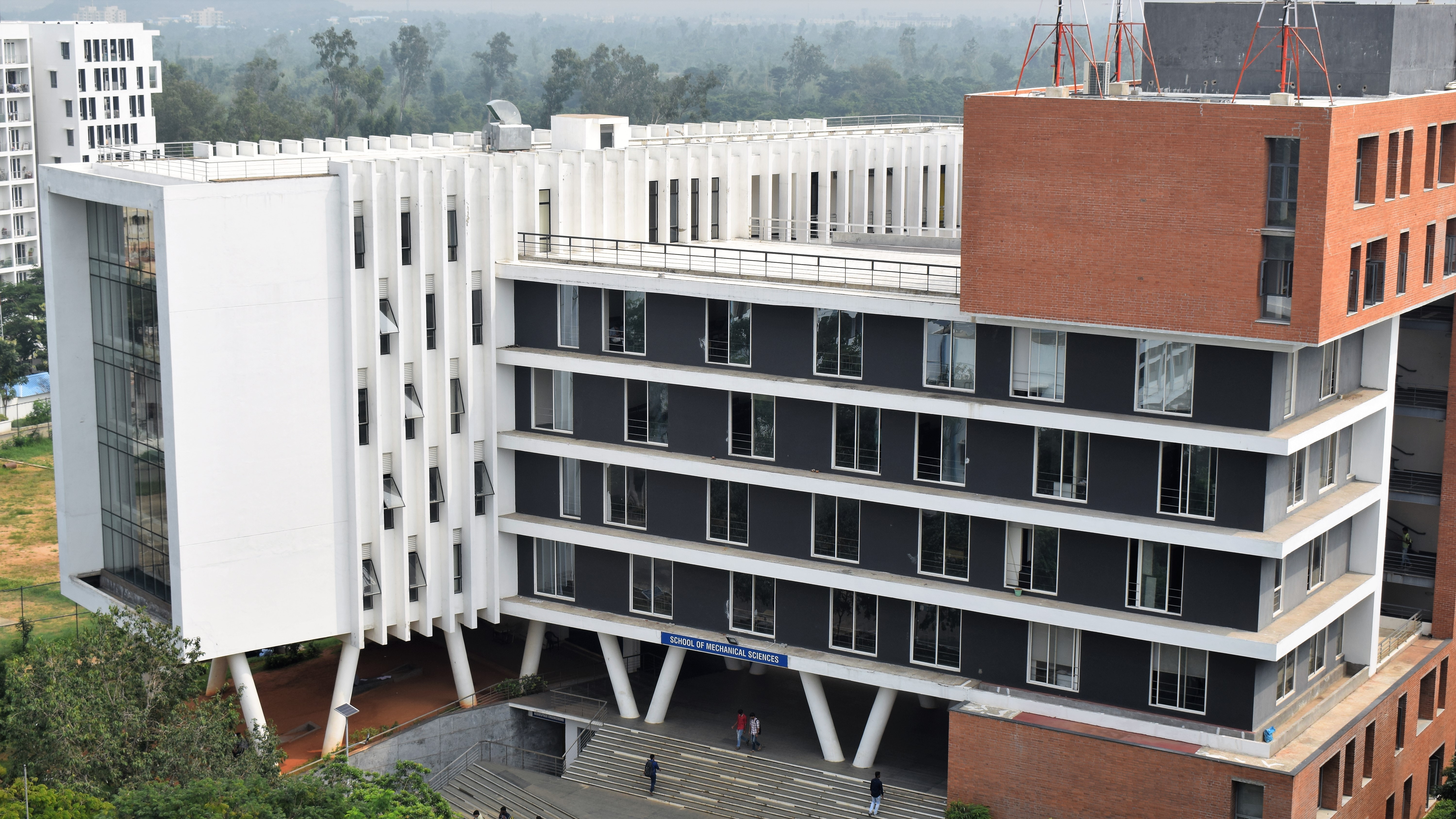
Introduction about Ph.D. in Commerce at B.S. Abdur Rahman Crescent Institute of Science and Technology
Embarking on a journey toward academic excellence requires a foundation built on innovation, tradition, and a commitment to societal progress. The Ph.D. in Commerce at B.S. Abdur Rahman Crescent Institute of Science and Technology (BSACIST) is meticulously designed for professionals and aspiring researchers who wish to redefine the boundaries of global business and economic theory. Located in Chennai, this prestigious institution empowers scholars to transition from practitioners to thought leaders, equipping them with the analytical rigor necessary to tackle the complexities of the modern financial landscape. By fostering a culture of deep inquiry, the Institute ensures that every doctoral candidate contributes meaningful, high-impact knowledge to the academic and corporate world. Whether you are aiming for a tenure-track position in academia or a strategic leadership role in industry-led research, this program serves as the ultimate catalyst for your cognitive and professional growth.
Ph.D Admission 2026-2027 & Writing Support Services by Shiksha Research
Eligibility Criteria for Ph.D. in Commerce at B.S. Abdur Rahman Crescent Institute of Science and Technology
To maintain a high standard of research quality, the B.S. Abdur Rahman Crescent Institute of Science and Technology has established comprehensive eligibility criteria for its Ph.D. program in Commerce. Potential candidates must align with the following requirements:
- Academic Qualification: Candidates must hold a Master?s degree (M.Com, M.Phil, MBA, or an equivalent professional degree like CA/ICWA/ACS) from a recognized university.
- Minimum Percentage: A minimum of 55% marks in aggregate (or an equivalent grade 'B' in the UGC 7-point scale) is required.
- Relaxation: A relaxation of 5% (from 55% to 50%) is provided for candidates belonging to SC/ST/OBC (non-creamy layer)/Differently-abled categories as per government norms.
- Professional Experience: While not mandatory for full-time scholars, professionals applying for the part-time program should demonstrate relevant work experience in industry or academia.
Entrance Exam for Ph.D. in Commerce at B.S. Abdur Rahman Crescent Institute of Science and Technology
The selection process is rigorous, ensuring that only the most dedicated scholars are admitted. The Institute conducts its own Entrance Test designed to evaluate the candidate's research aptitude and subject-specific knowledge. The exam typically consists of two parts:
- Research Methodology: Testing the candidate?s ability to think critically, analyze data, and understand scientific inquiry methods.
- Subject-Specific Component (Commerce): Focusing on advanced concepts in accounting, finance, marketing, and organizational management.
Candidates who have qualified for the UGC-NET (including JRF), UGC-CSIR NET (including JRF), SLET, GATE, or have completed an M.Phil. degree through a regular mode are generally exempted from the written entrance exam, though they must still appear for the personal interview.
Fee Structure for Ph.D. in Commerce at B.S. Abdur Rahman Crescent Institute of Science and Technology
The fee structure at BSACIST is designed to be competitive, providing immense value for the world-class research facilities offered. Below is an estimated breakdown of the costs involved:
| Category of Fee | Full-Time Candidates (Approx.) | Part-Time Candidates (Approx.) |
|---|---|---|
| Application & Registration Fee | ?1,000 - ?2,000 | ?1,000 - ?2,000 |
| Tuition Fee (Per Semester) | ?25,000 - ?35,000 | ?30,000 - ?40,000 |
| Caution Deposit (Refundable) | ?5,000 | ?5,000 |
| Thesis Submission Fee | ?15,000 - ?20,000 | ?15,000 - ?20,000 |
| Development & Library Fee | ?5,000 (Annual) | ?5,000 (Annual) |
Note: Fees are subject to revision by the Institute's management. It is advisable to check the latest prospectus for the exact figures.
Admission Process for Ph.D. in Commerce at B.S. Abdur Rahman Crescent Institute of Science and Technology
The admission process is a journey of defining your research identity. It follows a structured path to ensure transparency and meritocracy:
- Online Notification: The Institute releases Ph.D. admission notifications twice a year (usually for the January and July sessions).
- Submission of Application: Candidates apply via the official portal with their academic credentials and a brief research statement.
- Entrance Examination: Eligible candidates appear for the written test conducted at the campus.
- Personal Interview: Shortlisted candidates are invited for a viva-voce/interview where they present their research interests before a Departmental Research Committee (DRC).
- Final Selection: Admission is granted based on the combined performance in the entrance test, interview, and previous academic record.
To ensure your academic proposal meets the highest standards during this phase, many scholars utilize professional Thesis and Dissertation Writing Services to refine their research vision and objectives.
Ph.D. Subjects and Specializations in Commerce at B.S. Abdur Rahman Crescent Institute of Science and Technology
The Department of Commerce at BSACIST offers a diverse range of specializations, allowing researchers to delve into niche areas of the economy. These include:
- Financial Management: Exploring capital structures, risk management, and the evolution of FinTech.
- Human Resource Management: Investigating organizational behavior, leadership styles, and employee psychological contracts.
- Marketing Management: Researching digital consumer behavior, brand equity, and sustainable marketing strategies.
- Banking and Insurance: Focused on regulatory frameworks, digital banking, and risk assessment models.
- International Business: Analyzing global trade policies, cross-border investments, and supply chain logistics.
Research Areas in Commerce at B.S. Abdur Rahman Crescent Institute of Science and Technology
The Institute encourages interdisciplinary research that addresses contemporary global challenges. Key research areas currently being explored by faculty and scholars include:
- Cryptocurrency and Blockchain in Corporate Accounting.
- Social Entrepreneurship and Rural Development.
- Corporate Social Responsibility (CSR) and ESG Reporting.
- Impact of Artificial Intelligence on Financial Auditing.
- Behavioral Finance and Investment Patterns among Millennials.
To successfully navigate these complex topics, leveraging Research Paper Writing Services can drastically improve the chances of publication in high-impact, peer-reviewed journals.
Documents Required for Ph.D. in Commerce at B.S. Abdur Rahman Crescent Institute of Science and Technology
A seamless application process requires the submission of various verified documents. Ensure you have the following ready:
- SSLC/10th and Higher Secondary/12th Mark sheets.
- UG and PG Degree Certificates and Consolidated Mark sheets.
- M.Phil. Certificate and Mark sheet (if applicable).
- Valid Scorecard of NET/SLET/GATE (if applying for exemption).
- Transfer Certificate and Conduct Certificate.
- Community Certificate (for reservation categories).
- A brief Research Proposal (Concept Note) outlining the intended area of study.
- No Objection Certificate (NOC) from the employer (for part-time candidates).
- Experience Certificates (if any).
B.S. Abdur Rahman Crescent Institute of Science and Technology Ph.D. Syllabus for Commerce
The Ph.D. syllabus is not a rigid classroom curriculum but a guide for successful research. It typically consists of mandatory coursework in the first year:
- Course Work I: Research Methodology: Focusing on philosophy of science, research design, and ethical practices in conducting research.
- Course Work II: Quantitative Techniques and Data Analysis: Covering advanced statistics, econometric modeling, and software tools like SPSS, R, or AMOS.
- Course Work III: Specialization Elective: A course specifically tailored to the scholar's chosen field (e.g., Advanced Corporate Finance).
- Course Work IV: Literature Review: An intensive exercise in documenting and critical analysis of existing research in the candidate?s specific topic.
During the data collection phase, scholars often find that professional Questionnaire Design and Development is vital for ensuring the reliability and validity of their primary data.
How To Apply for Ph.D. in Commerce at B.S. Abdur Rahman Crescent Institute of Science and Technology
Ready to take the leap? Follow these steps to apply:
- Visit the official website of B.S. Abdur Rahman Crescent Institute of Science and Technology.
- Navigate to the 'Admissions' section and select 'Ph.D. Programs'.
- Register your email and generate login credentials.
- Fill in the application form with accurate personal and academic details.
- Upload scanned copies of all required documents and a recent photograph.
- Pay the application fee via the secure online payment gateway.
- Submit the form and take a printout for future reference.
Career Scope and Job Opportunities After Ph.D. in Commerce from B.S. Abdur Rahman Crescent Institute of Science and Technology
A Ph.D. in Commerce from BSACIST opens doors to elite career paths. Institutions and industries value the deep analytical skills acquired during this journey. Potential career trajectories include:
- Academic Leadership: Professors, Deans, or Heads of Departments in prestigious universities worldwide.
- Corporate Research: Working as a Chief Economist, Financial Consultant, or Market Research Analyst in Fortune 500 companies.
- Public Policy: Advisors to government bodies, the World Bank, or the IMF on economic and trade policies.
- Entrepreneurship: Founding specialized consultancy firms in audit, tax, or strategy.
- Think Tanks: Senior Research Fellows in institutes focused on economic development and sustainability.
In the final stages of the program, utilizing expert Research Data Analysis Services can help in presenting findings that are robust enough to influence industry practices and policy decisions.
Scholarship for Ph.D. in Commerce at B.S. Abdur Rahman Crescent Institute of Science and Technology
The Institute is committed to supporting meritorious scholars through various financial aid programs:
- Crescent Research Fellowship (CRF): Awarded to full-time scholars based on merit and performance in the entrance exam.
- Project Fellowships: Scholars may work as Research Assistants on faculty projects funded by government bodies like ICSSR or DST.
- Government Scholarships: Support for reserved categories and minority students through state and central government schemes.
- External Funding: Encouragement to apply for UGC-JRF, Rajiv Gandhi National Fellowship, and Maulana Azad National Fellowship.
FAQs Regarding Ph.D. in Commerce at B.S. Abdur Rahman Crescent Institute of Science and Technology
1. What is the duration of the Ph.D. program in Commerce?
The minimum duration for full-time scholars is 3 years, and for part-time scholars, it is 4 years. The maximum duration allowed is 6 years.
2. Can I pursue a Ph.D. in Commerce while working?
Yes, the Institute provides a Part-Time Ph.D. category specifically for working professionals, provided they can produce a No Objection Certificate (NOC) from their employer.
3. Is there an age limit for applying?
No, there is generally no upper age limit for pursuing research, as long as the candidate meets the educational eligibility criteria.
4. How often is the entrance exam conducted?
The entrance exams and interviews are typically conducted twice a year, corresponding with the winter and summer admission cycles.
5. Is the Ph.D. from BSACIST recognized globally?
Absolutely. B.S. Abdur Rahman Crescent Institute of Science and Technology is a deemed-to-be university accredited by NAAC with an 'A+' grade and recognized by the UGC, ensuring global validity of its degrees.








