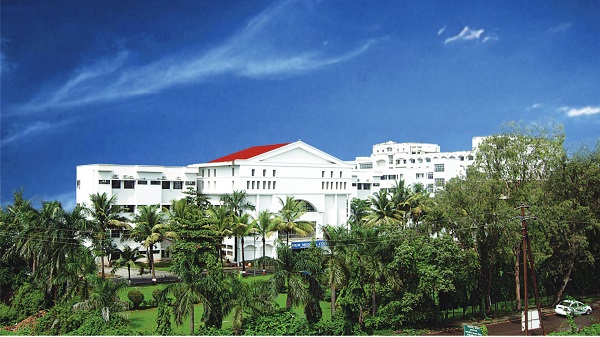
Introduction about Ph.D. in Ear, Nose And Throat at MGM Institute of Health Sciences
The pursuit of a Ph.D. in Ear, Nose And Throat (ENT) at the prestigious MGM Institute of Health Sciences (MGMIHS) represents the pinnacle of academic and clinical excellence for medical professionals. As the field of Otorhinolaryngology undergoes rapid technological transformations?from robotic-assisted surgeries to advanced cochlear implantation?there is an urgent need for scholarly research that pushes the boundaries of current medical paradigms. MGMIHS, recognized for its world-class infrastructure and commitment to healthcare innovation, offers an environment where clinicians can evolve into visionary researchers. This program is designed not just to confer a degree, but to empower scholars to contribute original insights into the complexities of head and neck disorders, sensory restoration, and surgical precision. By choosing this doctoral path, you are committing to a journey of discovery that bridges the gap between clinical practice and transformative medical science.
Ph.D Admission 2026-2027 & Writing Support Services by Shiksha Research
Eligibility Criteria for Ph.D. in Ear, Nose And Throat at MGM Institute of Health Sciences
Aspiring candidates must demonstrate a robust academic background and a clinical foundation to be considered for this elite research program. The eligibility criteria are designed to ensure that scholars possess the necessary prerequisites for high-level medical investigation.
- Educational Qualification: Candidates must hold a Master?s degree (MS in ENT) or a DNB in Otorhinolaryngology recognized by the National Medical Commission (NMC).
- Minimum Marks: A minimum of 55% aggregate marks (or equivalent grade) in the postgraduate degree is required. A relaxation of 5% is typically provided for candidates belonging to SC/ST/OBC (non-creamy layer) and differently-abled categories.
- Medical Registration: Candidates must possess a valid registration with the State Medical Council or the National Medical Commission.
- Professional Standing: While not always mandatory, having prior clinical experience or published case studies can significantly strengthen an application for PhD Admission Assistance.
Entrance Exam for Ph.D. in Ear, Nose And Throat at MGM Institute of Health Sciences
The selection process at MGMIHS is rigorous, ensuring that only the most dedicated minds enter the fellowship of researchers. The primary gateway is the Ph.D. Common Entrance Test (CET). This examination is divided into two distinctive parts:
- Research Methodology: This section evaluates the candidate's aptitude for scientific inquiry, statistical analysis, and ethical research practices.
- Subject-Specific Domain: This focuses on advanced Otorhinolaryngology, covering anatomy, physiology, and pathology related to the ear, nose, throat, and head-neck regions.
Candidates who have cleared national-level examinations such as UGC-NET, CSIR-NET, or those holding a valid JRF are often exempted from the entrance test but must appear for the mandatory personal interview and presentation of their research intent.
Fee Structure for Ph.D. in Ear, Nose And Throat at MGM Institute of Health Sciences
Investing in a Ph.D. is an investment in your career's future. The fee structure at MGM Institute of Health Sciences is competitive for a premier health institution. Below is an approximate breakdown of the costs involved:
| Fee Component | Approximate Amount (INR) | Frequency |
|---|---|---|
| Registration & Admission Fee | ?25,000 - ?40,000 | One-time |
| Annual Tuition Fee | ?1,50,000 - ?2,50,000 | Per Annum |
| Laboratory & Research Lab Access | ?30,000 | Per Annum |
| Library and Digital Resources | ?10,000 | Per Annum |
| Thesis Submission & Viva-Voce | ?20,000 - ?50,000 | At the time of submission |
Note: The fees are subject to change based on university regulations and specific research requirements.
Admission Process for Ph.D. in Ear, Nose And Throat at MGM Institute of Health Sciences
The admission process is a journey of defining your professional identity as a researcher. It begins with the official notification on the MGMIHS website, followed by:
- Application Phase: Filling out the online application form with personal and academic details.
- CET Examination: Qualifying the entrance exam with the required percentile.
- Research Proposal Presentation: Shortlisted candidates must present a concise research plan. Utilizing PhD Topic Selection and Proposal Assistance can be vital here to align your vision with the university's research strengths.
- Personal Interview: An interaction with the Doctoral Research Committee (DRC) to gauge clinical depth and research passion.
- Final Selection: Based on the combined scores of the entrance test and interview performance.
Ph.D. Subjects and Specializations in Ear, Nose And Throat at MGM Institute of Health Sciences
The Ph.D. program allows for deep specialization in specific niches of Otolaryngology. Scholars can focus their studies on:
- Advanced Otology & Neurotology: Exploring vestibular disorders and inner ear regeneration.
- Rhinology and Skull Base Surgery: Investigating endoscopic approaches and chronic inflammatory airway diseases.
- Pediatric Otolaryngology: Researching congenital anomalies and hearing loss in infants.
- Laryngology and Phonosurgery: Specializing in voice disorders and airway reconstruction.
- Head and Neck Oncology: Focusing on molecular markers and surgical outcomes in oral and laryngeal cancers.
Research Areas in Ear, Nose And Throat at MGM Institute of Health Sciences
MGMIHS encourages multidisciplinary research. Current areas of intensive investigation include:
- Cochlear Implants and Neural Plasticity.
- Genetic mapping of Hereditary Hearing Loss.
- Innovative treatments for Obstructive Sleep Apnea (OSA).
- Biomaterials in middle ear reconstruction.
- The impact of environmental pollutants on Sinonasal Health.
For those looking to commercialize their findings, obtaining Patent Filing and Support Services is a strategic move to protect clinical innovations developed during the Ph.D.
Documents Required for Ph.D. in Ear, Nose And Throat at MGM Institute of Health Sciences
To ensure a seamless verification process, candidates should prepare the following documents:
- Postgraduate Degree Certificate (MS/DNB).
- MBBS Degree Certificate and Internship Completion Certificate.
- All marksheets from undergraduate and postgraduate studies.
- NMC/State Medical Council Registration.
- Experience Certificate (if applicable).
- Research Proposal (Abstract).
- Letters of Recommendation (Minimum two).
- No Objection Certificate (NOC) if employed in a government or private hospital.
- Valid ID Proof and Passport-sized photographs.
MGM Institute of Health Sciences Ph.D. Syllabus for Ear, Nose And Throat
The syllabus is structured to transform a clinician into a scientist. While the research is self-directed, the coursework (usually during the first year) covers:
- Module I: Research Methodology: Biostatistics, sampling techniques, and clinical trial design.
- Module II: Ethics and Bioethics: Navigating Institutional Review Board (IRB) protocols and patient confidentiality in ENT trials.
- Module III: Advanced Otorhinolaryngology: Literature review of recent advances, molecular biology in ENT, and imaging technologies.
- Module IV: Scientific Writing: Techniques for drafting impactful research papers. Many students seek Editing and Proofreading Services to ensure their final thesis meets global academic standards.
How To Apply for Ph.D. in Ear, Nose And Throat at MGM Institute of Health Sciences
The application process is straightforward but requires attention to detail:
- Visit the MGMIHS official website (www.mgmuhs.com).
- Navigate to the "Admissions" section and select the Ph.D. portal.
- Register as a new user and login.
- Fill in the application form accurately.
- Upload scanned copies of required documents.
- Pay the application fee through the online payment gateway.
- Print the application confirmation for future reference.
Career Scope and Job Opportunities After Ph.D. in Ear, Nose And Throat from MGM Institute of Health Sciences
An ENT specialist with a Ph.D. occupies a unique and highly respected position in the healthcare ecosystem. The career trajectory is vast and inspirational:
- Academic Leadership: Become a Professor or Head of Department in medical colleges, shaping the next generation of ENT surgeons.
- Clinical Scientist: Lead research and development in corporate hospital chains or specialized research institutes.
- Public Health Consultant: Advise government agencies on hearing screening programs and noise pollution policies.
- Biotech and Pharma Consultant: Contribute to the development of new ENT drugs and medical devices.
- International Research Fellow: Opportunities to collaborate with global bodies like the WHO on hearing health initiatives.
Furthermore, established professionals who have made lifelong clinical contributions without a formal Ph.D. may sometimes explore Honorary Doctorate Programs as a recognition of their immense impact on the field.
Scholarship for Ph.D. in Ear, Nose And Throat at MGM Institute of Health Sciences
MGMIHS and other external agencies offer financial support to meritorious research scholars to alleviate the financial burden of doctoral studies:
- Institutional Fellowships: Awarded to top-ranking students in the entrance exam.
- Government Grants: Scholars are encouraged to apply for fellowship schemes from ICMR, CSIR, and the Department of Biotechnology (DBT).
- External Sponsorships: Partnerships with ENT equipment manufacturers who fund specific clinical research.
Securing these grants often requires high-quality manuscripts, where Research Publication Support becomes an invaluable asset for the scholar.
FAQs Regarding Ph.D. in Ear, Nose And Throat at MGM Institute of Health Sciences
1. What is the duration of the Ph.D. program?
The typical duration is 3 to 5 years, depending on the progress of the research and thesis completion.
2. Can I pursue this Ph.D. while practicing clinically?
Yes, MGMIHS often allows internal and external candidates to pursue research, though a minimum residency or attendance period for coursework is required.
3. Is the Ph.D. from MGMIHS UGC recognized?
Yes, MGMIHS is a Deemed-to-be University recognized by the UGC, ensuring the degree has nationwide and international validity.
4. How often are the admission cycles open?
Admissions are typically announced once or twice a year, usually in the summer and winter sessions.
5. Is there an age limit for applying?
Generally, there is no upper age limit for Ph.D. admissions in the medical faculty, emphasizing lifelong learning and professional growth.








