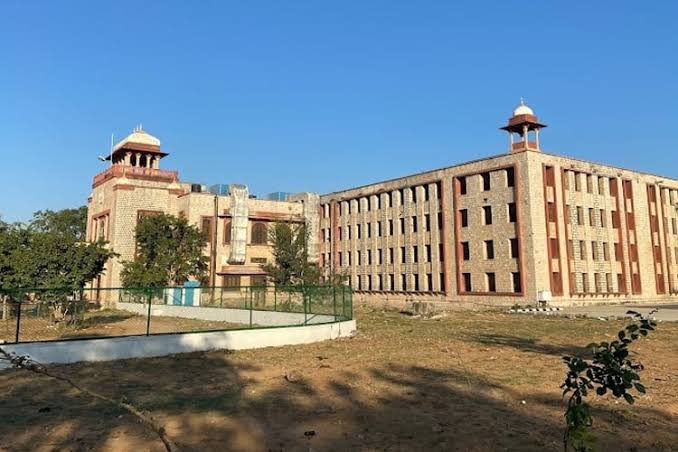
Ph.D. in Econometrics from Rajasthan University: Eligibility, Entrance Exam, Fee Structure, Admission Process, Subjects, Research Areas, Syllabus, Scholarship & Career Scope
Introduction about Ph.D. in Econometrics at Rajasthan University
The Doctorate in Econometrics offered by Rajasthan University is a rigorous research?oriented programme designed for professionals who aspire to become thought leaders in quantitative economics, policy analysis, and data?driven decision making. With a blend of advanced statistical methods, economic theory, and computational tools, this Ph.D. equips scholars to tackle complex economic problems ranging from macro?policy evaluation to micro?level market dynamics. The curriculum encourages interdisciplinary collaboration, leveraging the university?s strong ties with industry, government agencies, and international research centres.
Ph.D Admission 2026-2027 & Writing Support Services by Shiksha Research
Eligibility Criteria for Ph.D. in Econometrics at Rajasthan University
- Master?s degree (or equivalent) in Economics, Statistics, Mathematics, Finance, or any related discipline with a minimum aggregate of 55% (or 5.0 CGPA) for general category candidates.
- For candidates holding a PG Diploma in Econometrics or related fields, a minimum of 60% is required.
- Qualifying national level tests such as UGC?NET, CSIR?NET, or GATE (Economics/Mathematics) are accepted in lieu of university?specific entrance exams.
- Professional experience of at least two years in research, data analytics, or policy advisory roles is considered a strong advantage.
- English proficiency (IELTS/TOEFL) is not mandatory for Indian nationals but may be required for overseas applicants.
Entrance Exam for Ph.D. in Econometrics at Rajasthan University
Rajasthan University conducts an annual Ph.D. entrance test that evaluates candidates on:
- Micro? and macro?economic theory.
- Advanced statistical inference and econometric modelling.
- Mathematical methods for economics (calculus, linear algebra, optimisation).
- Research aptitude and analytical writing.
The exam comprises a 100?minute written paper (120 multiple?choice & short?answer questions) followed by a personal interview with a panel of subject experts. Candidates with valid UGC?NET/CSIR?NET scores are exempted from the written component but must attend the interview.
Fee Structure for Ph.D. in Econometrics at Rajasthan University
| Component | Annual Fee (INR) | Notes |
|---|---|---|
| Tuition & Examination Fee | ?35,000 | Payable at the start of each academic year. |
| Laboratory & Software Access | ?10,000 | Includes STATA, R, Python licences. |
| Library & Resource Fee | ?5,000 | Provides access to premium journals and databases. |
| Miscellaneous (seminars, workshops) | ?3,000 | Variable based on participation. |
| Total Approximate Annual Cost | ?53,000 | Subject to revision each academic session. |
Admission Process for Ph.D. in Econometrics at Rajasthan University
- Online Application: Submit the completed application form via the university?s admission portal along with scanned copies of academic transcripts.
- Document Verification: Appear at the university?s documentation centre for original certificate verification within 15 days of application submission.
- Entrance Examination / Qualifying Test Submission: Register for the university?s entrance exam or upload UGC?NET/CSIR?NET scorecards.
- Interview & Research Proposal Presentation: Shortlisted candidates are invited for a personal interview and to present a concise research proposal (max 5 pages).
- Final Admission Offer: Successful candidates receive a formal admission letter with details of fee payment and registration dates.
- Enrollment & Induction: Complete fee payment, enrol for courses, and attend the mandatory orientation programme.
Ph.D. Subjects and Specializations in Econometrics at Rajasthan University
The doctorate programme offers the following specializations, allowing candidates to tailor their research to emerging economic challenges:
- Time?Series Econometrics & Forecasting
- Panel Data & Micro?Econometrics
- Structural Econometric Modelling
- Financial Econometrics and Risk Management
- Spatial Econometrics & Regional Development
- Machine Learning Applications in Econometrics
Research Areas in Econometrics at Rajasthan University
Key research domains pursued by faculty and Ph.D. scholars include:
- Macroeconomic Policy Impact Assessment (inflation, fiscal stimulus, monetary transmission).
- Labor Market Dynamics and Wage Inequality.
- Health Economics and Econometric Evaluation of Public Health Interventions.
- Environmental Economics ? causal inference on climate policy.
- Digital Economy ? econometric analysis of e?commerce, fintech, and data privacy.
- Urban Economics ? housing price modelling and transportation demand.
Documents Required for Ph.D. in Econometrics at Rajasthan University
| Document | Format | Remarks |
|---|---|---|
| Academic Transcripts (10?2, Graduation, Post?Graduation) | PDF (Scanned) | Original copies to be presented during verification. |
| UGC?NET/CSIR?NET/GATE Scorecard (if applicable) | Valid for the current academic year. | |
| Research Proposal (max 5 pages) | Should highlight objectives, methodology, and expected contribution. | |
| Curriculum Vitae (CV) | Include publications, projects, and professional experience. | |
| Identity Proof (Aadhaar / Passport) | Government?issued photo ID. |
Rajasthan University Ph.D. Syllabus for Econometrics
The syllabus is structured into three phases ? Coursework, Comprehensive Examination, and Thesis Submission.
Phase I ? Core Coursework (12 months)
- Advanced Microeconomics
- Advanced Macroeconomics
- Statistical Theory for Economists
- Econometric Methods I & II
- Computational Economics (R, Python, Stata)
- Research Methodology & Academic Writing
Phase II ? Comprehensive Examination (6 months)
A written and oral exam covering all core subjects, followed by a proposal defence.
Phase III ? Thesis Research (24?30 months)
Original research leading to a dissertation that meets the university?s publication standards.
How To Apply for Ph.D. in Econometrics at Rajasthan University
Prospective candidates should follow these steps to submit a successful application:
- Visit the official Rajasthan University admission portal and register a new user account.
- Fill in personal and academic details, upload the required PDFs, and pay the non?refundable application fee of ?1,500 online.
- Schedule the entrance examination (if required) through the portal and note the examination centre.
- Prepare a concise research proposal aligning with one of the university?s research areas.
- After receiving the merit list, book an interview slot and attend the interview with your proposal.
- Upon selection, complete fee payment, enrol in the mandatory induction programme, and commence coursework.
Career Scope and Job Opportunities After Ph.D. in Econometrics from Rajasthan University
Graduates of the Econometrics Ph.D. program enjoy a broad spectrum of high?impact career paths:
- Academic Positions: Assistant Professor, Associate Professor, and Research Fellow at national and international universities.
- Research Institutions: Economist or Senior Analyst at RBI, NITI Aayog, World Bank, IMF, and think?tanks.
- Financial Sector: Quantitative Analyst, Risk Manager, or Portfolio Strategist in banks, asset?management firms, and fintech startups.
- Data?Intensive Industries: Senior Data Scientist or Econometric Modeller in consulting firms, e?commerce giants, and government statistical departments.
- Policy Advisory: Lead analyst for policy formulation, impact evaluation, and evidence?based decision making.
With the rise of data?driven decision making, the demand for professionals who can bridge rigorous econometric theory with real?world applications is soaring, making this Ph.D. a future?proof investment.
Scholarship for Ph.D. in Econometrics at Rajasthan University
Rajasthan University offers several merit?based and need?based financial aids:
- University Merit Scholarship: 50% tuition waiver for top 10% of candidates based on entrance score and academic record.
- UGC?NET Fellowship: Monthly stipend of ?31,000 plus contingency grant for research materials.
- External Grants: Opportunities to apply for scholarships from the Department of Science & Technology (DST), Indian Council








