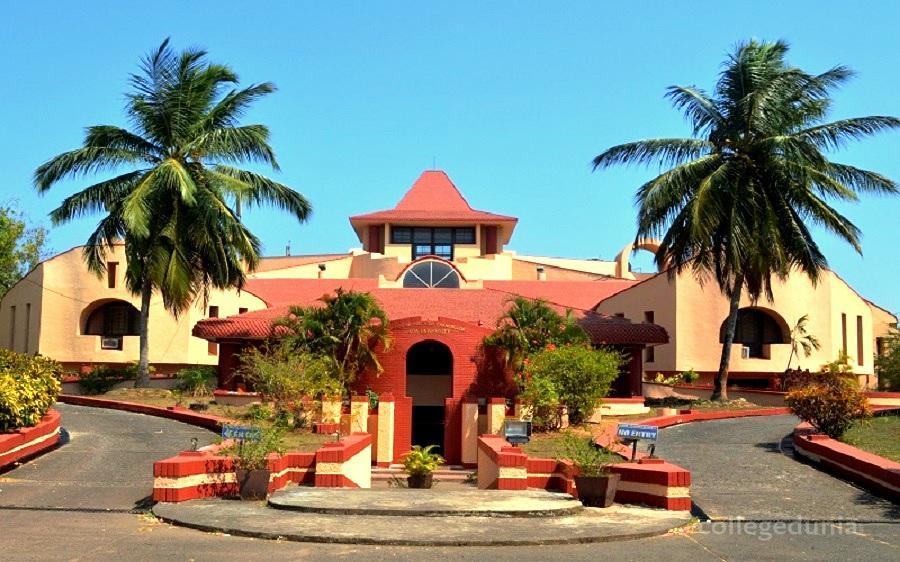
Introduction about Ph.D. in Economics at Goa University
Embarking on a doctoral journey in Economics at Goa University opens the gateway to cutting‑edge research, influential policy analysis, and a distinguished academic profile. The programme is meticulously designed for aspiring scholars who are driven to decode complex economic phenomena, influence public discourse, and shape the future of economic thought. Whether you wish to explore macro‑economic stability, development economics, or financial markets, the Ph.D. in Economics at Goa University equips you with rigorous analytical tools, mentorship from renowned faculty, and a vibrant research community.
Eligibility Criteria for Ph.D. in Economics at Goa University
Prospective candidates must satisfy the following minimum requirements:
- A Master’s degree (M.A./M.Sc.) in Economics or a closely related discipline with at least 55% aggregate marks (50% for reserved categories).
- Qualifying score in the university‑level Ph.D. entrance test or a national level exam such as UGC‑NET, CSIR‑NET, or GATE (Economics).
- English language proficiency (if the medium of previous study was not English) – typically an IELTS score of 6.0 or equivalent.
- For candidates holding a professional degree (e.g., MBA with a major in Finance), supplementary coursework in core economics may be required.
Entrance Exam for Ph.D. in Economics at Goa University
The entrance examination evaluates both theoretical knowledge and research aptitude. The test pattern includes:
- Paper‑I (Objective): 100 multiple‑choice questions covering Micro‑economics, Macro‑economics, Econometrics, and Development Economics.
- Paper‑II (Descriptive): Two essay‑type questions that assess analytical writing, data interpretation, and research proposal drafting.
- Interview & VIVA: A panel interview to gauge research interests, motivation, and suitability for doctoral studies.
Candidates who have cleared UGC‑NET or equivalent examinations are exempted from Paper‑I but still participate in Paper‑II and the interview.
Fee Structure for Ph.D. in Economics at Goa University
| Component | Annual Fee (INR) | Notes |
|---|---|---|
| Tuition Fee | ₹ 18,000 | Applicable to all full‑time doctoral candidates. |
| Library & Resource Charges | ₹ 2,500 | Includes access to digital journals and databases. |
| Examination & Evaluation Fee | ₹ 3,000 | Paid per semester. |
| Miscellaneous (Laboratory, Seminar, etc.) | ₹ 1,500 | Variable based on research needs. |
| Total Approx. Annual Cost | ₹ 25,000 | Subject to revision each academic year. |
Students can avail of a 50% tuition waiver if they secure a merit‑based scholarship or fulfill the teaching‑assistantship criteria. The university also offers a limited number of fully funded seats for candidates with outstanding research proposals.
Admission Process for Ph.D. in Economics at Goa University
The admission journey follows a transparent, step‑by‑step workflow:
- Online Application: Submit the completed application form through the university portal along with scanned copies of academic transcripts.
- Entrance Examination: Appear for the written test (or submit your UGC‑NET score).
- Document Verification: Upload required certificates, identity proof, and research proposal abstract.
- Interview & VIVA: Attend the personal interview conducted by the Department of Economics.
- Final Selection: Receive the admission offer letter via email. Pay the provisional fee to confirm the seat.
- Orientation: Participate in the orientation program and register for the first semester.
Ph.D. Subjects and Specializations in Economics at Goa University
While the overarching degree is a Doctor of Philosophy in Economics, students can specialize in one of the following research streams:
- Macroeconomic Policy & Development
- International Trade & Finance
- Environmental & Resource Economics
- Health Economics
- Quantitative Methods & Econometrics
- Labor Economics & Public Policy
- Behavioral and Experimental Economics
Research Areas in Economics at Goa University
The department encourages interdisciplinary investigations. Current research hotspots include:
- Impact of tourism on coastal economies.
- Fiscal decentralization and its effect on regional growth.
- Climate‑change adaptation financing.
- Digital transformation of financial services in emerging markets.
- Poverty alleviation strategies using micro‑finance models.
Students are urged to align their dissertation topics with national priorities and global scholarly discourse, enhancing both relevance and publishability.
Documents Required for Ph.D. in Economics at Goa University
| Document | Format | Remarks |
|---|---|---|
| Academic Transcripts (10+2, Graduation, Post‑Graduation) | PDF – Scanned copies | Must be attested by the issuing institution. |
| Entrance Exam Scorecard (UGC‑NET / GATE / University Test) | Valid for the current academic year. | |
| Research Proposal (1500‑2000 words) | DOCX or PDF | Include objectives, methodology, and expected contributions. |
| Identity Proof (Aadhar / Passport) | Government‑issued photo ID. | |
| Proof of English Proficiency (if required) | IELTS, TOEFL, or equivalent. |
Goa University Ph.D. Syllabus for Economics
The syllabus is structured into core modules, electives, and research components:
- Core Modules: Advanced Micro‑economics, Advanced Macro‑economics, Econometric Theory, Research Methodology.
- Electives (choose two): Development Economics, Financial Economics, Environmental Economics, Health Economics, Behavioral Economics.
- Research Component: Seminar presentations, Publication of at least two peer‑reviewed articles, Dissertation defense.
How To Apply for Ph.D. in Economics at Goa University
Follow these concise steps to submit a successful application:
- Visit the official Goa University Ph.D. portal and create a new user account.
- Complete the online application form, ensuring all mandatory fields are filled accurately.
- Upload the documents listed in the Documents Required section.
- Pay the non‑refundable application fee of ₹ 1,200 via net banking or UPI.
- Submit the research proposal draft. For additional guidance, consider professional PhD Topic Selection and Proposal Assistance.
- Monitor your email for the entrance exam schedule and further instructions.
Career Scope and Job Opportunities After Ph.D. in Economics from Goa University
A doctorate in Economics positions you for a spectrum of high‑impact roles:
- Academic Positions: Assistant Professor, Associate Professor, Department Head in universities across India and abroad.
- Research Institutes: Economist or Senior Fellow at think‑tanks such as NIPER, RBI, World Bank, or IMF.
- Policy Advisory: Senior Analyst in government ministries, state planning commissions, or public‑policy NGOs.
- Financial Sector: Chief Economist, Risk Analyst, or Portfolio Manager in banks, investment houses, and insurance firms.
- International Organizations: Project Economist for UNDP, ADB, or WTO.
- Corporate Strategy: Business Development Director, Economic Consultant for multinational corporations.
Graduates often leverage the university’s strong alumni network and industry collaborations to secure roles that blend research acumen with practical decision‑making.
Scholarship for Ph.D. in Economics at Goa University
Financial support is available through several avenues:
- University Merit Scholarships: Up to 50% tuition waiver for top‑ranked entrance test performers.
- UGC Junior Research Fellowship (JRF): Annual stipend of ₹ 31,000 plus contingency grant.
- External Fellowships: Gates Cambridge, Commonwealth, and DBT‑ISRO funded scholarships.
- Teaching Assistantship: Monthly remuneration for conducting tutorials and grading assignments.
Students can also avail professional Editing and Proofreading Services to enhance the quality of their manuscripts before journal submission, increasing the likelihood of securing research grants.
FAQs Regarding Ph.D. in Economics at Goa University
- 1. How long does it take to complete the Ph.D. in Economics?
- The typical duration is 3–5 years, depending on the research progress and publication requirements.
- 2. Is part‑time enrollment allowed?
- Yes, part‑time options are available for working professionals, with a flexible schedule for coursework and research.
- 3. Can I switch my specialization after enrollment?
- Subject to departmental approval








