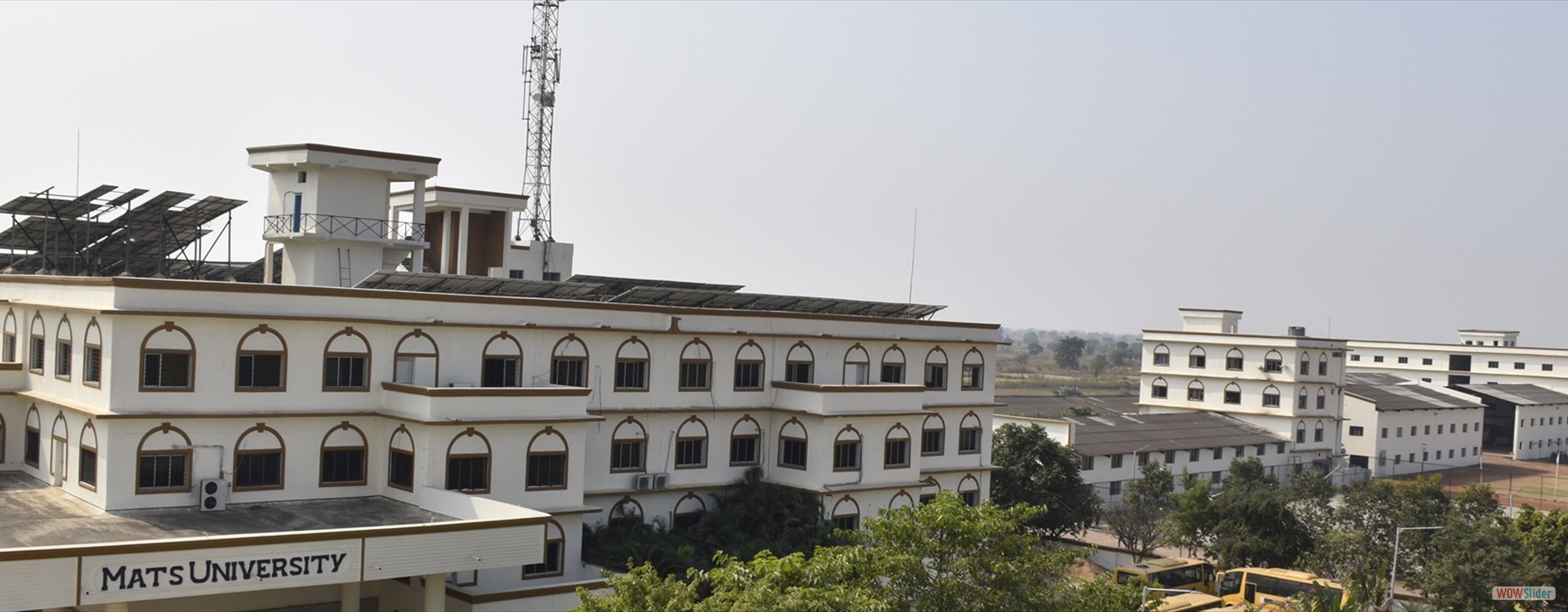
Introduction about Ph.D. in Education at MATS University
Embarking on a journey toward a Ph.D. in Education at MATS University is more than just an academic pursuit; it is a transformative experience designed for visionary professionals who seek to redefine the landscape of learning. MATS University, located in the vibrant state of Chhattisgarh, has established itself as a beacon of excellence in higher education, fostering an environment where innovation meets tradition. For educators, administrators, and policy-makers, this doctoral program offers a platform to delve deep into the complexities of pedagogical theories, educational management, and societal impact. By choosing MATS University, you are committing to a rigorous intellectual challenge that will empower you to lead with authority and contribute original knowledge to the global academic community. Whether your passion lies in curriculum development or technological integration in classrooms, the university provides the resources and mentorship necessary to turn your vision into reality. To navigate this competitive landscape, many candidates seek PhD Admission Assistance to ensure their application stands out and reflects their professional potential.
Ph.D Admission 2026-2027 & Writing Support Services by Shiksha Research
Eligibility Criteria for Ph.D. in Education at MATS University
To maintain high academic standards and ensure that candidates are prepared for the rigors of advanced research, MATS University has established comprehensive eligibility criteria. Prospective students must hold a Master?s degree in Education (M.Ed.) or a relevant postgraduate degree from a recognized university. A minimum of 55% aggregate marks (or an equivalent grade point average) is generally required, though a relaxation of 5% is often provided to candidates from reserved categories (SC/ST/OBC) or differently-abled individuals, in accordance with UGC guidelines. Beyond academic scores, professional experience in the field of education is highly valued, as it provides a practical foundation for theoretical research. Candidates who have already cleared national-level examinations like UGC-NET, JRF, or SET are often given preference and may be eligible for direct admission phases, showcasing their readiness for high-level scholarly inquiry.
Entrance Exam for Ph.D. in Education at MATS University
The gateway to the doctoral program at MATS University is the MATS Entrance Test (MET). This examination is meticulously designed to assess a candidate's aptitude for research, logical reasoning, and depth of subject knowledge. The entrance exam typically consists of two parts: the first focuses on Research Methodology, evaluating the candidate's ability to design studies and analyze data, while the second part is subject-specific, covering core themes in Education such as Philosophy of Education, Psychology of the Learner, and Educational Technology. Success in the MET requires not only a mastery of the syllabus but also an analytical mindset that can bridge the gap between theory and practice. Candidates who demonstrate exceptional performance in the entrance exam proceed to the crucial interview stage, where they present their research interests to a panel of esteemed faculty members.
Fee Structure for Ph.D. in Education at MATS University
Investing in a Ph.D. is an investment in your professional future. MATS University offers a transparent and competitive fee structure designed to support long-term research goals without compromising on resources. The fees cover various aspects from registration and coursework to thesis evaluation. Below is an indicative breakdown of the fee components:
| Fee Component | Description | Approximate Amount (INR) |
|---|---|---|
| Registration Fee | One-time payment at the time of admission | ?10,000 - ?15,000 |
| Coursework Fee | Covers the mandatory first-semester modules | ?20,000 - ?25,000 |
| Annual Tuition Fee | Payable for each year of the program (approx. 3-5 years) | ?60,000 - ?80,000 per year |
| Library & Laboratory Fee | Access to digital resources and physical labs | ?5,000 per year |
| Thesis Submission Fee | Payable during the final submission phase | ?20,000 - ?30,000 |
Please note that these figures are subject to change based on university regulations. For professionals who have achieved extraordinary milestones in their careers without a formal Ph.D., the university also acknowledges excellence through various channels, and some may even explore Honorary Doctorate Programs as a testament to their lifelong contributions to the field.
Admission Process for Ph.D. in Education at MATS University
The admission process at MATS University is rigorous and merit-based, ensuring that the most capable minds enter the research community. It begins with the release of the official admission notification, usually available on the university website. Interested candidates must fill out the application form and submit it along with the required processing fees. After the application phase, eligible candidates are called for the MATS Entrance Test. Those who clear the test, along with candidates exempted through UGC-NET/JRF, are invited for a personal interview. During the interview, candidates must discuss their potential research area and demonstrate their commitment to the discipline. Final selection is based on a composite score of the entrance exam, interview performance, and previous academic record. Once selected, candidates undergo a registration process and are assigned a research supervisor to guide them through their doctoral journey.
Ph.D. Subjects and Specializations in Education at MATS University
Education is a vast and dynamic field, and MATS University offers a diverse range of specializations to cater to the evolving needs of the global education sector. Scholars can choose to focus on areas that resonate with their career aspirations and social impact goals. Popular specializations include Educational Psychology, which examines the mental processes of learners; Educational Leadership and Administration, focusing on institutional management; and Inclusive Education, which seeks to create equitable learning environments for students with diverse needs. Other emerging areas include Digital Pedagogy and Curriculum Design. Selecting the right focus is vital, and many scholars benefit from PhD Topic Selection and Proposal Assistance to refine their research questions and ensure their study remains relevant and innovative.
Research Areas in Education at MATS University
MATS University encourages interdisciplinary research that addresses contemporary challenges in the Indian and international education systems. Some of the prominent research areas include:
- Teacher Education: Impact of training programs on classroom effectiveness and professional ethics.
- Educational Technology: The role of AI, VR, and Gamification in modern learning environments.
- Sociology of Education: Exploring the relationship between education and social mobility, gender parity, and rural development.
- Policy Analysis: Evaluating the implementation of the National Education Policy (NEP) and its impact on vocational training.
- Measurement and Evaluation: Developing new tools for assessing student performance and emotional intelligence.
Documents Required for Ph.D. in Education at MATS University
To ensure a smooth admission process, candidates must prepare a comprehensive dossier of documents. Accuracy in documentation is critical for verifying eligibility and academic history. The required documents typically include:
- High School (10th) and Higher Secondary (12th) Marksheets.
- Bachelor?s and Master?s Degree certificates and transcripts.
- Valid Scorecards of UGC-NET/JRF/SET (if applicable).
- A detailed Curriculum Vitae (CV) highlighting professional experience.
- A preliminary Research Proposal (Synopsis) outlining the intended study.
- No Objection Certificate (NOC) from the current employer for working professionals.
- Category certificate (if claiming reservation benefits).
- Passport-sized photographs and valid Government ID proof (Aadhar/Passport).
MATS University Ph.D. Syllabus for Education
The Ph.D. program is structured into two main phases: Coursework and the Main Research phase. The coursework is mandatory and serves as the foundation for high-quality research. It typically lasts for one semester and includes modules on Research Methodology, Advanced Statistics, and Computer Applications in Research. Scholars also study 'Review of Literature' where they analyze existing academic work to identify gaps. During this stage, maintaining high standards of writing is essential; hence, scholars often utilize Editing and Proofreading Services to ensure their assignments and preliminary reports are of publishable quality. Following the coursework, scholars move to the specialized study of their chosen topic, focusing on data collection, analysis, and the formulation of original conclusions.
How To Apply for Ph.D. in Education at MATS University
Applying for a Ph.D. at MATS University is a straightforward online process. Follow these steps to secure your spot in the program:
- Visit the Official Website: Go to the MATS University admissions portal to find the active Ph.D. link.
- Registration: Create an account using your email and mobile number.
- Form Filling: Enter your personal details, academic qualifications, and professional experience accurately.
- Upload Documents: Upload scanned copies of all required certificates and your research proposal.
- Fee Payment: Pay the application fee via the integrated secure payment gateway.
- Submission: Review the details and submit the form. Keep a printed copy of the application and transaction receipt for future reference.
- Entrance Test Admit Card: Download the admit card once it is released and prepare for the MET exam.
Career Scope and Job Opportunities After Ph.D. in Education from MATS University
Earning a Ph.D. in Education from MATS University opens doors to some of the most prestigious and influential roles in the sector. Graduates are well-equipped to enter academia as Professors or Senior Lecturers in renowned universities. Beyond teaching, the degree qualifies individuals for leadership roles such as Educational Consultants, Institutional Directors, or Policy Advisors for government and non-governmental organizations. The corporate sector also offers opportunities in 'Learning and Development' departments, where Ph.D. holders design high-impact training programs for employees. To enhance their global profile, many graduates focus on publishing their findings in high-impact journals, often seeking Research Publication Support to navigate the complex world of peer-reviewed academic journals. The depth of research skills acquired ensures that graduates can also work as Independent Researchers or Curriculum Specialists.
Scholarship for Ph.D. in Education at MATS University
MATS University is committed to making advanced research accessible to talented individuals regardless of their financial background. Various financial aid options are available, including university-level fellowships for top-ranking entrance exam scorers. Furthermore, scholars are encouraged to apply for external fellowships such as the Maulana Azad National Fellowship, Rajiv Gandhi National Fellowship, or UGC-JRF stipends. These scholarships often provide a monthly stipend and a contingency grant to cover research-related expenses. In some cases, research that leads to innovative tools or methodologies can be monetized or protected through legal frameworks; for this, researchers can seek Patent Filing and Support Services to safeguard their intellectual property and enhance the commercial value of their work.
FAQs Regarding Ph.D. in Education at MATS University
1. What is the duration of the Ph.D. program in Education?
The program typically lasts between 3 to 5 years, depending on the progress of the research and the nature of the data collection.
2. Can I pursue a Ph.D. in Education while working?
Yes, MATS University offers a part-time Ph.D. option for working professionals, provided they can attend the mandatory coursework and meet the residency requirements as per UGC norms.
3. Is the Ph.D. degree from MATS University recognized globally?
Absolutely. MATS University is a recognized institution, and its Ph.D. degrees align with the standards set by the University Grants Commission (UGC), making them valid for jobs and further research worldwide.
4. What is the importance of the Research Proposal during the interview?
The proposal is crucial as it demonstrates your ability to identify a research problem, frame objectives, and suggest a methodology. it shows the committee that you have a clear direction for your doctoral journey.
5. Are there any residency requirements for the Ph.D. program?
Yes, scholars are usually required to spend a specific period on campus during the coursework phase to interact with supervisors and utilize university resources.








