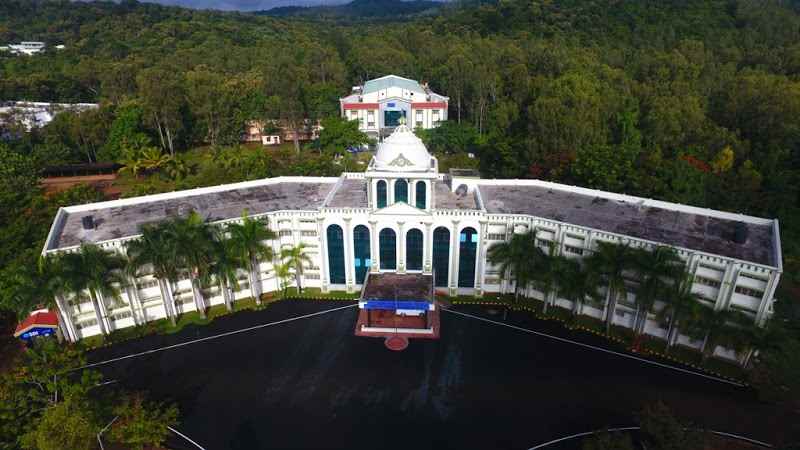
Ph.D. in Education from Nrupathunga University: Eligibility, Entrance Exam, Fee Structure, Admission Process, Subjects, Research Areas, Syllabus, Scholarship & Career Scope
Introduction about Ph.D. in Education at Nrupathunga University
The Doctor of Philosophy (Ph.D.) in Education at Nrupathunga University stands as a beacon for professionals who aspire to lead transformative research, shape educational policy, and influence learning ecosystems worldwide. This program blends rigorous scholarly inquiry with practical insights, empowering candidates to address complex challenges ranging from curriculum design to educational technology integration. With a faculty renowned for interdisciplinary collaboration and a research‑rich campus environment, the university fosters an inspirational journey that aligns personal ambition with societal impact.
Eligibility Criteria for Ph.D. in Education at Nrupathunga University
Prospective scholars must satisfy the following baseline requirements:
- A Master’s degree in Education, Psychology, Sociology, or a closely related discipline with at least 55% aggregate (or equivalent CGPA).
- Minimum of two years of professional experience in teaching, research, or educational administration is strongly preferred.
- Qualifying score in the university‑conducted entrance examination or a recognized national test (e.g., UGC‑NET).
- English language proficiency (IELTS ≥ 6.0 or TOEFL ≥ 80) for international candidates.
Candidates who hold a Ph.D. in a related field may also be considered for a direct entry based on research portfolio and publications.
Entrance Exam for Ph.D. in Education at Nrupathunga University
The entrance assessment evaluates both academic foundations and research aptitude. The exam is divided into two sections:
- Paper‑I (General Ability): Verbal reasoning, quantitative aptitude, and general awareness.
- Paper‑II (Subject Specific): Educational theories, research methodology, curriculum development, and policy analysis.
Preparation resources, including past papers and mock tests, are available on the university portal. Candidates who have cleared the UGC‑NET in Education are exempted from Paper‑II and may directly apply for the interview stage.
Fee Structure for Ph.D. in Education at Nrupathunga University
| Fee Component | Amount (INR) | Notes |
|---|---|---|
| Application & Registration Fee | 5,000 | One‑time, non‑refundable |
| Annual Tuition Fee | 45,000 | Payable at the start of each academic year |
| Laboratory & Library Charges | 2,500 | Includes access to digital resources |
| Examination & Evaluation Fee | 3,000 | Per semester |
| Miscellaneous (Student Services) | 1,500 | Student‑council activities, counseling, etc. |
| Total Approximate Cost (3‑Year Programme) | 1,68,500 | Excluding scholarships and waivers |
Financial support options, such as university fellowships, research grants, and external scholarships, can significantly reduce the out‑of‑pocket expenses.
Admission Process for Ph.D. in Education at Nrupathunga University
The admission trajectory is designed to be transparent and merit‑driven:
- Online Application: Submit the completed form through the university’s admission portal along with scanned copies of academic certificates.
- Entrance Examination: Appear for the two‑paper test scheduled by the university. Qualified candidates receive a merit list.
- Interview & Proposal Presentation: Shortlisted applicants present a research proposal and undergo a personal interview with the faculty panel.
- Final Admission Offer: Successful candidates receive an official acceptance letter, detailing fee payment schedule and registration steps.
- Orientation: New scholars attend a week‑long orientation covering campus resources, research ethics, and academic expectations.
For personalized guidance, many aspirants turn to PhD Admission Assistance services, which streamline documentation and interview preparation.
Ph.D. Subjects and Specializations in Education at Nrupathunga University
The doctoral program offers a suite of specializations, enabling candidates to tailor their research focus:
- Curriculum Design and Evaluation
- Educational Leadership and Policy
- Instructional Technology and E‑Learning
- Special and Inclusive Education
- Psychology of Learning and Development
- Comparative and International Education
- Assessment and Measurement
Each specialization is supported by dedicated faculty mentors and access to state‑of‑the‑art labs or simulation centers.
Research Areas in Education at Nrupathunga University
Current research clusters reflect global educational priorities:
- Digital transformation in K‑12 and higher education.
- Impact of socio‑economic factors on learning outcomes.
- Teacher professional development models.
- Policy analysis of inclusive education frameworks.
- Data‑driven assessment and learning analytics.
- Neuroscience‑informed pedagogy.
- Community‑based education interventions.
Students are encouraged to collaborate with the Research Publication Support team to disseminate findings in high‑impact journals.
Documents Required for Ph.D. in Education at Nrupathunga University
| Document | Details |
|---|---|
| Completed Application Form | Online submission with a digital signature. |
| Academic Transcripts | Original certificates of Master's degree (and any prior Ph.D.). |
| Entrance Exam Scorecard | Official result statement from Nrupathunga University. |
| Research Proposal (2,000‑3,000 words) | Clear objectives, methodology, and expected contributions. |
| Curriculum Vitae | Highlight academic achievements, publications, and work experience. |
| Proof of English Proficiency | IELTS/TOEFL score report (if applicable). |
| Recommendation Letters (2) | From academicians or senior professionals familiar with your work. |
Nrupathunga University Ph.D. Syllabus for Education
The curriculum is structured into three phases:
- Core Coursework (Year 1): Research Methods, Advanced Educational Theory, Statistics for Education, and Ethics in Research.
- Specialization Modules (Year 2): Choose two optional courses aligning with your focus area, such as “Learning Technologies” or “Policy Analysis”.
- Dissertation & Publication (Year 3): Conduct original research, submit drafts for peer review, and defend the thesis before a multidisciplinary panel.
Students may also enroll in workshops on grant writing, data visualization, and scholarly communication, often facilitated by the PhD Topic Selection and Proposal Assistance team.
How To Apply for Ph.D. in Education at Nrupathunga University
Follow these step‑by‑step instructions to submit a successful application:
- Visit the official Ph.D. Education portal and create a user account.
- Complete the online application form, ensuring all fields are accurately filled.
- Upload scanned copies of required documents (see the Documents Required section).
- Pay the non‑refundable application fee via the integrated payment gateway.
- Schedule your entrance examination slot and download the admit card.
- After receiving the merit list, book an interview appointment.
- Submit the finalized research proposal and pay the registration fee upon acceptance.
For added confidence, many candidates engage Editing and Proofreading Services to polish their proposal and CV before submission.
Career Scope and Job Opportunities After Ph.D. in Education from Nrupathunga University
A doctorate in Education opens doors to diverse professional pathways:
- Academic Positions: Assistant Professor, Associate Professor, or Department Head at universities and colleges.
- Research Institutes: Senior researcher or project leader in think‑tanks and education research centers.
- Policy & Advisory Roles: Education policy analyst for government ministries, NGOs, or international bodies like UNESCO.
- Consultancy: Curriculum design consultant, e‑learning strategist, or educational technology advisor for private firms.
- Leadership: Director of Learning & Development, Head of Training, or Chief Learning Officer in corporate settings.
Alumni of the program have secured fellowships and grants from agencies such as the Indian Council of Social Science








