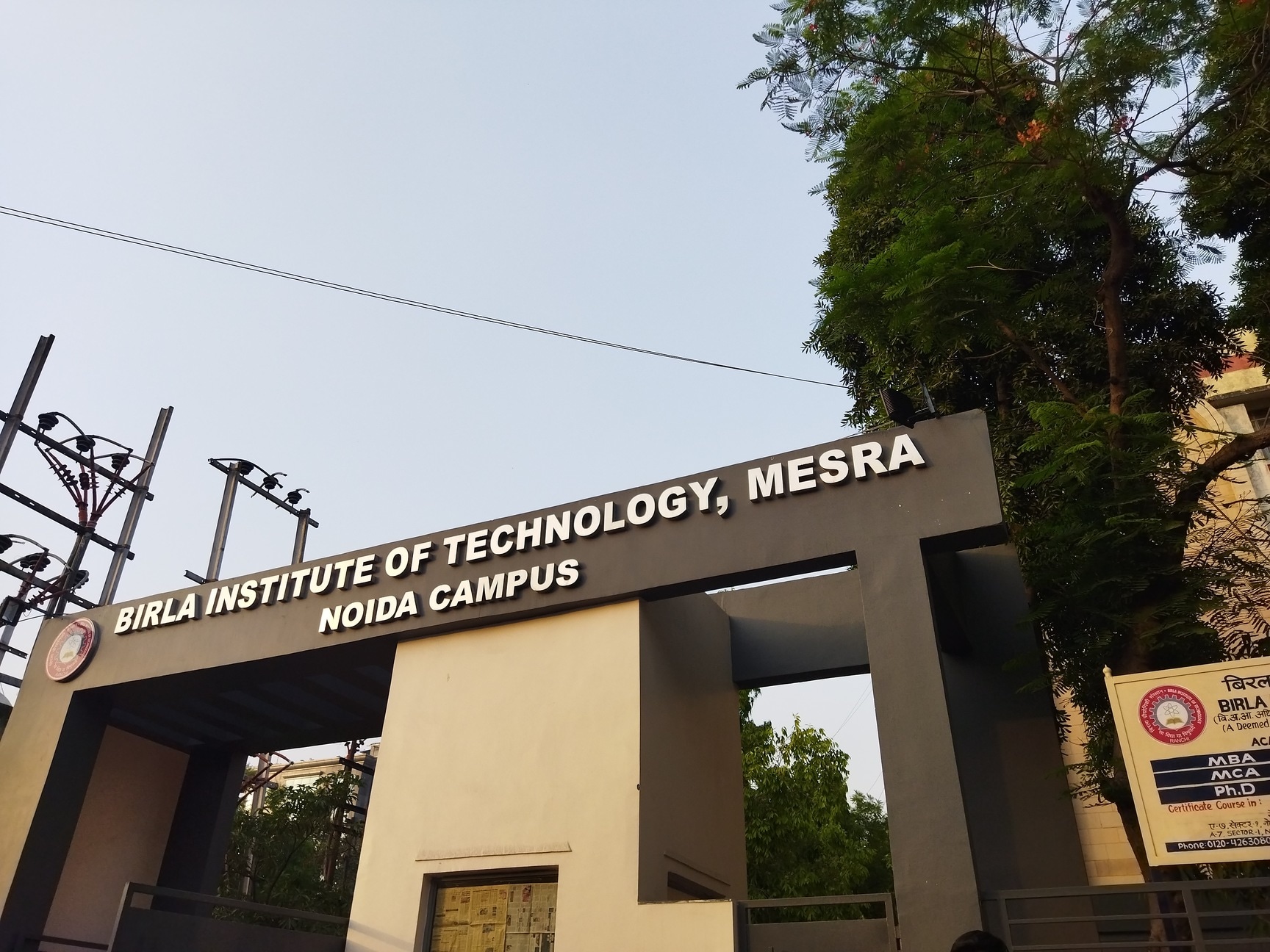
Ph.D. in Electrical & Electronics Engineering from Birla Institute of Technology
The Birla Institute of Technology (BIT) has long been a beacon of innovation in engineering education. Its Doctoral programme in Electrical & Electronics Engineering is designed for professionals who aspire to lead cutting‑edge research, influence industry standards, and shape future technologies. With state‑of‑the‑art labs, interdisciplinary collaboration, and mentorship from renowned faculty, BIT offers an inspiring environment where curiosity meets rigor.
Ph.D Admission 2026-2027 & Writing Support Services by Shiksha Research
Eligibility Criteria for Ph.D. in Electrical & Electronics Engineering at Birla Institute of Technology
Candidates must possess a Master’s degree (M.Tech, M.E., MSc) in Electrical Engineering, Electronics Engineering, or a closely related discipline with a minimum aggregate of 55% (or equivalent CGPA). Graduates with a B.Tech/M.Tech dual degree, as well as those holding a Ph.D. in a related field, are also considered. Applicants should demonstrate a strong academic record, research aptitude, and proficiency in English (minimum IELTS 6.0 or TOEFL 80 for international students).
Entrance Exam for Ph.D. in Electrical & Electronics Engineering at Birla Institute of Technology
BIT conducts a comprehensive entrance examination to assess candidates’ fundamental knowledge and research potential. The exam comprises three sections:
- Core Subjects: Circuit Theory, Signal Processing, Power Systems, Control Engineering.
- Analytical Ability: Quantitative aptitude, logical reasoning.
- Research Aptitude: Statement of purpose, previous project work, publications.
The test is followed by a personal interview where the selection panel evaluates the applicant’s research interests, communication skills, and alignment with BIT’s research thrusts. Candidates holding GATE scores (minimum 500) are exempted from the written test but must appear for the interview.
Fee Structure for Ph.D. in Electrical & Electronics Engineering at Birla Institute of Technology
| Component | Annual Cost (INR) | Notes |
|---|---|---|
| Tuition Fee | ₹45,000 | Waived for GATE qualified candidates |
| Laboratory & Equipment Charges | ₹12,000 | Includes access to advanced labs and software licenses |
| Library & Resource Fee | ₹3,500 | Unlimited access to digital and physical collections |
| Miscellaneous (Health, Sports, etc.) | ₹4,500 | Campus amenities |
| Total Approx. | ₹65,000 | Subject to annual revision |
Admission Process for Ph.D. in Electrical & Electronics Engineering at Birla Institute of Technology
The admission cycle follows a streamlined five‑step process:
- Online Application Submission through BIT’s portal.
- Upload of academic transcripts, GATE scores (if any), and research proposal.
- Entrance examination (or GATE exemption) and interview scheduling.
- Evaluation of academic merit, research proposal, and interview performance.
- Final admission offer, fee payment, and enrollment.
Prospective scholars are encouraged to contact the Department of Electrical & Electronics Engineering for guidance on preparing a compelling research proposal.
Ph.D. Subjects and Specializations in Electrical & Electronics Engineering at Birla Institute of Technology
BIT’s doctoral curriculum offers a wide spectrum of specializations, including:
- Power Electronics and Smart Grids
- Digital Signal Processing
- Embedded Systems and IoT
- Control Systems and Robotics
- Renewable Energy Systems
- VLSI Design and Nanoelectronics
- Electromagnetic Compatibility
Research Areas in Electrical & Electronics Engineering at Birla Institute of Technology
The institute’s research ecosystem is aligned with national priorities and industry trends. Current focus areas encompass:
- Energy‑efficient power converters for electric vehicles.
- Machine learning‑driven fault diagnosis in power networks.
- Low‑power wearable electronics for healthcare.
- Advanced modulation techniques for 5G/6G communication.
- Quantum‑enabled nano‑electronic devices.
- High‑frequency RF circuit design for satellite systems.
Documents Required for Ph.D. in Electrical & Electronics Engineering at Birla Institute of Technology
| Document | Details |
|---|---|
| Academic Transcripts | All postgraduate and undergraduate mark sheets (original + attested copy) |
| GATE Score Card | Only if applicable; must be less than three years old |
| Research Proposal | 2‑3 page document outlining objectives, methodology, and expected outcomes |
| Curriculum Vitae (CV) | Professional experience, publications, patents, and projects |
| Proof of Identity | Aadhaar/Passport (photocopy) |
| English Proficiency Certificate | IELTS/TOEFL (if required for foreign nationals) |
Birla Institute of Technology Ph.D. Syllabus for Electrical & Electronics Engineering
The syllabus is structured around core coursework, comprehensive exams, and research milestones:
- Core Courses (12 credits): Advanced Power Systems, Semiconductor Devices, Digital Signal Processing, Research Methodology.
- Elective Courses (6 credits): Choose from topics such as Neural Networks, Renewable Energy, VLSI Design, and High‑Frequency Communication.
- Comprehensive Examination: Conducted at the end of the first year to assess depth of knowledge.
- Thesis Work: Original research leading to a dissertation that contributes to the field.
How To Apply for Ph.D. in Electrical & Electronics Engineering at Birla Institute of Technology
Application steps are simple and fully digital:
- Visit the official BIT admissions portal and create a user account.
- Fill in personal and academic details, then upload the required documents.
- Pay the non‑refundable application fee of ₹2,000 via online banking.
- Submit the research proposal and await an email confirming your eligibility for the entrance test or interview.
- Track application status through the portal dashboard.
For assistance with proposal drafting, prospective candidates may consult the department’s research mentors or explore our Thesis and Dissertation Writing Services to ensure a compelling submission.
Career Scope and Job Opportunities After Ph.D. in Electrical & Electronics Engineering from Birla Institute of Technology
Graduates of the BIT Ph.D. program enjoy a diverse range of career pathways:
- Academia: Lecturer or Assistant Professor positions at premier universities and research institutes.
- Industry R&D: Senior research scientist roles in multinational corporations, semiconductor firms, and power utilities.
- Entrepreneurship: Founders of technology startups focusing on IoT, renewable energy, or AI‑driven electronics.
- Consultancy: Expert advisory services for government projects, standardization bodies, and policy think‑tanks.
The robust network of BIT alumni and industry collaborations ensures that Ph.D. graduates are highly sought after for leadership positions worldwide.
Scholarship for Ph.D. in Electrical & Electronics Engineering at Birla Institute of Technology
BIT offers merit‑based scholarships and financial assistance to deserving scholars:
- Merit Scholarship: Up to 100% tuition waiver for GATE qualified candidates.
- Research Stipend: Monthly stipend of ₹15,000–₹20,000, with additional project‑specific funding.
- External Fellowships: Eligibility for CSIR‑NET, UGC‑JRF, and industry‑sponsored grants.
Students can also avail of our Research Data Analysis Services to strengthen their project proposals and increase their chances of securing external funding.
FAQs Regarding Ph.D. in Electrical & Electronics Engineering at Birla Institute of Technology
- Q: Can I enroll part‑time while working?
A: Yes, BIT offers a flexible part‑time mode for working professionals with a minimum of 20 hours per week dedicated to research. - Q: Is there a minimum age limit?
A: No age restriction, provided the candidate meets the academic and research criteria. - Q: How long does it take to complete the Ph.D.?
A: Typically 3–4 years, depending on the research progress and publication requirements. - Q: Are there opportunities for international collaborations?
A: BIT has MoUs with several foreign universities, enabling joint supervision and exchange programs.








