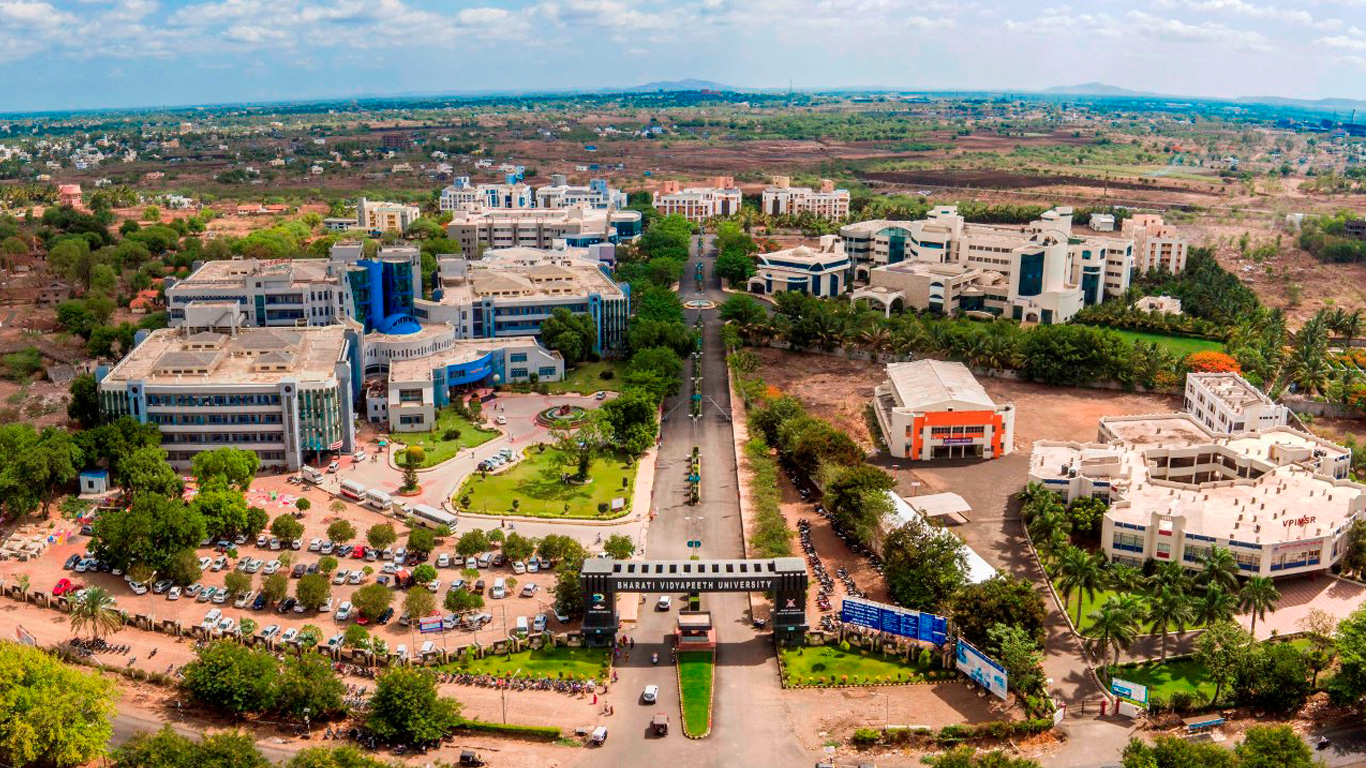
Introduction about Ph.D. in Electrical Engineering at Bharati Vidyapeeth
The pursuit of a Ph.D. in Electrical Engineering at Bharati Vidyapeeth is more than just an academic endeavor; it is a transformative journey for professionals who aspire to lead the next wave of technological innovation. In an era where global energy demands are shifting toward sustainability and smart automation, the role of an expert electrical engineer has never been more critical. Bharati Vidyapeeth, a prestigious Deemed-to-be University, offers a robust research environment that encourages scholars to delve into the complexities of power systems, renewable energy, and advanced control electronics. This program is meticulously designed to bridge the gap between theoretical mastery and industrial application, empowering researchers to solve real-world problems that impact millions.
By joining this doctoral program, you align yourself with a community of visionary thinkers and seasoned mentors. The university provides state-of-the-art laboratory facilities and a collaborative ecosystem that fosters breakthrough discoveries. Whether you are aiming to revolutionize the efficiency of electric vehicles or integrate artificial intelligence into smart grids, Bharati Vidyapeeth serves as the perfect catalyst for your intellectual growth and professional evolution.
Ph.D Admission 2026-2027 & Writing Support Services by Shiksha Research
Eligibility Criteria for Ph.D. in Electrical Engineering at Bharati Vidyapeeth
To maintain the high standards of research and academic excellence, Bharati Vidyapeeth follows a rigorous selection criterion for its Ph.D. candidates. Prospective scholars must demonstrate a strong academic background and a genuine aptitude for advanced technical research. The following criteria must be met:
- Educational Qualification: Candidates must hold a Master?s degree (M.E. or M.Tech.) in Electrical Engineering or a closely related specialization from a recognized university.
- Minimum Percentage: A minimum of 55% aggregate marks (or an equivalent grade/CGPA) at the postgraduate level is required. A relaxation of 5% is typically granted to candidates belonging to reserved categories (SC/ST/OBC non-creamy layer) as per UGC and university norms.
- Professional Experience: While not mandatory, candidates with professional experience in R&D sectors or academia are highly encouraged to apply, as their practical insights often enrich the research environment.
- UGC-NET/GATE: Candidates who have cleared national-level examinations like GATE, UGC-NET, or SET may be eligible for exemptions from the university's entrance test, though they must still participate in the personal interview.
Entrance Exam for Ph.D. in Electrical Engineering at Bharati Vidyapeeth
The gateway to this prestigious program is the Bharati Vidyapeeth University Common Entrance Test (BVU-CET) for Ph.D. This examination is designed to assess the candidate's analytical abilities and their depth of knowledge in core electrical engineering concepts. The exam typically consists of two main components:
- Section A: Research Methodology: This part tests the candidate's understanding of research ethics, statistics, data interpretation, and logical reasoning. Developing a sound foundation here is vital, and many candidates seek assistance with Questionnaire Design and Development to better structure their future experimental frameworks.
- Section B: Subject-Specific Knowledge: This section focuses on advanced topics in Electrical Engineering, including Power Systems, Control Theory, Electrical Machines, and Electronics.
Passing the entrance exam requires a minimum qualifying score of 50%. Successful candidates are then shortlisted for a personal interview where they present their research interests to a panel of experts.
Fee Structure for Ph.D. in Electrical Engineering at Bharati Vidyapeeth
Investing in a Ph.D. is an investment in your future leadership. The fee structure at Bharati Vidyapeeth is designed to be competitive while ensuring access to world-class resources and guidance. Below is an approximate breakdown of the costs involved:
| Fee Component | Approximate Amount (INR) | Frequency |
|---|---|---|
| Admission/Registration Fee | ?10,000 - ?15,000 | One-time |
| Annual Tuition Fee | ?70,000 - ?1,00,000 | Per Annum |
| Laboratory & Library Fees | ?15,000 | Per Annum |
| Thesis Submission & Examination Fee | ?20,000 - ?30,000 | At the time of submission |
| Caution Deposit (Refundable) | ?10,000 | One-time |
Note: The fees are subject to change according to university policy. Candidates are advised to check the official brochure for the exact current rates.
Admission Process for Ph.D. in Electrical Engineering at Bharati Vidyapeeth
The admission process at Bharati Vidyapeeth is transparent and merit-based, ensuring that the most capable and dedicated researchers are selected. The steps are as follows:
- Step 1: Online Application: Visit the official university portal and fill out the Ph.D. application form with accurate details and document uploads.
- Step 2: Entrance Examination: Appear for the BVU Ph.D. Entrance Test. Check for exemption status if you have cleared GATE or NET.
- Step 3: Personal Interview: Shortlisted candidates must present their research proposal before the Departmental Research Committee (DRC). This is where you demonstrate the feasibility and significance of your proposed study.
- Step 4: Provisional Registration: Upon selection, candidates pay the requisite fees and are provisionally registered.
- Step 5: Coursework: Scholars must complete six months of mandatory coursework, focusing on research techniques and advanced electrical engineering theory.
Ph.D. Subjects and Specializations in Electrical Engineering at Bharati Vidyapeeth
Bharati Vidyapeeth offers a diverse range of specializations, allowing scholars to focus on areas that align with their career goals. Some of the core subjects and specialized tracks include:
- Advanced Power Systems: Focusing on stability, protection, and the integration of smart grids.
- Renewable Energy Systems: Research into solar, wind, and hybrid energy storage solutions.
- Power Electronics and Drives: Designing efficient converters for industrial applications and electric vehicles.
- Control Systems and Automation: Advanced robotics, nonlinear control, and process automation.
- High Voltage Engineering: Studying insulation, discharge phenomena, and high-voltage testing techniques.
To excel in these subjects, scholars often produce high-quality papers. Utilizing Research Paper Writing Services can help in structuring these complex technical findings for high-impact journals.
Research Areas in Electrical Engineering at Bharati Vidyapeeth
Research is the heartbeat of the Ph.D. program. Bharati Vidyapeeth encourages interdisciplinary research that addresses current global challenges. Prominent research areas include:
- Smart Grid Technology: Implementation of IoT and communication protocols in power distribution.
- Electric Vehicle (EV) Infrastructure: Battery management systems, fast-charging technologies, and drivetrain optimization.
- Machine Learning in Power Systems: Predictive maintenance and load forecasting using AI algorithms.
- Microgrids: Autonomous operation of localized energy grids powered by sustainable sources.
- Signal Processing: Application of advanced DSP techniques in electrical appliance monitoring and fault detection.
Successful research in these fields often requires complex computational modeling. Scholars frequently leverage Research Data Analysis Services to ensure their experimental results are statistically significant and robust.
Documents Required for Ph.D. in Electrical Engineering at Bharati Vidyapeeth
Ensuring you have the correct documentation is vital for a smooth application process. Candidates should prepare the following:
- High School and Higher Secondary Marksheets/Certificates.
- Graduation and Post-Graduation Degree Certificates.
- Statement of Marks for all semesters of M.E./M.Tech.
- Valid GATE/NET/SET Scorecard (if applicable).
- Candidate's updated Curriculum Vitae (CV).
- A well-drafted Research Proposal (Synopsis).
- No Objection Certificate (NOC) from the current employer (for part-time candidates).
- Transfer or Migration Certificate and Caste Certificate (if applicable).
Bharati Vidyapeeth Ph.D. Syllabus for Electrical Engineering
The Ph.D. syllabus is split into two phases: Coursework and Independent Research. The coursework is designed to refine the scholar?s methodology before they dive into their thesis.
Phase 1: Coursework (6 Months)
- Research Methodology: Quantitative methods, computer applications, and ethical research practices.
- Core Curriculum: Advanced Engineering Mathematics and Recent Trends in Electrical Engineering.
- Elective: A subject specifically related to the scholar?s chosen research area.
Phase 2: Thematic Research
This phase involves data collection, experimentation, and drafting the dissertation. For many, this is the most challenging stage, and accessing professional Thesis and Dissertation Writing Services can provide the necessary guidance to maintain academic rigor and meet submission deadlines.
How To Apply for Ph.D. in Electrical Engineering at Bharati Vidyapeeth
The application process is entirely digital and user-friendly. Follow these steps to begin your journey:
- Check Advertisement: Look for the Ph.D. notification on the Bharati Vidyapeeth University official website, usually released twice a year.
- Registration: Create an account on the admission portal and select "Ph.D. Electrical Engineering."
- Upload Details: Fill in your academic history and upload the required documents in the specified format.
- Payment: Pay the non-refundable application fee via credit card, debit card, or net banking.
- Print Confirmation: Keep a copy of the submitted form and payment receipt for future reference.
Career Scope and Job Opportunities After Ph.D. in Electrical Engineering from Bharati Vidyapeeth
The completion of a doctorate opens doors to the highest levels of professional and academic achievement. As a Ph.D. holder from Bharati Vidyapeeth, your career trajectory can lead to:
- Academia: Secure positions as Professors or Heads of Department in prestigious engineering colleges and universities worldwide.
- R&D Leadership: Lead research teams in multinational giants like Siemens, ABB, General Electric, or Tesla, focusing on next-gen electrical hardware and software.
- Government Sector: Hold high-ranking administrative or technical roles in organizations like ISRO, DRDO, or Power Grid Corporation of India.
- Consultancy: Act as a high-level consultant for international energy policy or industrial automation projects.
- Entrepreneurship: Launch tech startups focused on sustainable energy solutions, smart home automation, or AI-driven power management systems.
Scholarship for Ph.D. in Electrical Engineering at Bharati Vidyapeeth
Bharati Vidyapeeth is committed to supporting meritorious scholars through various financial aid programs. These ensure that financial constraints do not hinder intellectual progress:
- University Fellowships: Awarded to full-time scholars based on their performance in the entrance exam and interview.
- UGC-JRF/SRF: Candidates who have cleared the NET-JRF receive substantial monthly stipends and contingency grants from the University Grants Commission.
- Sponsored Research Projects: Scholars can work as Junior Research Fellows (JRF) in projects funded by agencies like DST, AICTE, or ISRO, which covers their tuition and living expenses.
- Institutional Teaching Assistantships: Opportunities for scholars to assist in undergraduate labs and lectures in exchange for a monthly stipend.
FAQs Regarding Ph.D. in Electrical Engineering at Bharati Vidyapeeth
Q1: What is the duration of the Ph.D. program?
A: The minimum duration is 3 years, and the maximum is usually 6 years, including the coursework.
Q2: Can I pursue a Ph.D. while working?
A: Yes, Bharati Vidyapeeth offers a part-time Ph.D. option for working professionals, provided they submit an NOC from their current employer.
Q3: Is the Bharati Vidyapeeth Ph.D. recognized globally?
A: Absolutely. Bharati Vidyapeeth is a NAAC 'A+' accredited Deemed University, and its Ph.D. degree is recognized by the UGC and internationally.
Q4: How often are admission notifications released?
A: Generally, admission cycles occur twice a year, during the summer and winter sessions.
Q5: Do I need a published paper before applying?
A: While not a requirement for application, having published papers in reputable journals can significantly strengthen your profile during the interview stage.








