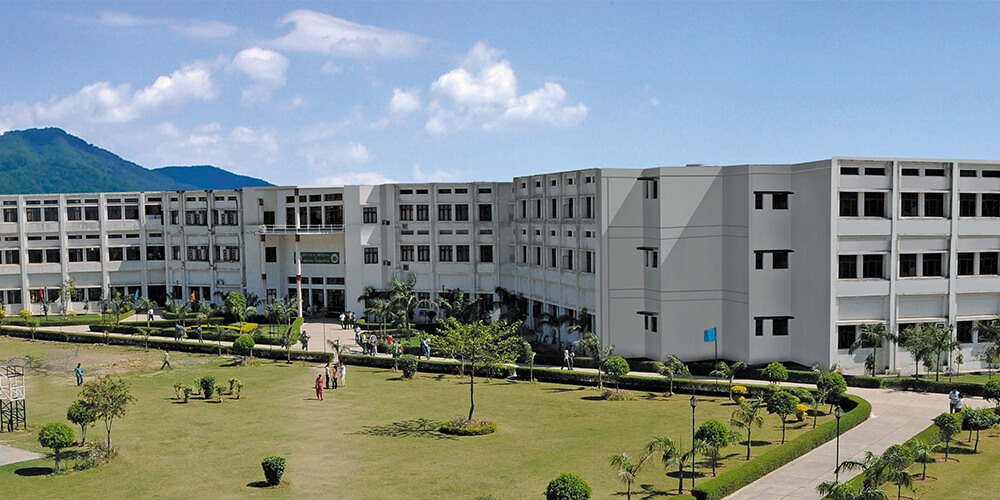
Introduction about Ph.D. in Electronics And Communication Engineering at Baddi University of Emerging Sciences and Technology
Pursuing a Ph.D. in Electronics And Communication Engineering at Baddi University of Emerging Sciences and Technology (BUEST) offers a transformative platform for engineers, researchers, and innovators seeking to shape the future of wireless communication, signal processing, and embedded systems. The program blends rigorous coursework, cutting‑edge research, and industry collaborations, empowering professionals to become thought leaders in a rapidly evolving technological landscape.
Eligibility Criteria for Ph.D. in Electronics And Communication Engineering at Baddi University of Emerging Sciences and Technology
Candidates must possess a Master’s degree (M.Tech/M.Sc.) in Electronics & Communication Engineering or a closely related discipline with a minimum aggregate of 55% (or CGPA 6.0/10). Final year students can also apply, provided they submit a provisional mark sheet. A valid GATE score in the EE sector is advantageous but not mandatory. Applicants must demonstrate proficiency in English (IELTS/TOEFL) if they have completed their prior degree from a non‑English medium institution.
Entrance Exam for Ph.D. in Electronics And Communication Engineering at Baddi University of Emerging Sciences and Technology
BUEST conducts its own entrance test, BUEST Ph.D. Entrance Exam, which evaluates candidates on core subjects such as Analog & Digital Communication, Signal Processing, Microwave Engineering, and Research Methodology. The exam consists of multiple‑choice questions (MCQs) and short answer sections, followed by a personal interview to assess research aptitude and subject mastery. GATE qualifiers may be exempted from the written test and directly invited for an interview.
Fee Structure for Ph.D. in Electronics And Communication Engineering at Baddi University of Emerging Sciences and Technology
| Component | Amount (INR) |
|---|---|
| Application Processing Fee | 1,500 |
| Entrance Examination Fee | 3,000 |
| Annual Tuition & Laboratory Fee | 45,000 |
| Research Material & Publication Allowance | 10,000 |
| Miscellaneous (Library, Campus Facilities) | 5,000 |
| Total (Approx.) | 64,500 per annum |
The fee is payable at the beginning of each academic year. Scholarships, teaching assistantships, and industry‑sponsored projects can significantly reduce the financial burden for eligible candidates.
Admission Process for Ph.D. in Electronics And Communication Engineering at Baddi University of Emerging Sciences and Technology
The admission workflow comprises the following steps:
- Online application submission through the university portal.
- Upload of academic transcripts, GATE scorecard (if any), and a research proposal (max 1500 words).
- Payment of the non‑refundable application fee.
- Screening of applications by the Departmental Admissions Committee.
- Invitation to appear for the entrance exam or direct interview for GATE qualifiers.
- Personal interview conducted by the faculty panel.
- Final merit list announcement and issuance of admission offer letter.
Ph.D. Subjects and Specializations in Electronics And Communication Engineering at Baddi University of Emerging Sciences and Technology
The program offers diverse specializations, allowing candidates to tailor their research trajectory:
- Advanced Wireless Communication Systems
- Signal Processing and Multimedia Transmission
- Microwave & Millimeter‑Wave Engineering
- Embedded Systems and IoT Architecture
- Optoelectronics and Photonic Devices
- Artificial Intelligence for Communication Networks
Research Areas in Electronics And Communication Engineering at Baddi University of Emerging Sciences and Technology
BUEST’s state‑of‑the‑art labs and collaborations foster research in high‑impact domains, including:
- 5G/6G and Beyond: Antenna design, beamforming, and network slicing.
- Quantum Communication and Secure Data Transfer.
- Machine Learning‑Based Signal Classification.
- Energy‑Efficient RF Front‑Ends for Green Communications.
- Biomedical Signal Acquisition and Processing.
- Smart Sensor Networks for Industry 4.0.
Documents Required for Ph.D. in Electronics And Communication Engineering at Baddi University of Emerging Sciences and Technology
| Document | Details |
|---|---|
| Academic Transcripts | Certified copies of B.Tech/M.Tech degrees. |
| GATE Score Card (optional) | Valid EE paper score, if applicable. |
| Research Proposal | 1500‑word document outlining objectives and methodology. |
| Curriculum Vitae | Professional experience, publications, and projects. |
| English Proficiency Proof | IELTS/TOEFL scores (if required). |
| Passport‑size Photographs | Two recent color photographs. |
Baddi University of Emerging Sciences and Technology Ph.D. Syllabus for Electronics And Communication Engineering
The syllabus integrates foundational coursework with research milestones:
- Advanced Electromagnetics & RF Engineering (3 credits)
- Digital Signal Processing and Adaptive Filters (3 credits)
- Research Methodology & Ethics (2 credits)
- Seminar & Conference Presentation (1 credit)
- Thesis Work (12 credits – spanning 3 years)
How To Apply for Ph.D. in Electronics And Communication Engineering at Baddi University of Emerging Sciences and Technology
Prospective candidates should follow these practical steps:
- Visit the official BUEST admission portal.
- Create a user account and fill in personal details.
- Upload scanned copies of the required documents (see Documents Required section).
- Enter your research proposal in the dedicated textbox.
- Pay the application fee via net banking or credit card.
- Submit the application and note the generated application ID for future reference.
- Monitor email notifications for exam dates and interview schedules.
Career Scope and Job Opportunities After Ph.D. in Electronics And Communication Engineering from Baddi University of Emerging Sciences and Technology
Graduates emerge as experts equipped to lead in academia, industry, and research institutions. Typical career pathways include:
- Assistant/Associate Professor in premier engineering colleges.
- Senior Research Scientist in national labs (e.g., DRDO, ISRO).
- R&D Lead for telecom giants (e.g., Bharti Airtel, Jio).
- Chief Technology Officer (CTO) for startups focusing on IoT, AI‑driven communication, or wearable health tech.
- Consultant for government projects on 5G/6G deployment and smart city initiatives.
Scholarship for Ph.D. in Electronics And Communication Engineering at Baddi University of Emerging Sciences and Technology
BUEST provides merit‑based scholarships covering tuition, living allowance, and research expenses. Additionally, external funding sources such as the UGC Fellowship, CSIR‑NET, and industry‑sponsored grants are available to high‑performing scholars. Candidates are encouraged to apply early for these financial aids while preparing their research proposal.
FAQs Regarding Ph.D. in Electronics And Communication Engineering at Baddi University of Emerging Sciences and Technology
- Q1: Can a working professional enroll part‑time?
- Yes, BUEST offers a flexible part‑time mode for industry professionals, allowing them to attend weekend labs and submit thesis work remotely.
- Q2: Is there a minimum GATE percentile required?
- While there is no strict cutoff, a percentile above 65% strengthens the application and may waive the entrance test.
- Q3: How long does it take to complete the Ph.D.?
- The average duration is three years for full‑time candidates; part‑time candidates may require 4‑5 years.
- Q4: Are publications mandatory for thesis submission?
- At least two papers in peer‑reviewed international journals or conferences are recommended for a robust evaluation.
For supplementary assistance with your doctoral journey, consider professional services such as Thesis and Dissertation Writing Services, Research Data Analysis Services, Research Paper Writing Services, and Questionnaire Design and Development.








