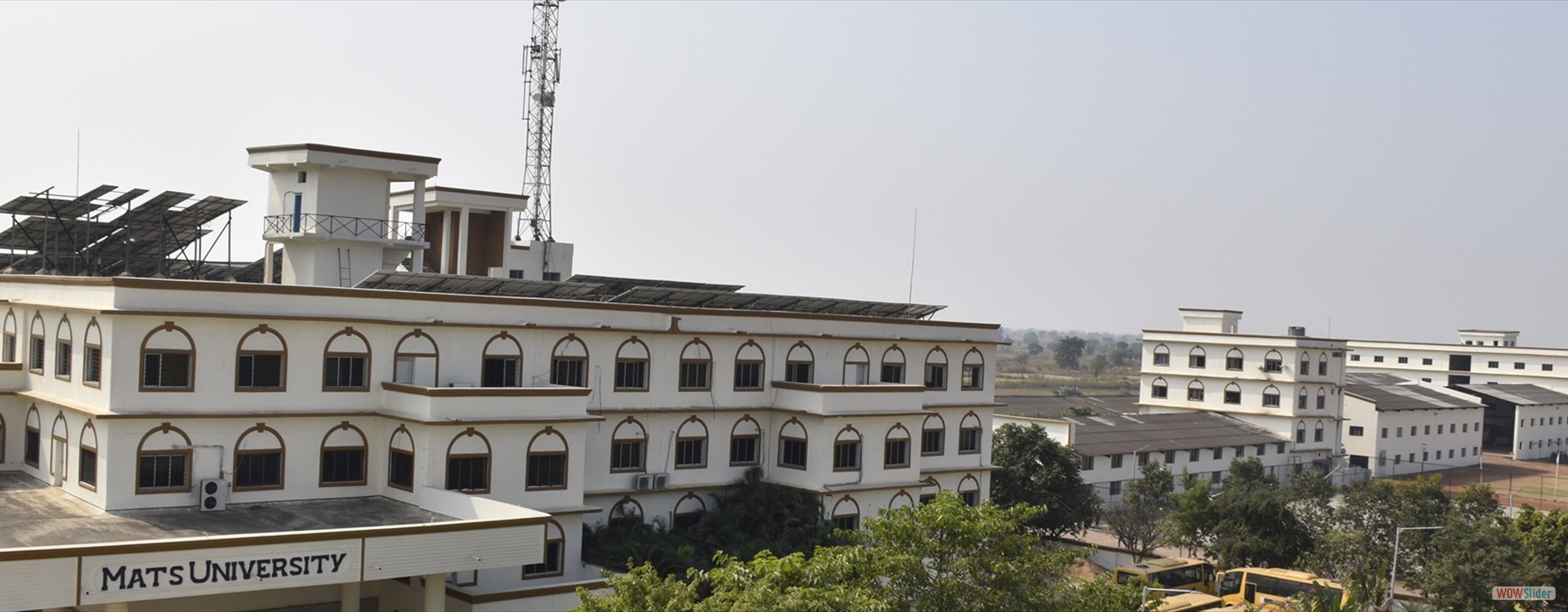
Introduction about Ph.D. in Electronics And Communication Engineering at MATS University
In an era defined by rapid technological leaps, pursuing a Ph.D. in Electronics and Communication Engineering (ECE) at MATS University stands as a beacon for professionals and scholars aiming to redefine the boundaries of innovation. MATS University, known for its commitment to academic excellence and research-driven pedagogy, offers a robust platform for candidates to delve deep into the mechanics of telecommunications, microelectronics, and signal processing. This doctoral program is not merely an academic milestone but an inspirational journey designed to transform engineers into visionary researchers. Whether you are aiming to lead research and development in a global conglomerate or seeking the prestige associated with top-tier academic contributions?perhaps even exploring the path toward Honorary Doctorate Programs?MATS University provides the environment, mentorship, and infrastructure required to achieve excellence.
Ph.D Admission 2026-2027 & Writing Support Services by Shiksha Research
Eligibility Criteria for Ph.D. in Electronics And Communication Engineering at MATS University
To embark on this elite academic journey, candidates must meet specific eligibility benchmarks set by the university and regulatory bodies. The requirements ensure that only the most dedicated and prepared minds enter the rigorous research phase of the doctorate. The primary criteria include:
- Master?s Degree: Applicants must possess a Master of Engineering (M.E.) or Master of Technology (M.Tech) in Electronics and Communication Engineering or a closely related discipline from a recognized university.
- Minimum Aggregate: A minimum of 55% marks (or an equivalent grade) at the postgraduate level is required. A relaxation of 5% may be applicable for candidates from reserved categories as per government norms.
- Professional Experience: While not always mandatory, MATS University values professional experience, especially for those applying under the part-time or sponsored research categories.
- Pre-Ph.D. Qualifications: Candidates who have cleared national-level exams such as GATE, UGC-NET, or JRF are often given preference during the selection process.
Entrance Exam for Ph.D. in Electronics And Communication Engineering at MATS University
MATS University conducts a comprehensive entrance examination to evaluate the analytical and technical aptitude of prospective doctoral candidates. The entrance exam serves as a gateway to ensure that students possess the foundational knowledge required for high-level research. The exam typically consists of two segments: Research Methodology and Subject-Specific Knowledge. The subject-specific part focuses on core topics like Electromagnetic Theory, Digital Signal Processing, VLSI Design, and Wireless Communication. Candidates who have qualified for national exams like GATE or UGC-NET/CSIR-NET may be exempted from the university's written entrance test, though they must still appear for the university's personal interview round to discuss their research vision.
Fee Structure for Ph.D. in Electronics And Communication Engineering at MATS University
The investment in a Ph.D. program is an investment in your future leadership in the tech industry. MATS University maintains a transparent and competitive fee structure designed to support sustainable high-quality research facilities. Below is an approximate breakdown of the fee components:
| Fee Component | Approximate Amount (INR) | Frequency |
|---|---|---|
| Registration & Application Fee | ?2,500 - ?5,000 | One-time |
| Coursework Fee | ?15,000 - ?20,000 | One-time |
| Annual Tuition Fee | ?60,000 - ?80,000 | Per Annum |
| Thesis Submission & Viva-Voce | ?20,000 - ?30,000 | One-time |
| Library and Lab Development | ?10,000 | Annual |
Note: The fee structure is subject to change based on university regulations and specific research requirements.
Admission Process for Ph.D. in Electronics And Communication Engineering at MATS University
The admission process at MATS University is designed to be rigorous yet supportive, ensuring that every candidate is a right fit for the research ecosystem. To streamline your journey, many professionals opt for PhD Admission Assistance to navigate the complex documentation and scheduling phases. The process generally follows these steps:
- Online Application: Submission of the application form along with the necessary processing fees via the official university portal.
- Entrance Testing: Participation in the MATS Ph.D. Entrance Test (MPET) unless exempted through national scores.
- Interview and Research Presentation: Shortlisted candidates are invited to present their research interests before a Departmental Research Committee (DRC).
- Documentation: Submission of academic transcripts, work experience certificates, and letters of recommendation.
- Final Selection: Admission is granted based on the cumulative performance in the entrance test, interview, and academic history.
Ph.D. Subjects and Specializations in Electronics And Communication Engineering at MATS University
The Ph.D. program at MATS University is characterized by its diversity in specializations, allowing researchers to tackle contemporary challenges in the ECE domain. Scholars are encouraged to focus on niche areas that have significant industrial and societal impact. Major specializations include:
- VLSI Design and Embedded Systems: Focused on the development of high-performance integrated circuits and intelligent hardware.
- Optical Communication: Researching next-generation high-speed data transmission technologies.
- Wireless Sensor Networks (WSN) and IoT: Developing smart environments and advanced sensor connectivity protocols.
- Signal and Image Processing: Enhancing medical imaging, satellite data, and voice recognition technologies.
- Antenna Theory and RF Engineering: Designing efficient communication hardware for aerospace and defense.
Research Areas in Electronics And Communication Engineering at MATS University
The research ecosystem at MATS University thrives on interdisciplinary collaboration and industrial relevance. Researchers tackle problems ranging from 6G communication to smart grid technologies. Finding the right niche is critical for long-term success; therefore, many students utilize PhD Topic Selection and Proposal Assistance to focus their efforts on high-impact research problems. Key research areas include Nanotechnology in Electronics, Artificial Intelligence in Communications, Robotics and Automation, Green Communication, and Cryptography for Secure Communication. The university provides state-of-the-art laboratory facilities for fabrication and simulation, ensuring that theoretical models are validated through empirical data.
Documents Required for Ph.D. in Electronics And Communication Engineering at MATS University
A smooth admission process requires a meticulous assembly of documents. Before applying, ensure you have the following ready:
- Original and Photocopies of 10th, 12th, Graduation, and Post-Graduation Marksheets.
- Post-Graduate Degree Certificate or Provisional Certificate.
- Valid Scorecard of Entrance Exams (GATE/NET/SLET) if applicable.
- Detailed Research Proposal (Statement of Purpose).
- No Objection Certificate (NOC) from the current employer (for part-time candidates).
- Passport-size photographs and valid Government Photo ID.
- Migration and Transfer Certificates.
Scholars are often advised to seek Editing and Proofreading Services for their research statements and transcripts to ensure a professional and error-free presentation to the admissions committee.
MATS University Ph.D. Syllabus for Electronics And Communication Engineering
The Ph.D. syllabus at MATS University is divided into the initial coursework and the subsequent research phase. The coursework is designed to equip scholars with the tools of investigation and specialized knowledge. The primary segments include:
- Research Methodology: Techniques of literature review, statistical analysis (SPSS/MATLAB), and research ethics.
- Advanced Engineering Mathematics: Complex analysis, optimization techniques, and numerical methods.
- Subject-Specific Advanced Electives: Deep dives into VLSI, Information Theory, or Advanced DSP depending on the chosen specialization.
- Computer Application in Research: Training on simulation software like HFSS, Cadence, or LabVIEW.
Upon completion of the coursework, scholars must focus on their research papers. To meet the high standards of global journals, Research Publication Support is frequently engaged to help format and target high-impact Factor (IF) journals.
How To Apply for Ph.D. in Electronics And Communication Engineering at MATS University
Applying to MATS University is a straightforward digital process designed for professional convenience. Follow these steps:
- Visit the official MATS University website and navigate to the 'Research' or 'Admissions' section.
- Register as a new user and fill in your personal and academic details.
- Upload scanned copies of all required documents as specified in the recruitment brochure.
- Pay the application fee via the secure payment gateway.
- Download the confirmation page and keep track of the entrance exam dates.
- Prepare your preliminary research proposal for the upcoming interview round.
Career Scope and Job Opportunities After Ph.D. in Electronics And Communication Engineering from MATS University
Holding a Ph.D. from MATS University opens doors to the highest echelons of the engineering world. Professionals with a doctorate are not just engineers; they are innovators and thought leaders. The career paths include:
- Chief Technology Officer (CTO): Leading the technological vision of multinational corporations.
- University Professor: Training the next generation of engineers in prestigious academic institutions.
- Senior Scientist: Conducting cutting-edge research in organizations like ISRO, DRDO, or private R&D labs.
- Principal Engineer: Oversighting complex system designs in the telecommunications and semiconductor industry.
- Entrepreneur: Launching tech startups based on proprietary patented technologies.
For those interested in the commercialization of ?? research, Patent Filing and Support Services become invaluable, ensuring that your intellectual property is protected as you transition from research to the global market.
Scholarship for Ph.D. in Electronics And Communication Engineering at MATS University
MATS University is committed to ensuring that financial constraints do not hinder brilliant minds. Various scholarships and fellowships are available:
- University Research Fellowships: Awarded to top-ranking candidates based on their entrance performance.
- State Government Scholarships: Financial aid for students belonging to SC/ST/OBC categories.
- National Fellowships: Support for candidates who have qualified for UGC-NET JRF or CSIR JRF.
- Industry-Sponsored Fellowships: Opportunities for researchers working on projects funded by corporate partners.
FAQs Regarding Ph.D. in Electronics And Communication Engineering at MATS University
Q1: Can I pursue a Ph.D. in ECE while working?
Yes, MATS University offers part-time Ph.D. programs for working professionals, provided they submit an NOC from their employer.
Q2: What is the typical duration of the program?
The program generally takes between 3 to 6 years, depending on the speed of research and thesis completion.
Q3: Is the MATS University Ph.D. degree UGC recognized?
Absolutely. MATS University is a recognized institution, and its doctoral degrees are valid for all government and private sector jobs.
Q4: Do I need a published paper before submitting my thesis?
Yes, as per UGC norms followed by MATS University, candidates are usually required to publish at least two research papers in peer-reviewed journals before the final viva.
Q5: What help does the university provide for international students?
The university has a dedicated international student cell to assist with visas, accommodation, and cultural integration.








