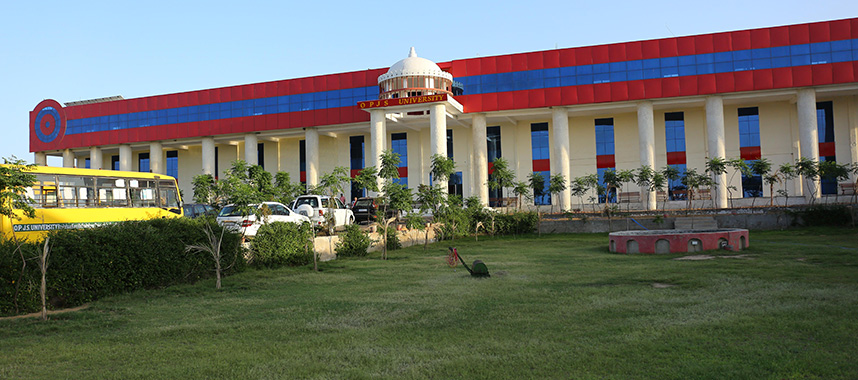
Ph.D. in Engineering from OPJS University: Eligibility, Entrance Exam, Fee Structure, Admission Process, Subjects, Research Areas, Syllabus, Scholarship & Career Scope
Introduction about Ph.D. in Engineering at OPJS University
OPJS University has emerged as a premier destination for aspiring researchers who wish to push the boundaries of modern engineering. The Ph.D. in Engineering program blends rigorous coursework with cutting‑edge research, empowering professionals to become innovators, thought leaders, and industry consultants. Whether you aim to develop sustainable infrastructure, advance AI‑driven manufacturing, or pioneer renewable energy solutions, OPJS University offers a supportive ecosystem backed by state‑of‑the‑art laboratories and an extensive network of industry partners.
Eligibility Criteria for Ph.D. in Engineering at OPJS University
To qualify for the doctoral programme, candidates must meet the following conditions:
- A Master’s degree (M.Tech, M.E., MSc) in Engineering or a related discipline with a minimum aggregate of 55% (or CGPA 5.5/10).
- For candidates with a B.Tech/BE (Integrated 5‑year) degree, a minimum of 60% aggregate is required.
- Valid GATE or UGC‑NET score (optional but highly recommended).
- Demonstrated research aptitude through publications, project work, or professional experience.
Entrance Exam for Ph.D. in Engineering at OPJS University
OPJS University conducts its own entrance test, the OPJS Ph.D. Engineering Entrance Examination, twice a year (January & July). The exam evaluates:
- Fundamental engineering concepts (core subjects).
- Analytical reasoning and quantitative ability.
- Research methodology and proposal writing skills.
Candidates can also gain admission based on their GATE/NET scores, bypassing the university‑level test.
Fee Structure for Ph.D. in Engineering at OPJS University
| Component | Annual Fee (INR) | Notes |
|---|---|---|
| Tuition & Laboratory Charges | 75,000 | Includes access to labs and research facilities |
| Library & E‑Resources | 10,000 | Digital journals, conference databases |
| Annual Examination & Evaluation | 5,000 | Internal assessments & viva voce |
| Miscellaneous (Student Welfare) | 5,000 | Sports, cultural, and health services |
| Total (Approx.) | 95,000 | Subject to change each academic year |
Admission Process for Ph.D. in Engineering at OPJS University
- Online Application: Submit the application form through the university portal.
- Document Upload: Attach scanned copies of academic transcripts, degree certificates, and ID proof.
- Entrance Examination / Score Submission: Appear for the OPJS entrance test or upload GATE/NET scores.
- Interview & Research Proposal Review: Shortlisted candidates present a concise research proposal before the faculty panel.
- Final Offer Letter: Admission is confirmed via email, followed by fee payment and enrollment.
Ph.D. Subjects and Specializations in Engineering at OPJS University
The doctoral programme offers a broad spectrum of specializations, including:
- Computer Science & Engineering
- Electrical & Electronics Engineering
- Mechanical Engineering
- Civil & Environmental Engineering
- Instrumentation & Control Engineering
- Robotics & Automation
- Nanotechnology & Materials Engineering
Research Areas in Engineering at OPJS University
Faculty members lead research in emerging domains such as:
- Artificial Intelligence & Machine Learning for Smart Manufacturing
- Renewable Energy Systems and Grid Integration
- Advanced Composite Materials and Additive Manufacturing
- IoT‑Enabled Infrastructure Monitoring
- Biomedical Devices and Nano‑Sensors
- Cyber‑Physical Systems and Industry 4.0
- Sustainable Urban Transportation and Mobility Solutions
Documents Required for Ph.D. in Engineering at OPJS University
| Document | Format | Remarks |
|---|---|---|
| Application Form (Online) | PDF/Online | Completed with accurate details |
| Academic Transcripts & Degree Certificates | Scanned PDF (max 5 MB) | Originals may be requested during verification |
| GATE / UGC‑NET Scorecard (if applicable) | Valid for the preceding 3 years | |
| Research Proposal (2‑3 pages) | DOCX or PDF | Clear objectives, methodology, and expected outcomes |
| Curriculum Vitae | Highlight publications, patents, and projects | |
| Identity Proof (Aadhaar / Passport) | Scanned PDF | Verified during admission |
| Letter of Recommendation (2) | From academic or industry supervisors |
OPJS University Ph.D. Syllabus for Engineering
The syllabus is designed to strengthen foundational knowledge while fostering research competency. Core components include:
- Research Methodology and Scientific Writing
- Advanced Topics in Chosen Specialization (e.g., AI in Manufacturing, Smart Grids)
- Statistical Tools and Data Analytics for Engineers
- Ethics, Patent Law, and Commercialization
- Seminars, Workshops, and Conference Participation
How To Apply for Ph.D. in Engineering at OPJS University
Follow these step‑by‑step instructions to submit a successful application:
- Visit the official Ph.D. Engineering portal and create a user account.
- Fill out the online application form, ensuring all personal and academic details are accurate.
- Upload the required documents listed in the “Documents Required” table.
- Pay the non‑refundable application fee (₹ 2,000) via net banking or credit card.
- Schedule the entrance examination (if you do not have a valid GATE/NET score).
- After clearing the test or submitting a valid score, upload your research proposal.
- Await the interview invitation via email and prepare a 10‑minute presentation of your proposal.
- Upon selection, sign the admission offer and pay the first year’s tuition to commence your research journey.
Career Scope and Job Opportunities After Ph.D. in Engineering from OPJS University
A doctorate from OPJS University unlocks a multitude of high‑impact roles:
- Lead Research Scientist in multinational R&D centers.
- Professor or Associate Professor in top engineering colleges.
- Chief Technology Officer (CTO) or Innovation Manager in technology firms.
- Consultant for government agencies on infrastructure and sustainability projects.
- Entrepreneur and startup founder in emerging tech domains.
- Senior Patent Analyst and Intellectual Property Strategist.
Moreover, OPJS University’s industry collaborations facilitate joint research projects, industry‑sponsored theses, and placement pipelines for doctoral graduates.
Scholarship for Ph.D. in Engineering at OPJS University
The university offers merit‑based and need‑based scholarships that cover up to 80% of tuition fees. Additional financial aid includes:
- Research Assistantships (RA) with stipends ranging from ₹ 12,000–₹ 18,000 per month.
- Teaching Assistantships (TA) for undergraduate courses.
- External fellowships such as the UGC‑JRF and AICTE Doctoral Fellowship.
To apply for scholarships, submit a separate scholarship application form along with your Ph.D. admission documents. Eligibility is assessed based on academic performance, research potential, and financial need.
FAQs Regarding Ph.D. in Engineering at OPJS University
- Q: Can I pursue a Ph.D. part‑time while working?
- A: Yes, OPJS University offers a flexible part‑time schedule for working professionals, with weekend lab sessions and online coursework.
- Q: Is there any provision for industry‑sponsored projects?
- A: Absolutely. The university maintains MoUs with leading firms; selected candidates can work on industry‑funded research and receive additional stipends.
- Q: How long does it typically take to complete the Ph.D.?
- A: The average duration is 3‑4 years, contingent upon the research progress and timely submission of dissertations.
- Q: Are there any language requirements?
- A: All coursework and thesis must be submitted in English. Non‑native speakers may be required to provide TOEFL/IELTS scores if their prior education was not in English.
- Q: What support services are available for thesis writing?
- A: OPJS University provides Editing and Proofreading Services, as well as workshops on academic writing, citation management, and plagiarism checking.
- Q: Can I get assistance with selecting a research topic?
- A: Yes, the university’s PhD








