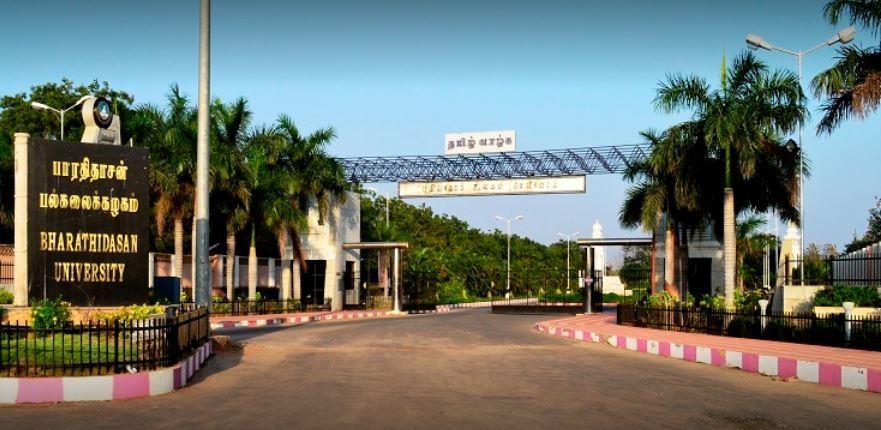
Ph.D. in Environmental Biotechnology from Bharathidasan University
Environmental Biotechnology stands at the nexus of cutting‑edge science and sustainable development. Bharathidasan University, renowned for its research‑intensive environment, offers a doctoral programme that equips professionals with advanced expertise to tackle ecological challenges, develop bio‑remediation technologies, and innovate in waste‑to‑resource solutions. This guide provides an in‑depth look at every aspect of the Ph.D. journey—from eligibility criteria to career opportunities—so you can make an informed decision and embark on a transformative academic adventure.
Ph.D Admission 2026-2027 & Writing Support Services by Shiksha Research
Eligibility Criteria for Ph.D. in Environmental Biotechnology at Bharathidasan University
- Master’s degree (M.Sc., M.Tech., or equivalent) in Biotechnology, Environmental Science, Microbiology, Biochemistry, or a related discipline with a minimum of 55% aggregate (or 5.0 CGPA on a 10‑point scale).
- For candidates with a Bachelor’s degree (B.Tech./B.Sc.) qualifying under the direct Ph.D. route, a minimum of 60% aggregate is required.
- Valid GATE/NET/UGC‑JRF score is preferred but not mandatory; candidates may also qualify through the university’s own entrance test.
- Proficiency in English (both written and spoken) to undertake research documentation and publications.
Entrance Exam for Ph.D. in Environmental Biotechnology at Bharathidasan University
The university conducts a written entrance examination consisting of two sections: a subject‑specific test (covering molecular biology, environmental microbiology, bioprocess engineering, and analytical techniques) and a general aptitude test (research methodology, statistics, and English comprehension). Candidates may also be shortlisted based on national-level scores (GATE/NET) and an interview that assesses research aptitude, motivation, and alignment with faculty expertise.
Fee Structure for Ph.D. in Environmental Biotechnology at Bharathidasan University
| Component | Annual Fee (INR) | Notes |
|---|---|---|
| Tuition & Examination Fee | 15,000 | Applicable for all Indian residents; NRI rates differ. |
| Laboratory & Resource Charges | 8,000 | Includes access to biotech labs, culture collections, and instrumentation. |
| Research Publication & Conference Support | 5,000 | Subsidized for students with Research Publication Support assistance. |
| Annual Miscellaneous Charges | 2,000 | Library, digital resources, and student activities. |
| Total Approximate Cost | 30,000 | Subject to revision annually. |
Admission Process for Ph.D. in Environmental Biotechnology at Bharathidasan University
- Online Application: Submit the application form through the university portal along with scanned copies of academic certificates.
- Entrance Examination: Appear for the university‑conducted written test (or submit valid GATE/NET scores).
- Interview & Research Proposal Review: Shortlisted candidates present a research proposal to the department faculty.
- Final Selection: Merit list issued based on marks, interview performance, and research fit.
- Enrollment: Pay the fee, submit original documents, and register for the first semester.
Ph.D. Subjects and Specializations in Environmental Biotechnology at Bharathidasan University
The doctoral programme offers diverse specializations, including:
- Bioremediation of Heavy Metals and Organic Pollutants
- Bioenergy Production from Waste Biomass
- Industrial Enzyme Engineering
- Microbial Ecology and Environmental Genomics
- Nanobiotechnology for Environmental Applications
- Green Chemistry and Sustainable Process Development
Research Areas in Environmental Biotechnology at Bharathidasan University
Faculty members lead cutting‑edge projects in:
- Construction of engineered microbial consortia for landfill leachate treatment.
- Development of low‑cost biosensors for detection of pesticide residues.
- Valorization of agro‑industrial waste into bio‑fuels and bioplastics.
- Genomic exploration of extremophiles for novel enzyme discovery.
- Carbon capture technologies through algae‑based photobioreactors.
- Policy‑driven research on circular economy models in Indian industry.
Documents Required for Ph.D. in Environmental Biotechnology at Bharathidasan University
| Document | Format | Remarks |
|---|---|---|
| Application Form | Online PDF | Signed electronically. |
| Academic Transcripts | PDF (scanned) | All semesters/years. |
| Degree Certificates | PDF (scanned) | Original and photocopy. |
| GATE/NET Scorecard (if applicable) | Valid for the current admission cycle. | |
| Research Proposal (2,000‑3,000 words) | Word Document | Include objectives, methodology, and expected outcomes. |
| Resume/CV | Highlight publications and projects. | |
| Letter of Recommendation (2) | From academic or industry supervisors. | |
| Proof of English Proficiency (if required) | IELTS/TOEFL scores. |
Bharathidasan University Ph.D. Syllabus for Environmental Biotechnology
The syllabus is structured over three phases:
- Core Coursework (Year 1) – Advanced Molecular Biology, Environmental Microbiology, Bioprocess Engineering, Statistics for Life Sciences, and Research Ethics.
- Comprehensive Examination (End of Year 1) – Written and oral tests to assess mastery of core concepts.
- Thesis Research (Years 2‑4) – Independent research under a faculty supervisor, periodic progress reports, and publication of at least two peer‑reviewed articles.
How To Apply for Ph.D. in Environmental Biotechnology at Bharathidasan University
Follow these steps:
- Visit the official university portal and navigate to the “Ph.D. Admissions” section.
- Create an account, fill in personal details, and upload the required documents.
- Select “Environmental Biotechnology” as the desired programme and pay the provisional application fee.
- Schedule the entrance examination date (or upload your GATE/NET score).
- Prepare a compelling research proposal—consider using our PhD Topic Selection and Proposal Assistance service for professional guidance.
- Track application status and respond to interview invitations promptly.
Career Scope and Job Opportunities After Ph.D. in Environmental Biotechnology from Bharathidasan University
Graduates enjoy a broad spectrum of career pathways:
- Academic Positions – Assistant Professor, Lecturer, or Research Fellow in leading universities and research institutes.
- Industry R&D – Senior Scientist roles in biotech firms, waste‑management companies, and renewable energy startups.
- Government & Public Sector – Policy analyst, environmental consultant, or project manager in agencies such as the Ministry of Environment, Forest & Climate Change.
- Entrepreneurship – Founding eco‑innovative ventures focused on bio‑remediation, bio‑fertilizers, or sustainable product development.
- International Organizations – Positions with UNDP, WHO, or World Bank on climate‑resilience and sustainable development projects.
With the rising demand for sustainable solutions, a Ph.D. in Environmental Biotechnology equips you with the technical expertise and research acumen to lead transformative initiatives globally.
Scholarship for Ph.D. in Environmental Biotechnology at Bharathidasan University
The university offers several financial aid options:
- University Merit Scholarships – up to 50% tuition waiver based on academic performance.
- UGC–CSIR Junior Research Fellowship (JRF) – stipend of INR 31,000 per month plus contingency.
- External Grants – eligibility for government-funded schemes like DST‑SERB.
- Industry Sponsored Fellowships – collaborations with biotech companies that fund project‑specific research.
Applicants are encouraged to explore the Editing and Proofreading Services to ensure scholarship applications are impeccably presented.
FAQs Regarding Ph.D. in Environmental Biotechnology at Bharathidasan University
- What is the minimum qualifying percentage for the master's degree?
- 55% aggregate (or 5.0 CGPA) for most streams; 60% for direct Ph.D. from a bachelor's degree.
- Can I apply without appearing for the university entrance test?
- Yes, if you have a valid GATE or NET score; the university may waive the written test for such candidates.
- How long does it take to complete the Ph.D.?
- The typical duration is 4 years, subject to satisfactory progress and successful thesis defense.
- Is part‑time enrollment allowed for working professionals?
- Part‑time options are available but require special permission from the department and a flexible research schedule.
- What support is available for publishing research papers?
- The university provides access to journals and conference discounts; you can also avail Research Publication Support</








