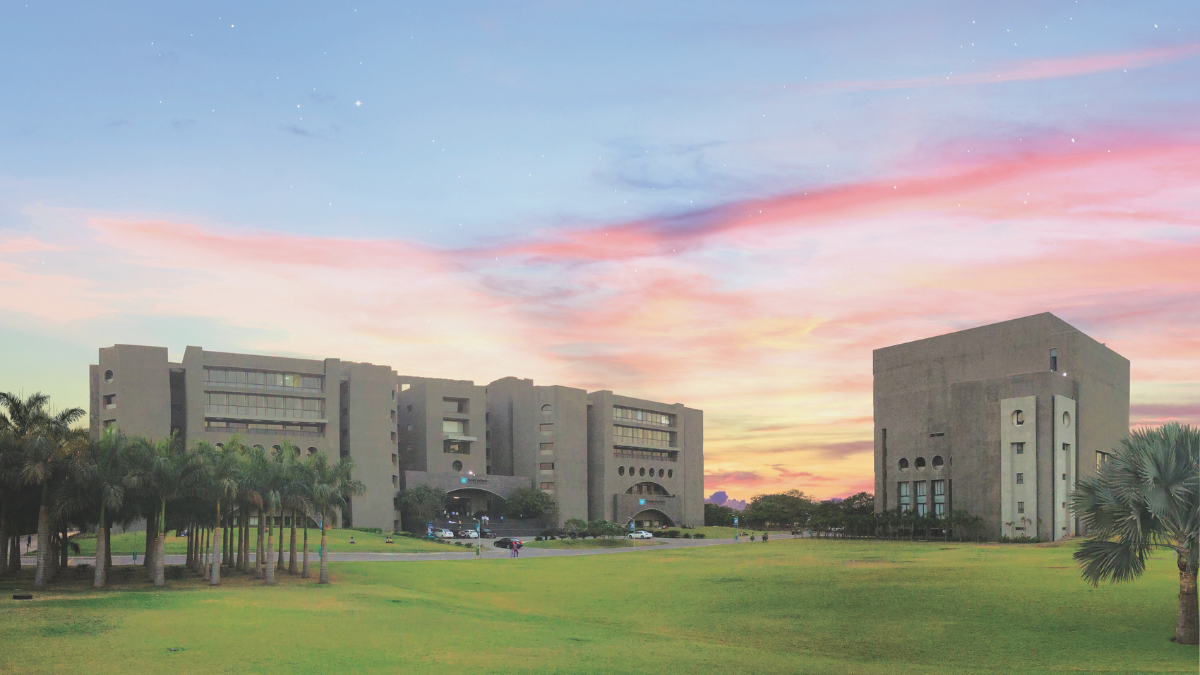
Ph.D. in Environmental Engineering from Marwadi University: Eligibility, Entrance Exam, Fee Structure, Admission Process, Subjects, Research Areas, Syllabus, Scholarship & Career Scope
Introduction about Ph.D. in Environmental Engineering at Marwadi University
Marwadi University has emerged as a leading hub for advanced research in sustainable technologies, offering a rigorous Ph.D. in Environmental Engineering that blends theoretical depth with hands‑on problem solving. Designed for seasoned engineers and scientists, this program cultivates innovators capable of addressing climate change, water scarcity, and pollution control on a global scale. With state‑of‑the‑art laboratories, collaborations with industry giants, and an interdisciplinary faculty, candidates gain the expertise needed to drive transformative change in the environmental sector.
Embarking on this doctoral journey not only expands your scientific horizons but also positions you as a thought leader in a field where expertise is in critical demand.
Ph.D Admission 2026-2027 & Writing Support Services by Shiksha Research
Eligibility Criteria for Ph.D. in Environmental Engineering at Marwadi University
Prospective scholars must fulfill the following minimum requirements:
- Master’s degree (M.Tech, MSc, M.Sc. Eng.) in Environmental Engineering, Chemical Engineering, Civil Engineering, or a closely related discipline with a minimum CGPA of 6.5/10 (or equivalent grade).
- Valid score in a recognized national entrance test (e.g., GATE, UGC NET, CSIR NET) or clearing the university‑conducted Ph.D. entrance exam.
- Demonstrated research aptitude through a statement of purpose, academic transcripts, and two professional references.
- For candidates holding a Ph.D. in a different engineering field, a supplementary evaluation may be required to ensure subject compatibility.
International applicants should submit an equivalent qualification assessment and meet the English proficiency benchmark (IELTS ≥ 6.5 or TOEFL ≥ 80).
Entrance Exam for Ph.D. in Environmental Engineering at Marwadi University
The university conducts a comprehensive entrance test that evaluates both subject‑specific knowledge and research potential. The exam structure includes:
- Paper‑I (Objective): 60 multiple‑choice questions covering fundamentals of environmental systems, water treatment, waste management, and environmental policy.
- Paper‑II (Descriptive): Two essay‑type questions focusing on research methodology, data analysis, and critical review of recent advancements.
- Interview: A panel interview to assess motivation, communication skills, and alignment with faculty research interests.
Candidates can download the detailed syllabus and past papers from the university’s official portal to prepare effectively.
Fee Structure for Ph.D. in Environmental Engineering at Marwadi University
| Component | Annual Fee (INR) |
|---|---|
| Tuition & Lecture Fees | 45,000 |
| Laboratory & Resource Charges | 20,000 |
| Library & Digital Access Fee | 5,000 |
| Examination & Evaluation Fee | 8,000 |
| Miscellaneous (Student Services) | 2,000 |
| Total Approx. Annual Cost | 80,000 |
Scholarships, research grants, and teaching assistantships are available to offset these costs for high‑performing candidates.
Admission Process for Ph.D. in Environmental Engineering at Marwadi University
- Online Application: Fill out the digital form on the university’s admission portal and upload scanned copies of certificates, ID proof, and a recent photograph.
- Entrance Test Registration: Pay the examination fee and select a preferred test center.
- Submission of Research Proposal: Attach a concise 1,500‑word proposal outlining the intended research problem, objectives, and methodology.
- Evaluation: Appear for the entrance test, followed by the interview.
- Final Offer: Successful candidates receive an admission letter with details on fee payment and registration.
All communications are routed through the official student portal; regular email updates keep applicants informed of their status.
Ph.D. Subjects and Specializations in Environmental Engineering at Marwadi University
Students may choose from a range of focused specializations, each aligned with emerging industry needs:
- Water Resources Management & Treatment Technologies
- Air Quality Monitoring & Control Systems
- Solid Waste Management & Recycling
- Environmental Impact Assessment & Policy
- Renewable Energy Integration & Sustainable Design
- Climate Change Modeling & Adaptation Strategies
Research Areas in Environmental Engineering at Marwadi University
The university’s research labs are actively engaged in cutting‑edge projects, including:
- Advanced Membrane Filtration for Desalination
- Nanomaterial‑Based Pollution Sensors
- Life‑Cycle Assessment of Green Construction Materials
- Carbon Capture and Utilization (CCU) Technologies
- Integrated Watershed Management Models
- Urban Air Quality Forecasting using AI
Collaboration opportunities with governmental agencies, NGOs, and multinational corporations further enhance real‑world impact.
Documents Required for Ph.D. in Environmental Engineering at Marwadi University
| Document | Requirement |
|---|---|
| Academic Transcripts (10+2, B.Tech/M.Sc., M.Tech/M.Sc.) | Original & attested photocopies |
| Entrance Exam Score Card (GATE/NET/University Test) | Valid score ≥ 50 percentile |
| Research Proposal | Maximum 2,000 words, signed by the prospective supervisor |
| Curriculum Vitae | Professional format highlighting publications and projects |
| Two Academic References | Letterheads with signatures |
| Passport‑Size Photograph | White background, recent |
| Proof of Identity (Aadhar/Passport) | Scanned copy |
All documents must be uploaded in PDF format with a maximum size of 2 MB per file.
Marwadi University Ph.D. Syllabus for Environmental Engineering
The doctoral curriculum balances coursework with independent research. Core modules include:
- Advanced Environmental Chemistry
- Statistical Methods for Environmental Data
- Research Design & Ethics
- Computational Modelling of Ecosystems
- Policy Frameworks for Sustainable Development
Students are required to complete a minimum of 30 credit hours of coursework in the first two semesters, after which they focus exclusively on their dissertation.
How To Apply for Ph.D. in Environmental Engineering at Marwadi University
Follow these step‑by‑step instructions to submit a successful application:
- Visit the official Marwadi University Ph.D. admissions portal and create a new account.
- Complete the online application form, ensuring all mandatory fields are filled.
- Upload the required documents (see the Documents Required table).
- Pay the non‑refundable application fee of INR 2,500 via net banking or UPI.
- Schedule your entrance exam slot and submit the research proposal for preliminary review.
- Await confirmation of exam details via email, then appear for the test and interview.
- Upon clearing the selection criteria, accept the admission offer and remit the first-year tuition fee.
Career Scope and Job Opportunities After Ph.D. in Environmental Engineering from Marwadi University
Graduates enjoy a diverse array of career pathways, such as:
- Senior Research Scientist in R&D labs of multinational environmental firms
- Policy Analyst or Environmental Consultant for governmental ministries and NGOs
- University Professor or Post‑Doctoral Fellow leading cutting‑edge projects
- Chief Sustainability Officer (CSO) in large corporations
- Entrepreneur launching clean‑tech startups
According to recent industry surveys, the average salary for Ph.D. holders in environmental engineering ranges from INR 12 Lakhs to INR 25 Lakhs per annum, with accelerated growth for those involved in renewable energy and waste‑to‑resource technologies.
Scholarship for Ph.D. in Environmental Engineering at Marwadi University
Marwadi University offers merit‑based scholarships covering up to 75 % of tuition fees for candidates with exemplary academic records. Additional financial aid includes:
- Research Assistantships (₹15,000–₹25,000 per month) tied to funded projects.
- Teaching Assistantships (₹10,000 per month) with the added benefit of pedagogical experience.
- External fellowships from agencies such as the Ministry of Science & Technology, DST‑SERB, and international bodies like the UN‑DP.
Applicants are encouraged to explore the <a href="https://shiksharesearch.com/services/editing---proof-reading








