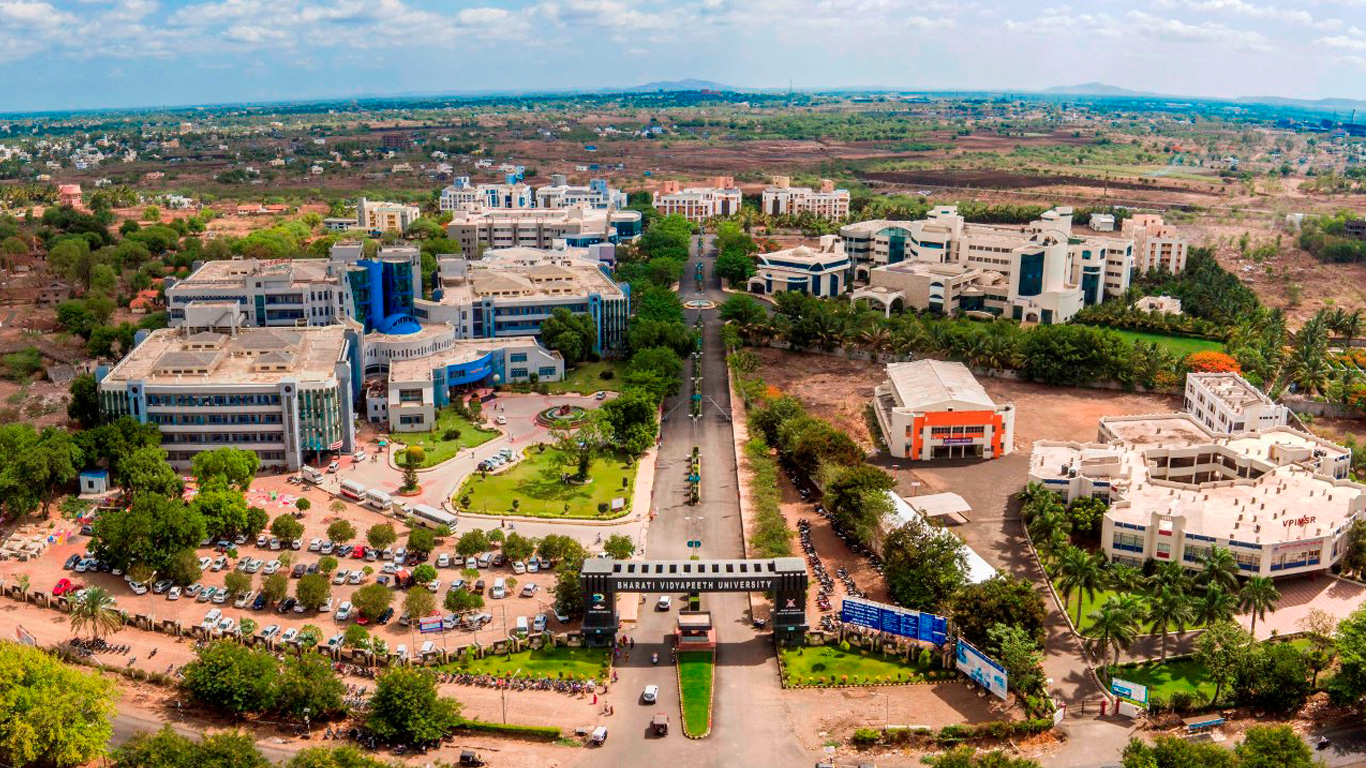
Introduction about Ph.D. in Environmental Science at Bharati Vidyapeeth
In an era where the global climate crisis is no longer a distant threat but a present reality, the world calls for visionary leaders and scientific experts who can navigate the complexities of sustainability. Pursuing a Ph.D. in Environmental Science at Bharati Vidyapeeth is more than just an academic milestone; it is a commitment to safeguarding the planet?s future. Known for its academic excellence and research-driven ecosystem, Bharati Vidyapeeth (Deemed to be University) offers a platform where innovation meets conservation. This doctorate program is designed for dedicated professionals who aim to pioneer solutions in biodiversity, pollution control, and resource management. Whether you are aiming for high-impact research or executive roles in environmental policy, securing the right PhD Admission Assistance can be your first step toward transforming your passion into a global legacy.
Ph.D Admission 2026-2027 & Writing Support Services by Shiksha Research
Eligibility Criteria for Ph.D. in Environmental Science at Bharati Vidyapeeth
Aspiring candidates must meet the rigorous academic standards set by Bharati Vidyapeeth to ensure a cohort of high-caliber researchers. The inspirational journey toward a doctorate begins with a solid foundation in environmental sciences or related interdisciplinary fields. The eligibility criteria are as follows:
- Academic Qualification: Candidates must possess a Master?s degree (M.Sc. or equivalent) in Environmental Science, Life Sciences, Chemical Sciences, or related disciplines from a recognized university.
- Minimum Marks: A minimum of 55% aggregate marks (or an equivalent grade) is required at the postgraduate level. A relaxation of 5% is often provided to candidates belonging to reserved categories (SC/ST/OBC) as per UGC norms.
- Professional Experience: While not mandatory for all categories, professional experience in environmental research or consultancy is highly valued for professionals seeking to re-enter academia.
- Final Year Students: Students appearing for their final year examinations may also apply, provided they produce their results during the final admission interview.
Entrance Exam for Ph.D. in Environmental Science at Bharati Vidyapeeth
Entrance into the doctoral program at Bharati Vidyapeeth is highly competitive, emphasizing both subject knowledge and research aptitude. The university conducts its own All India Entrance Test (BVPEE) specifically for Ph.D. admissions. The exam typically consists of two sections: Research Methodology and Subject-Specific knowledge.
Candidates who have successfully cleared national-level examinations such as UGC-NET (including JRF), CSIR-NET, GATE, or SLET are generally exempted from the written entrance exam, though they must still appear for the personal interview. Preparing for this stage requires absolute precision in your research vision; many professionals seek PhD Topic Selection and Proposal Assistance to ensure their research goals align with the university?s investigative focus.
Fee Structure for Ph.D. in Environmental Science at Bharati Vidyapeeth
The investment in a Ph.D. at Bharati Vidyapeeth is structured to support world-class laboratory access and academic resources. Below is an approximate breakdown of the fee structure for the program:
| Category of Fee | Estimated Amount (INR) | Frequency |
|---|---|---|
| Application & Entrance Exam Fee | 2,000 - 3,000 | One-time |
| Admission/Registration Fee | 10,000 - 15,000 | One-time |
| Annual Tuition Fee | 60,000 - 90,000 | Per Year |
| Laboratory & Library Charges | 15,000 - 20,000 | Per Year |
| Thesis Submission & Viva-Voce | 20,000 - 25,000 | At Submission |
Note: Fees are subject to change as per university regulations. It is recommended to check the latest prospectus for current figures.
Admission Process for Ph.D. in Environmental Science at Bharati Vidyapeeth
The admission process is a multi-tiered journey designed to identify individuals with the potential to contribute original knowledge to the field. The path begins with an online application, followed by the entrance examination. Shortlisted candidates are then invited for a comprehensive personal interview or viva-voce. During this interview, the Departmental Research Committee (DRC) evaluates the candidate?s research interest, depth of knowledge, and the feasibility of their proposed study. For those who have reached the pinnacle of their careers and wish to gain recognition for lifelong contributions without the standard research path, exploring Honorary Doctorate Programs might be an alternative inspiration.
Ph.D. Subjects and Specializations in Environmental Science at Bharati Vidyapeeth
The Ph.D. program is not merely a continuation of postgraduate studies but a specialized dive into niche areas of ecological concern. Bharati Vidyapeeth encourages interdisciplinary research that bridges the gap between science and policy. Key specializations include:
- Environmental Toxicology and Chemistry
- Waste Management and Circular Economy
- Renewable Energy Systems
- Urban Ecology and Sustainable Development
- Climate Change Adaptation and Mitigation
- Environmental Laws and Ethics
Research Areas in Environmental Science at Bharati Vidyapeeth
Bharati Vidyapeeth is at the forefront of cutting-edge research. The university provides an inspiring environment where scholars can tackle real-world problems. Current high-priority research areas include water purification technologies, air quality monitoring in industrial hubs, and biodiversity conservation in the Western Ghats. Scholars are encouraged to document their findings meticulously. Utilizing Research Publication Support can significantly enhance the visibility of your work in high-impact international journals, ensuring your research reaches global stakeholders.
Documents Required for Ph.D. in Environmental Science at Bharati Vidyapeeth
To ensure a smooth admission process, candidates must prepare the following documentation:
- Postgraduate and Undergraduate Degree Certificates and Marksheets.
- Entrance Exam Scorecard (BVPEE) or NET/SET/GATE Certificate.
- A detailed Research Proposal (Synopsis).
- No Objection Certificate (NOC) from the current employer (for working professionals).
- Transfer Certificate (TC) and Migration Certificate.
- Passport-size photographs and Identity Proof (Aadhar/Passport).
- Caste Validity Certificate (if applicable).
Bharati Vidyapeeth Ph.D. Syllabus for Environmental Science
The coursework phase is a critical foundation for every researcher. The syllabus at Bharati Vidyapeeth is meticulously crafted to refine the analytical skills of the scholar. It generally includes:
- Paper I: Research Methodology: Quantitative methods, statistical analysis, computer applications, and research ethics.
- Paper II: Advanced Environmental Science: In-depth study of ecological principles and current environmental trends.
- Paper III: Elective/Specialized Subject: Courses tailored specifically to the candidate?s chosen research area.
- Paper IV: Review of Literature: Critical analysis of existing research to identify gaps.
As the syllabus demands high-quality writing, professional Editing and Proofreading Services are often recommended for thesis drafting and coursework reports to maintain academic integrity.
How To Apply for Ph.D. in Environmental Science at Bharati Vidyapeeth
The application process is streamlined through the official university portal. Follow these steps to begin your journey:
- Visit the official Bharati Vidyapeeth website and navigate to the 'Admissions' section.
- Register your profile with a valid email address and mobile number.
- Fill out the online application form for the Ph.D. entrance test.
- Upload the required documents in the specified format.
- Pay the application fee via the integrated secure payment gateway.
- Download and print the application confirmation and admit card for future reference.
Career Scope and Job Opportunities After Ph.D. in Environmental Science from Bharati Vidyapeeth
Graduating with a Ph.D. from a prestigious institution like Bharati Vidyapeeth opens doors to elite career paths. In an increasingly "green" economy, Ph.D. holders are highly sought after by:
- Academia: Roles as Professors and Head of Departments in global universities.
- Government Organizations: Scientific officers at the Ministry of Environment, Forest and Climate Change (MoEFCC) or the Central Pollution Control Board (CPCB).
- International NGOs: Leadership positions in organizations like the UNEP, WWF, or Greenpeace.
- Corporate Sector: Chief Sustainability Officers (CSO) or Environmental Consultants for MNCs focusing on ESG (Environmental, Social, and Governance) goals.
- Innovation: Development of new green technologies. If your research leads to a technical breakthrough, securing Patent Filing and Support Services is crucial to protecting your intellectual property.
Scholarship for Ph.D. in Environmental Science at Bharati Vidyapeeth
Bharati Vidyapeeth believes that financial constraints should never hinder brilliance. Various scholarship avenues are available for doctoral scholars:
- University Fellowships: Awarded to top-ranking students in the entrance examination.
- Junior Research Fellowship (JRF): For those who have cleared the UGC/CSIR-NET JRF.
- Government Schemes: State-sponsored scholarships for minority groups and economically weaker sections.
- Industry-Funded Projects: Scholars working on specific corporate-sponsored research projects often receive monthly stipends and research grants.
FAQs Regarding Ph.D. in Environmental Science at Bharati Vidyapeeth
Q1: What is the minimum duration of the Ph.D. program?
The minimum duration is three years, including coursework, and the maximum is usually six years.
Q2: Is part-time Ph.D. available for working professionals?
Yes, Bharati Vidyapeeth offers provisions for part-time research, provided the candidate fulfills the residency requirements and submits an NOC from their employer.
Q3: How important is the research proposal for the interview?
The research proposal is pivotal. It demonstrates your ability to think critically and your readiness to contribute to the scientific community.
Q4: Can I change my research guide later in the program?
Under exceptional circumstances and with the approval of the Research Committee, guide changes are possible, though not common.
Q5: Does the university help with research publications?
While the guides provide primary assistance, the university encourages scholars to use professional support to reach international publication standards.








