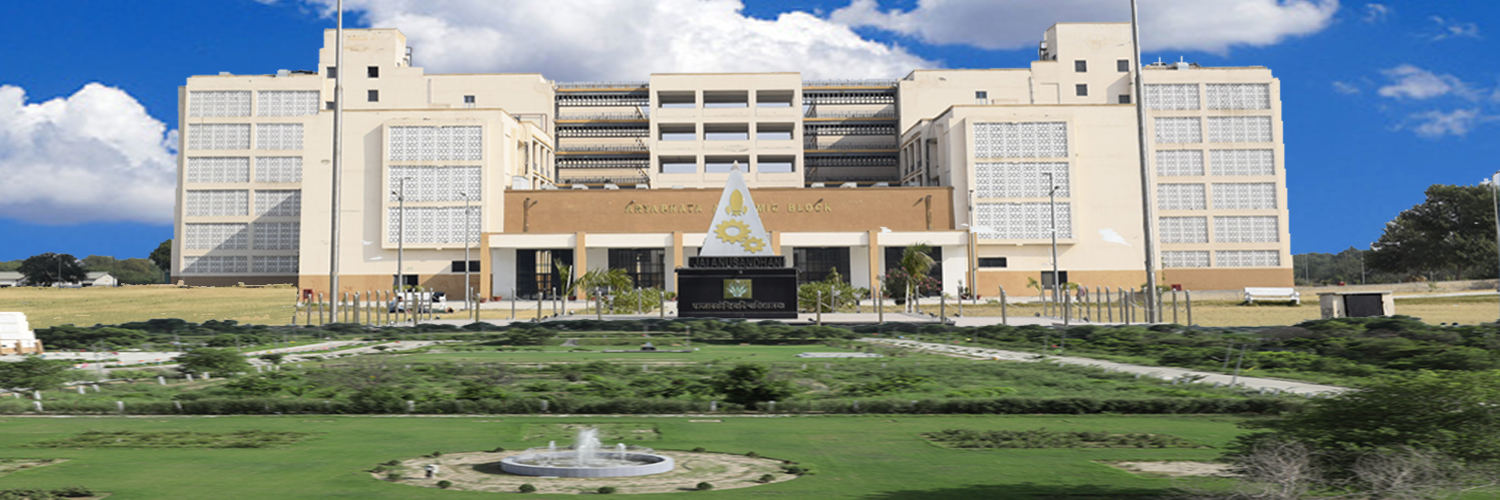
Ph.D. in Environmental Science from Central University of Punjab: Eligibility, Entrance Exam, Fee Structure, Admission Process, Subjects, Research Areas, Syllabus, Scholarship & Career Scope
Introduction about Ph.D. in Environmental Science at Central University of Punjab
Central University of Punjab (CUP) has emerged as a beacon of interdisciplinary research, especially in the realm of Environmental Science. The doctoral programme is designed for forward‑thinking professionals who aspire to drive sustainable solutions, influence policy, and lead cutting‑edge research. With state‑of‑the‑art laboratories, collaborations with international research centres, and a vibrant academic community, CUP offers an inspirational environment where scientific curiosity meets real‑world impact.
Ph.D Admission 2026-2027 & Writing Support Services by Shiksha Research
Eligibility Criteria for Ph.D. in Environmental Science at Central University of Punjab
Prospective candidates must meet the following academic and professional benchmarks:
- Master’s degree (M.Sc., M.Tech., M.A., or equivalent) in Environmental Science, Ecology, Geology, Chemistry, Biology, or a closely related discipline with a minimum of 55% marks (or CGPA equivalent).
- Qualified in a national-level entrance examination such as UGC NET, CSIR NET, GATE, or the university‑conducted Ph.D. entrance test.
- For candidates holding a Ph.D. in a related field, admission may be considered on the basis of research experience and a valid research proposal.
- Minimum age of 21 years at the time of admission; no upper age limit.
- Candidates with a strong background in quantitative methods, GIS, remote sensing, and statistical analysis are preferred.
Entrance Exam for Ph.D. in Environmental Science at Central University of Punjab
The entrance assessment evaluates both theoretical knowledge and research aptitude:
- Written Test (100 marks): Comprises two sections – Core Environmental Science (60 marks) and General Aptitude & Research Methodology (40 marks). Topics include climate change, environmental toxicology, ecosystem services, and data analytics.
- Interview (20 marks): A panel of subject experts examines the candidate’s research proposal, prior publications, and motivation to pursue a doctorate.
- Minimum qualifying score: 55% in the written test and an overall aggregate of 60% (including interview).
Fee Structure for Ph.D. in Environmental Science at Central University of Punjab
| Component | Amount (INR) | Frequency |
|---|---|---|
| Application Processing Fee | 2,500 | One‑time |
| Tuition Fee (Coursework & Seminars) | 45,000 | Per Semester |
| Laboratory & Field Work Charges | 15,000 | Per Semester |
| Annual Registration & Library Fee | 10,000 | Per Year |
| Miscellaneous (Printing, Software, etc.) | 5,000 | Per Year |
| Total Approximate Cost | ~₹2,10,000 (First Year) |
Note: Candidates securing merit‑based scholarships or research assistantships may enjoy a reduction of up to 50% on tuition and laboratory fees.
Admission Process for Ph.D. in Environmental Science at Central University of Punjab
The streamlined admission workflow consists of the following stages:
- Online Application Submission: Fill the digital form on the university portal, upload academic transcripts, research proposal, and two recommendation letters.
- Payment of Application Fee: Secure payment through net banking or credit card.
- Entrance Examination: Appear for the written test at designated centers; the schedule is released three weeks after the application deadline.
- Interview & Proposal Evaluation: Shortlisted candidates are invited for a personal interview and a detailed discussion of their research plan.
- Final Selection & Offer Letter: Successful candidates receive an admission offer via email along with details of fee payment and scholarship eligibility.
- Enrollment: Complete the registration process, attend orientation, and commence coursework.
Ph.D. Subjects and Specializations in Environmental Science at Central University of Punjab
CUP’s doctoral programme offers a spectrum of specializations that reflect emerging global challenges:
- Climate Change Modelling & Impact Assessment
- Environmental Toxicology & Risk Assessment
- Water Resources Management & Hydrology
- Air Quality Monitoring & Pollution Control
- Renewable Energy Systems & Sustainable Technologies
- Ecological Restoration & Biodiversity Conservation
- Geospatial Analysis & Remote Sensing Applications
- Environmental Policy, Governance & Law
Research Areas in Environmental Science at Central University of Punjab
Faculty members guide research in cutting‑edge domains that align with national and international priorities:
- Carbon Sequestration and Climate Mitigation Strategies
- Microplastics Pollution in Freshwater and Marine Systems
- Smart Cities: Sustainable Urban Planning and Green Infrastructure
- Soil Health, Agro‑Ecology, and Sustainable Agriculture
- Energy Efficiency in Industrial Processes
- Environmental Health: Airborne Pathogens and Public Health Impact
- Indigenous Knowledge Systems for Ecosystem Management
Documents Required for Ph.D. in Environmental Science at Central University of Punjab
| Document | Format | Remarks |
|---|---|---|
| Completed Online Application Form | Signed digitally | |
| Academic Transcripts (Post‑Graduation) | PDF/Scanned | Must bear university seal |
| Research Proposal (max 2,000 words) | Word Document | Include objectives, methodology, and expected outcomes |
| Two Letters of Recommendation | From academicians or industry professionals | |
| Proof of Entrance Exam Qualification | UGC NET, CSIR NET, GATE, etc. | |
| Identity Proof (Aadhar/Passport) | Valid government ID |
Central University of Punjab Ph.D. Syllabus for Environmental Science
The syllabus is structured to build a robust foundation before moving into specialized research modules:
- Year 1 – Core Foundations
- Advanced Environmental Chemistry
- Statistical Methods for Environmental Data
- Geographic Information Systems (GIS) and Remote Sensing
- Research Methodology & Ethics
- Year 2 – Specialization Modules
- Selected elective based on chosen specialization (e.g., Climate Modelling)
- Field Techniques and Laboratory Practices
- Seminar Series with International Experts
- Year 3 – Thesis Work
- Data Collection & Analysis
- Manuscript Preparation & Publication
- Thesis Defense and Viva‑voce
How To Apply for Ph.D. in Environmental Science at Central University of Punjab
Follow these step‑by‑step instructions to submit a successful application:
- Visit the official CUP admissions portal and click on “Apply for Ph.D.”
- Register using a valid email address and create a secure password.
- Complete the personal and academic sections, uploading scanned copies of all required documents.
- Draft a concise research proposal (max 2,000 words) that aligns with the university’s priority research areas.
- Pay the non‑refundable application fee via the integrated payment gateway.
- Submit the application and note the reference number for future correspondence.
- Monitor email for the admit card to the entrance test and subsequent interview schedule.
Career Scope and Job Opportunities After Ph.D. in Environmental Science from Central University of Punjab
A doctorate from CUP opens doors to a multitude of high‑impact careers:
- Academia: Assistant Professor, Associate Professor, or Research Fellow at premier universities and institutes.
- Research Organisations: Senior Scientist at CSIR, ICAR, Indian Institute of Forest Research, or international bodies like UNEP








