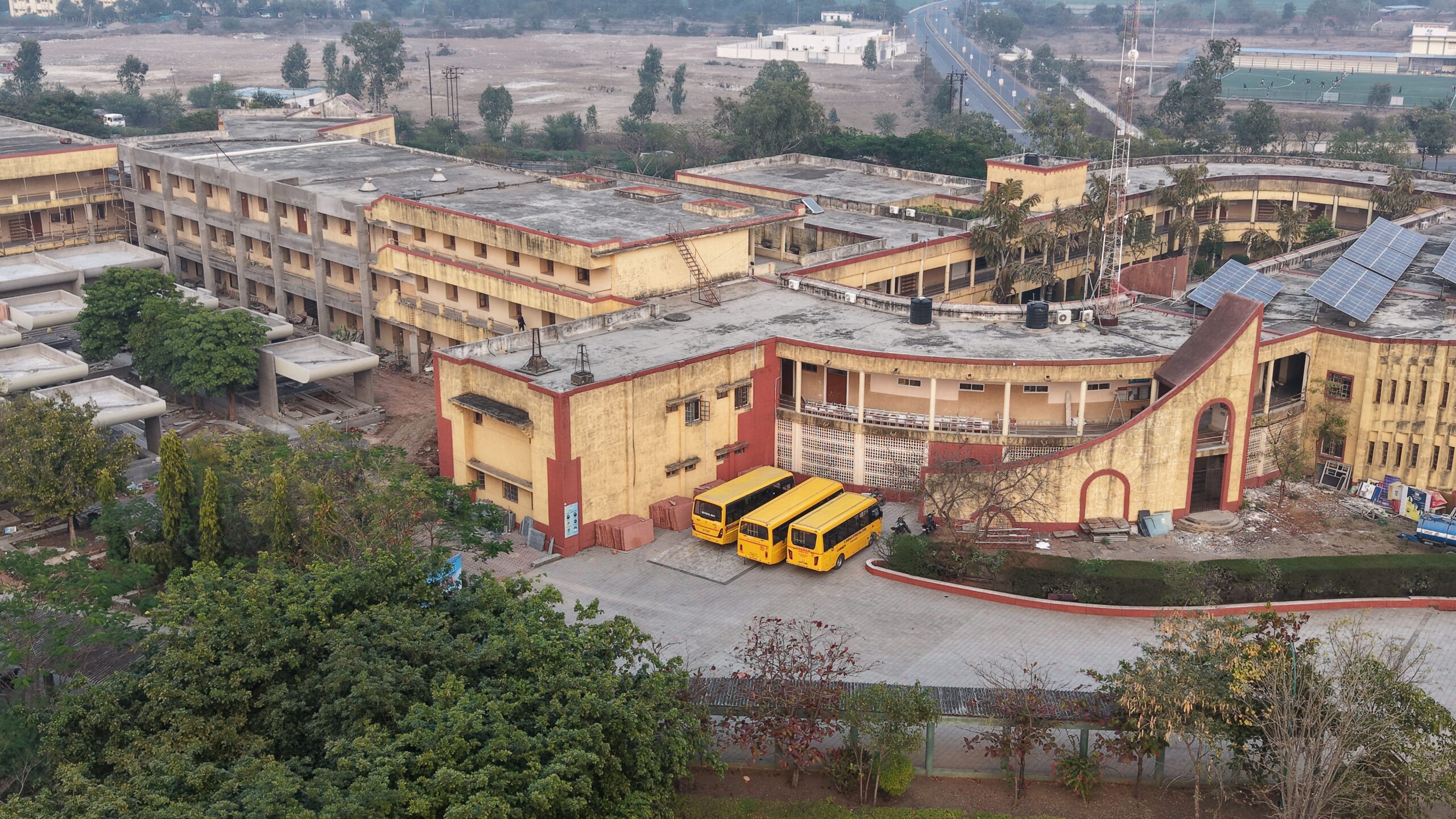
Ph.D. in Environmental Science from Mandsaur University
Introduction about Ph.D. in Environmental Science at Mandsaur University
Mandsaur University has emerged as a beacon for advanced research in environmental stewardship, offering a rigorous Ph.D. in Environmental Science that equips scholars with the analytical tools and interdisciplinary insight required to tackle today’s most pressing ecological challenges. The program blends cutting‑edge laboratory work, field investigations, and policy analysis, fostering professionals who can drive sustainable solutions across sectors such as energy, water resources, climate change, and biodiversity conservation.
Eligibility Criteria for Ph.D. in Environmental Science at Mandsaur University
Prospective candidates must satisfy the following minimum requirements:
- A Master’s degree (M.Sc., M.A., M.Tech.) in Environmental Science or a closely related discipline with a minimum aggregate of 55% (or equivalent CGPA).
- Qualification in national-level exams such as NET, GATE, CSIR‑UGC, or an institution‑approved equivalent.
- For candidates without a qualifying exam, a University Entrance Test (UET) will be conducted.
- Applicants should possess a strong foundation in research methodology, statistics, and GIS tools.
Entrance Exam for Ph.D. in Environmental Science at Mandsaur University
Mandsaur University conducts a two‑stage entrance evaluation:
- Written Test: Objective and descriptive questions covering core environmental concepts, research design, and quantitative analysis.
- Interview & Presentation: Candidates present a research proposal, discuss prior work, and demonstrate analytical competence.
The written test emphasizes critical thinking and the ability to integrate multidisciplinary knowledge—key traits for future environmental leaders.
Fee Structure for Ph.D. in Environmental Science at Mandsaur University
| Component | Annual Fee (INR) | One‑Time Fee (INR) |
|---|---|---|
| Tuition & Laboratory Charges | 25,000 | — |
| Research Material & Field Work Allowance | 12,000 | — |
| University Development Fund | — | 5,000 |
| Library & Digital Resources | 3,000 | — |
| Total (per annum) | 40,000 | 5,000 |
The fee is subject to revision based on university policy; however, scholarships and fellowships substantially offset these costs for deserving candidates.
Admission Process for Ph.D. in Environmental Science at Mandsaur University
The admission workflow follows a transparent, step‑by‑step pathway:
- Online Application: Submit the application form via the university portal, attaching academic transcripts, a research proposal, and eligibility certificates.
- Document Verification: The Admissions Committee validates credentials and eligibility.
- Entrance Examination: Eligible applicants sit for the written test.
- Interview & Proposal Review: Shortlisted candidates present their research ideas and undergo a faculty interview.
- Final Selection & Offer Letter: Successful candidates receive an admission offer and enrollment instructions.
Ph.D. Subjects and Specializations in Environmental Science at Mandsaur University
The program offers a diverse set of specializations to match emerging industry and academic needs:
- Climate Change Modeling and Mitigation
- Water Resources Management
- Ecological Restoration and Conservation
- Environmental Toxicology and Risk Assessment
- Renewable Energy Systems and Policy
- Geospatial Analysis and Remote Sensing
- Sustainable Urban Planning
Research Areas in Environmental Science at Mandsaur University
Research at Mandsaur University is anchored in four strategic pillars:
- Atmospheric Sciences: Air quality monitoring, greenhouse gas inventories, and climate dynamics.
- Hydrology and Water Quality: Watershed modeling, pollutant transport, and integrated water resource management.
- Biodiversity & Ecosystem Services: Habitat fragmentation, species conservation genetics, and ecosystem valuation.
- Environmental Policy & Governance: Policy impact assessment, environmental law, and stakeholder engagement frameworks.
Collaborations with national research institutes, NGOs, and industry partners broaden the impact of doctoral research.
Documents Required for Ph.D. in Environmental Science at Mandsaur University
| Document | Requirement |
|---|---|
| Completed Application Form | Online submission with electronic signature |
| Academic Transcripts (12th, Graduation, Post‑Graduation) | Original + Certified copies |
| Proof of NET/GATE/CSIR‑UGC Qualification | Scorecard or merit list |
| Research Proposal (5‑7 pages) | Includes objectives, methodology, and expected outcomes |
| Curriculum Vitae (CV) | Professional format highlighting research experience |
| Two Academic References | Letters on official letterhead |
| Identity Proof (Aadhaar / Passport) | Scanned copy |
Mandsaur University Ph.D. Syllabus for Environmental Science
The doctoral syllabus is structured into three core phases:
- Coursework (Year 1): Advanced modules covering Research Methodology, Statistical Modeling, GIS & Remote Sensing, Environmental Law, and Sustainable Development.
- Comprehensive Examination (End of Year 1): Tests conceptual mastery and readiness for independent research.
- Thesis Research (Years 2‑4): Original research, periodic progress seminars, and publication of findings in peer‑reviewed journals.
Students are encouraged to integrate interdisciplinary tools such as Thesis and Dissertation Writing Services and leverage data analytics platforms for robust outcome generation.
How To Apply for Ph.D. in Environmental Science at Mandsaur University
Follow these streamlined steps to submit a successful application:
- Visit the official university admissions portal and register an account.
- Fill in personal details, academic history, and upload scanned documents.
- Enter a concise research proposal (max 1500 words) outlining the problem statement, objectives, and methodology.
- Pay the non‑refundable application fee (INR 2,500) through the secure payment gateway.
- Submit the form and note the application reference number for future correspondence.
After submission, monitor email notifications for exam dates, interview invitations, and final decisions.
Career Scope and Job Opportunities After Ph.D. in Environmental Science from Mandsaur University
A doctorate in Environmental Science opens doors to high‑impact careers across sectors:
- Academic & Research Positions: Assistant Professor, Post‑doctoral Fellow, Research Scientist at universities and research councils.
- Government & Policy Agencies: Environmental Analyst, Climate Policy Advisor, Project Manager in ministries and regulatory bodies.
- Consulting & Private Industry: Sustainability Consultant, ESG Analyst, Renewable Energy Planner, Environmental Impact Assessment (EIA) specialist.
- International Organizations: Roles with UNDP, World Bank, IUCN, and NGOs focusing on climate resilience and biodiversity.
The blend of scientific rigor and policy insight ensures graduates are competitive for leadership roles that influence environmental governance worldwide.
Scholarship for Ph.D. in Environmental Science at Mandsaur University
Mandsaur University offers several financial aid options:
- University Merit Scholarship: Full tuition waiver for candidates with a CGPA above 8.5/10.
- UGC‑CSIR JRF & SRF: Stipends of INR 31,000 per month (JRF) and INR 35,000 per month (SRF) along with research grants.
- State Government Fellowships: Annual stipends and contingency grants for research aligned with regional environmental priorities.
- Project‑Based Funding: Access to funded projects in collaboration with industry partners, covering travel, field work, and equipment costs.
Applicants are also advised to explore external funding avenues such as Research Data Analysis Services grants and collaborative research schemes.
FAQs Regarding Ph.D. in Environmental Science at Mandsaur University
- What is the minimum duration to complete the Ph.D.?
- The standard duration is 4 years, with a possibility of extension up to 6 years based on research progress.
- Can I pursue the Ph.D. part‑time while working?
- Yes, Mandsaur University allows part‑time enrollment for professionals, subject to meeting research milestones within an extended timeline.
- Is there a provision for interdisciplinary research?
- Absolutely. The university encourages collaborations across departments such as Engineering, Economics, and Law, fostering holistic environmental solutions.
- How many publications are required for thesis submission?
- At least two papers in indexed journals (Scopus/Web of Science) are typically required, though the exact number may vary with the supervising faculty’s recommendation.
- Are there opportunities for international exposure?
- Students can apply for exchange programs and joint supervision with partner institutions abroad, often supported by scholarships like the Research Paper Writing Services fellowship.








