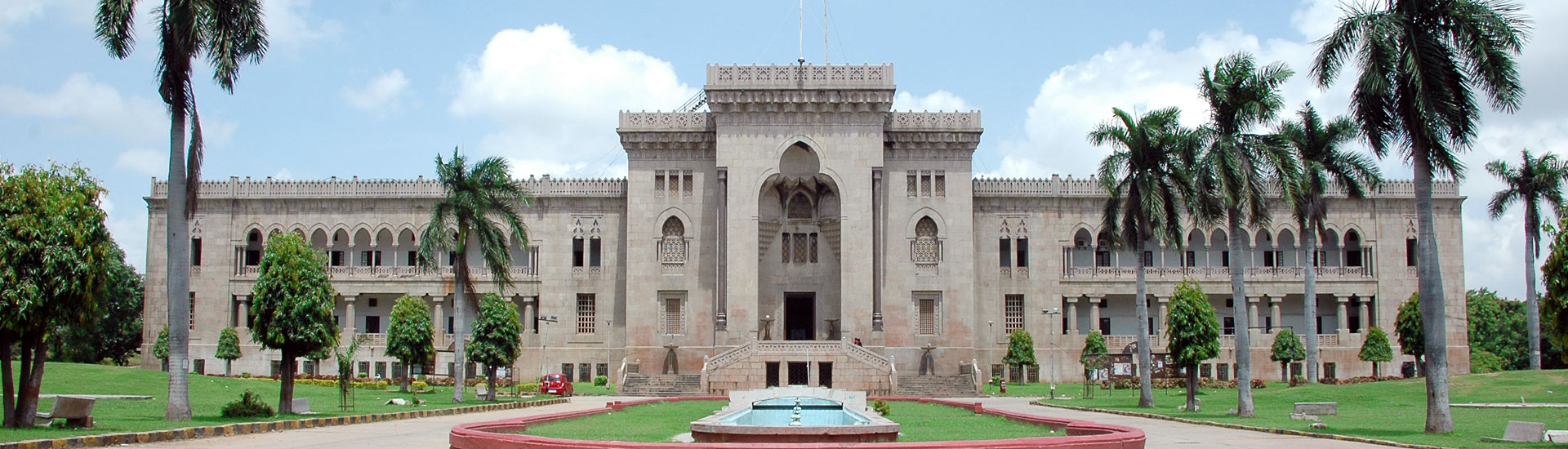
Ph.D. in Environmental Science from Osmania University: Eligibility, Entrance Exam, Fee Structure, Admission Process, Subjects, Research Areas, Syllabus, Scholarship & Career Scope
Introduction about Ph.D. in Environmental Science at Osmania University
Osmania University, a premier institution in the heart of Hyderabad, offers a rigorous and research‑driven Ph.D. program in Environmental Science. Designed for seasoned professionals, the program blends advanced theoretical frameworks with real‑world applications, empowering scholars to become leaders in sustainability, climate policy, and ecosystem management. Whether you aim to influence public policy, lead groundbreaking research, or drive corporate sustainability, Osmania University provides a vibrant academic ecosystem and state‑of‑the‑art laboratories to turn ambition into impact.
Eligibility Criteria for Ph.D. in Environmental Science at Osmania University
- Master’s degree (M.Sc., M.Tech., or equivalent) in Environmental Science, Ecology, Geography, Chemistry, Biology, or a closely related discipline with at least 55% aggregate (50% for SC/ST candidates).
- Valid GATE/NET/UGC-JRF score is preferred but not mandatory.
- Minimum of two years of professional experience in research, industry, or NGOs strengthens the application.
- Proficiency in English (IELTS/TOEFL not required for Indian nationals).
Entrance Exam for Ph.D. in Environmental Science at Osmania University
Osmania University conducts a two‑stage entrance assessment:
- Written Test: 60 questions covering advanced environmental concepts, research methodology, statistics, and analytical skills. The test is 2 hours long and is conducted online.
- Interview & Proposal Presentation: Candidates present a concise research proposal (10‑15 minutes) followed by a viva‑voce to evaluate depth of knowledge and research feasibility.
Preparation resources include previous year papers, university‑published syllabi, and recommended reading lists. A strong performance in the entrance exam significantly enhances admission chances.
Fee Structure for Ph.D. in Environmental Science at Osmania University
| Component | Annual Fee (INR) | Notes |
|---|---|---|
| Tuition & Laboratory Charges | 22,500 | Applicable for the first two years of coursework |
| Research & Publication Fee | 8,000 | Includes access to journals and conference travel |
| Library & Resource Access | 3,000 | Digital and physical library facilities |
| Miscellaneous (Student Activities, Exams) | 2,500 | Annual estimate |
| Total Approximate Fee per Year | 36,000 | Subject to revision each academic session |
Admission Process for Ph.D. in Environmental Science at Osmania University
- Online Application: Fill the registration form on the university portal, upload scanned copies of certificates, and pay the application fee (₹1,200).
- Document Verification: Submit original documents at the admission office within 15 days of the provisional acceptance email.
- Entrance Examination: Appear for the written test on the scheduled date. Admit cards are issued 7 days prior.
- Interview & Proposal Review: Shortlisted candidates are invited for a panel interview and proposal discussion.
- Final Admission Offer: Successful candidates receive an official admission letter, fee structure, and enrollment instructions.
Ph.D. Subjects and Specializations in Environmental Science at Osmania University
The program offers diverse specializations allowing candidates to tailor their research. Key subjects include:
- Climate Change Modelling and Mitigation
- Ecotoxicology and Pollution Control
- Renewable Energy Systems
- Urban Sustainability and Smart Cities
- Water Resources Management
- Environmental Impact Assessment (EIA)
- Geospatial Technologies and Remote Sensing
Research Areas in Environmental Science at Osmania University
Faculty members lead cutting‑edge research in the following domains, offering Ph.D. scholars ample opportunities for collaboration and funding:
- Air Quality Monitoring and Control Strategies
- Carbon Sequestration and Greenhouse Gas Inventories
- Integrated Waste Management and Circular Economy
- Climate‑Resilient Agriculture
- Marine and Coastal Ecosystem Conservation
- Environmental Health Risk Assessment
- Policy Analysis for Sustainable Development Goals (SDGs)
Documents Required for Ph.D. in Environmental Science at Osmania University
| Document | Format | Remarks |
|---|---|---|
| Academic Transcripts (Post‑Graduate) | PDF, Scanned Copy | Must be attested by the awarding institution |
| Research Proposal (max 2,500 words) | Word Document | Include objectives, methodology, and expected outcomes |
| Curriculum Vitae (CV) | Highlight publications, projects, and professional experience | |
| GATE/NET Score Card (if available) | PDF/Image | Optional but strengthens the profile |
| Letter of Recommendation (2) | From academic supervisors or senior industry mentors | |
| Identity Proof (Aadhaar / Passport) | Government‑issued ID |
Osmania University Ph.D. Syllabus for Environmental Science
The syllabus is structured into three phases: Coursework, Comprehensive Examination, and Thesis Research.
- Phase I – Core Coursework (12 credits): Advanced Environmental Chemistry, Ecological Modelling, Statistical Methods for Environmental Data, Research Ethics, and GIS for Environmental Analysis.
- Phase II – Comprehensive Examination: Written and oral exams testing mastery of core subjects and research design.
- Phase III – Thesis Research: Original research under a faculty supervisor, culminating in a dissertation and defense before a university panel.
How To Apply for Ph.D. in Environmental Science at Osmania University
Follow these step‑by‑step instructions to submit a successful application:
- Visit the official Osmania University admissions portal and create a new user account.
- Complete the online application form, ensuring accurate personal and academic details.
- Upload the required documents (see “Documents Required” section) in the prescribed formats.
- Pay the non‑refundable application fee using any of the accepted online payment methods.
- Submit the application and note the generated application ID for future correspondence.
- Monitor email for the admit card, entrance test schedule, and interview invitation.
- After clearing all selection stages, accept the offer by paying the first installment of the tuition fee.
Career Scope and Job Opportunities After Ph.D. in Environmental Science from Osmania University
Graduates enjoy a wide array of career pathways, driven by the global emphasis on sustainability and climate resilience:
- Academic & Research Positions: Assistant Professor, Post‑Doctoral Fellow, Research Scientist in universities and research institutes.
- Government & Policy Making: Environmental Analyst, Climate Policy Advisor, Senior Officer in ministries such as MoEFCC, state environmental departments.
- Corporate & Industry: Sustainability Manager, ESG Analyst, Environmental Consultant for multinational corporations, renewable energy firms, and manufacturing units.
- International Organizations: Project Officer or Specialist at UNDP, World Bank, IEA, and NGOs focusing on environmental conservation.
- Entrepreneurship: Founding start‑ups that develop green technologies, waste‑to‑energy solutions, or environmental data analytics platforms.
Scholarship for Ph.D. in Environmental Science at Osmania University
Financial assistance is available through various channels:
- University Merit Scholarship: Covers up to 75% of tuition fees for candidates with a GPA above 8.5/10.
- UGC‑JRF & SRF Fellowships: Competitive national fellowships providing a monthly stipend and research grant.
- Government Sponsored Schemes: Scholarships under the Department of Science & Technology (DST) and Ministry of Education.
- Industry‑Sponsored Projects: Funding through collaborations with corporate partners for applied research.
FAQs Regarding Ph.D. in Environmental Science at Osmania University
- Q1: Is a GATE or NET score mandatory for admission?
- A: No, it is not compulsory, but a valid score enhances the applicant’s profile and may provide additional scholarship opportunities.
- Q2: How long does the Ph.D. program typically take?
- A: The minimum duration is 3 years, while most candidates complete it in 4‑5 years depending on research progress.
- Q3: Can working professionals enroll part‑time?
- A: Yes, Osmania University offers a part‑time mode for eligible candidates who can attend mandatory seminars and submit progress reports.
- Q4: What is the role of the provided services in the admission journey?
- A: Prospective scholars can benefit from Editing








