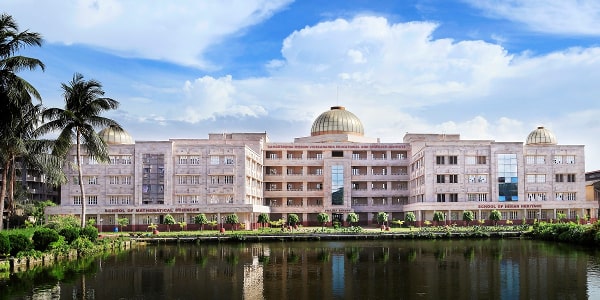
Ph.D. in Environmental Science at Ramakrishna Mission Vivekananda Educational and Research Institute
Introduction about Ph.D. in Environmental Science at Ramakrishna Mission Vivekananda Educational and Research Institute
The Ph.D. in Environmental Science offered by the Ramakrishna Mission Vivekananda Educational and Research Institute (RKMVERI) is a gateway for professionals eager to become pioneers in sustainable development, climate change mitigation, and ecological conservation. With a curriculum designed around cutting‑edge research, the program nurtures analytical rigor, interdisciplinary collaboration, and real‑world impact, making it an ideal choice for visionary scholars.
Eligibility Criteria for Ph.D. in Environmental Science at Ramakrishna Mission Vivekananda Educational and Research Institute
- Master’s degree (M.Sc., M.Tech., M.A.) in Environmental Science, Ecology, Earth Sciences, or a closely related discipline with a minimum of 55% aggregate (or equivalent CGPA).
- Valid GATE/NET score in relevant subject is preferred but not mandatory.
- Research experience, publications, or project work will be considered advantageous.
- Citizenship: Indian nationals; NRI/OCI candidates may apply under the same criteria.
Entrance Exam for Ph.D. in Environmental Science at Ramakrishna Mission Vivekananda Educational and Research Institute
The institute conducts a rigorous entrance examination comprising:
- Written Test – Objective and descriptive questions covering core environmental concepts, research methodology, and data analysis.
- Interview & VIVA – Assessment of research aptitude, subject expertise, and alignment with faculty interests.
Applicants with a valid GATE/NET score are exempted from the written test and directly invited for the interview phase.
Fee Structure for Ph.D. in Environmental Science at Ramakrishna Mission Vivekananda Educational and Research Institute
| Component | Annual Fee (INR) | Notes |
|---|---|---|
| Tuition & Laboratory Charges | 45,000 | Includes access to research labs and library resources. |
| Exam & Evaluation Fees | 5,000 | Covers internal assessments and dissertation evaluation. |
| Registration & Administration | 2,500 | One‑time payment at admission. |
| Miscellaneous (Internet, Printing) | 1,500 | Estimated per annum. |
| Total Approximate Cost | 54,000 | Subject to revision each academic year. |
Admission Process for Ph.D. in Environmental Science at Ramakrishna Mission Vivekananda Educational and Research Institute
- Online Application – Submit the application form through the institute’s portal with scanned copies of academic transcripts.
- Document Verification – Upload eligibility proof, research proposal, and GATE/NET scores (if any).
- Entrance Examination – Appear for the written test (unless exempted).
- Interview & VIVA – Shortlisted candidates attend a face‑to‑face interview with the faculty panel.
- Final Selection – Merit list released; admitted candidates receive an admission letter and fee payment details.
Ph.D. Subjects and Specializations in Environmental Science at Ramakrishna Mission Vivekananda Educational and Research Institute
Students may choose from a range of specialized tracks, including:
- Climate Change Modeling
- Environmental Toxicology
- Renewable Energy Systems
- Ecological Restoration
- Water Resources Management
- Environmental Impact Assessment
- Urban Sustainability and Smart Cities
Research Areas in Environmental Science at Ramakrishna Mission Vivekananda Educational and Research Institute
The institute’s research ecosystem focuses on high‑impact domains such as:
- Carbon Sequestration and Emission Reduction Strategies
- Pollution Monitoring using Remote Sensing & GIS
- Waste-to-Energy Technologies
- Bioremediation of Contaminated Sites
- Conservation Genetics of Endangered Species
- Policy Frameworks for Sustainable Development
Collaborations with national laboratories and international NGOs amplify the scope for interdisciplinary projects.
Documents Required for Ph.D. in Environmental Science at Ramakrishna Mission Vivekananda Educational and Research Institute
| Document | Format | Remarks |
|---|---|---|
| Academic Transcripts (M.Sc./M.Tech.) | PDF (Scanned) | All semesters |
| Degree Certificate | PDF (Scanned) | Original copy required later |
| GATE/NET Scorecard (if applicable) | Valid for the current admission cycle | |
| Research Proposal (2,000‑3,000 words) | DOCX or PDF | Must align with faculty interests |
| Identity Proof (Aadhaar/Passport) | Valid government ID | |
| Curriculum Vitae | Highlight publications & projects |
Ramakrishna Mission Vivekananda Educational and Research Institute Ph.D. Syllabus for Environmental Science
The doctoral syllabus is structured into three core phases:
- Coursework (Year 1) – Advanced modules on Research Methodology, Statistical Analysis, Environmental Law, and Specialized Electives.
- Comprehensive Examination (End of Year 1) – Written test covering coursework and literature review.
- Dissertation Phase (Years 2‑4) – Original research, data collection, analysis, and thesis writing. Candidates must publish at least two peer‑reviewed articles before submission.
How To Apply for Ph.D. in Environmental Science at Ramakrishna Mission Vivekananda Educational and Research Institute
Follow these steps to submit a successful application:
- Visit the official admission portal and create a user account.
- Fill in personal, academic, and research details accurately.
- Upload the required documents (see the Documents Required section).
- Pay the non‑refundable application fee of INR 2,000 through net banking or UPI.
- Submit the form and note the application reference number for future correspondence.
For assistance with proposal writing, explore our Thesis and Dissertation Writing Services.
Career Scope and Job Opportunities After Ph.D. in Environmental Science from Ramakrishna Mission Vivekananda Educational and Research Institute
Graduates enjoy diverse pathways, such as:
- Senior Research Scientist – Government labs (CSIR, DRDO), private R&D units, and international research institutes.
- Environmental Consultant – Advisory roles for multinational corporations, NGOs, and policy think‑tanks.
- Academic Faculty – Lecturer/Assistant Professor positions at premier universities.
- Project Manager – Leading large‑scale sustainability projects funded by World Bank, UNDP, or national agencies.
- Entrepreneur – Start‑ups in green technology, renewable energy, and environmental monitoring.
Scholarship for Ph.D. in Environmental Science at Ramakrishna Mission Vivekananda Educational and Research Institute
The institute offers merit‑based scholarships covering tuition waivers up to 100% and monthly stipends of INR 15,000. Additional funding is available through:
- UGC‑JRF (Junior Research Fellowship)
- CSIR‑NET fellowship
- Institute-sponsored research grants
Applicants can also benefit from collaborative funding programs by partnering with industry. For data handling support, consider our Research Data Analysis Services.
FAQs Regarding Ph.D. in Environmental Science at Ramakrishna Mission Vivekananda Educational and Research Institute
- Q1: What is the minimum duration to complete the Ph.D.?
- A: The program is designed for a minimum of 3 years and a maximum of 5 years, subject to satisfactory progress.
- Q2: Can I pursue the Ph.D. part‑time while working?
- A: Yes, the institute offers a flexible part‑time schedule for working professionals with prior approval.
- Q3: Are there opportunities for international collaborations?
- A: The institute has MoUs with several overseas universities, enabling joint supervision and exchange programs.
- Q4: How many publications are required before thesis submission?
- A: At least two papers in indexed journals are mandatory; additional conference papers are encouraged.
- Q5: Is there support for proposal development?
- A: Yes, prospective candidates can utilize our <a href="https://shiksharesearch.com








