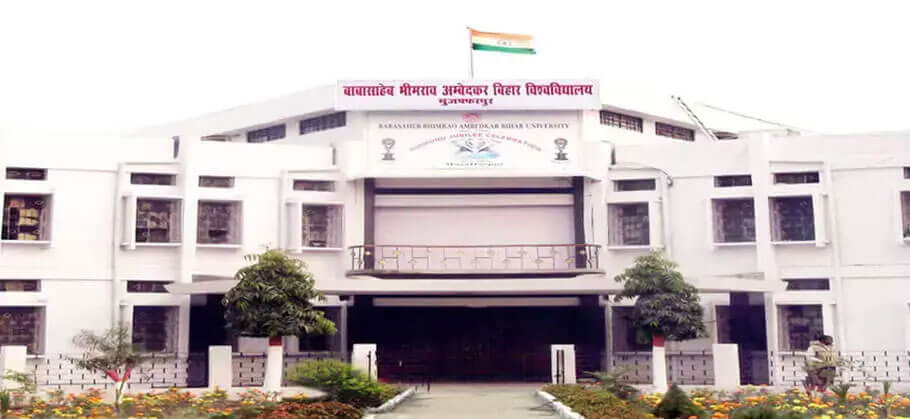
Introduction about Ph.D. in Fisheries Resource Management at Babasaheb Bhimrao Ambedkar Bihar University
Embarking on a Ph.D. in Fisheries Resource Management at Babasaheb Bhimrao Ambedkar Bihar University (BRABU) is more than just an academic pursuit; it is a commitment to safeguarding our planet's aquatic biodiversity and ensuring the sustainability of vital food sources. As the global demand for aquatic protein rises, the need for visionary leaders who can blend traditional knowledge with cutting-edge scientific innovation has never been more critical. Babasaheb Bhimrao Ambedkar Bihar University, located in the heart of Muzaffarpur, offers a transformative environment where researchers can explore the depths of ichthyology, aquatic ecology, and sustainable harvesting. This program is designed for professionals and scholars who aspire to influence policy, lead conservation efforts, and revolutionize the blue economy.
In this rigorous journey, scholars are expected to produce work of the highest caliber. Achieving academic excellence often requires meticulous attention to detail, which is why many researchers leverage professional Editing and Proofreading Services to ensure their findings are communicated with clarity and precision to the global scientific community. At BRABU, the Faculty of Science provides the infrastructure and mentorship necessary to turn ambitious hypotheses into groundbreaking discoveries.
Ph.D Admission 2026-2027 & Writing Support Services by Shiksha Research
Eligibility Criteria for Ph.D. in Fisheries Resource Management at Babasaheb Bhimrao Ambedkar Bihar University
To join the elite ranks of doctoral scholars at Babasaheb Bhimrao Ambedkar Bihar University, applicants must meet stringent eligibility requirements designed to ensure they possess the foundational knowledge required for advanced research. The primary criteria include:
- Postgraduate Degree: Candidates must hold a Master?s degree (M.Sc. or equivalent) in Fisheries Science, Zoology, Marine Biology, or a closely related discipline from a recognized university.
- Minimum Marks: A minimum of 55% aggregate marks (or an equivalent grade) at the Master's level is mandatory. A relaxation of 5% is typically provided to candidates from reserved categories (SC/ST/OBC/Differently-abled) as per university and UGC guidelines.
- Qualifying Examinations: Preference is often given to candidates who have cleared national-level examinations such as UGC-NET (including JRF), CSIR-NET, or GATE, though university-specific entrance tests are also a standard pathway.
Entrance Exam for Ph.D. in Fisheries Resource Management at Babasaheb Bhimrao Ambedkar Bihar University
The gateway to the doctoral program at BRABU is the Ph.D. Admission Test (PAT). This entrance examination is meticulously curated to evaluate a candidate?s research aptitude and subject-specific expertise. The exam generally consists of two papers:
- Paper I: Focuses on Research Methodology, logical reasoning, and analytical thinking, testing the candidate's preparedness for the rigors of independent investigation.
- Paper II: delves deep into Fisheries Resource Management, covering topics such as aquatic biology, fish physiology, and resource economics.
Candidates who successfully clear the PAT must then participate in a comprehensive interview/viva-voce. This is an opportunity for the faculty to assess the candidate's research vision and passion. Navigating this competitive landscape can be daunting, but professional PhD Admission Assistance can provide the strategic edge needed to secure a place in this prestigious program.
Fee Structure for Ph.D. in Fisheries Resource Management at Babasaheb Bhimrao Ambedkar Bihar University
The investment in a Ph.D. at Babasaheb Bhimrao Ambedkar Bihar University is structured to be accessible while providing the resources necessary for world-class research. Below is an indicative breakdown of the fee structure for the program:
| Particulars | Estimated Fee (INR) | Frequency |
|---|---|---|
| Application & Entrance Test Fee | ?2,500 - ?3,500 | One-time |
| Registration Fee | ?5,000 - ?7,000 | One-time |
| Course Work Fee | ?10,000 - ?15,000 | One-time |
| Annual Tuition/Research Fee | ?15,000 - ?25,000 | Per Annum |
| Thesis Submission & Evaluation Fee | ?10,000 - ?12,000 | Final Year |
| Library & Laboratory Fees | ?5,000 - ?8,000 | Annual |
Note: Fees are subject to revision by the university administration. It is advised to check the official BRABU notification for the most current figures.
Admission Process for Ph.D. in Fisheries Resource Management at Babasaheb Bhimrao Ambedkar Bihar University
The admission process at BRABU is a multi-step journey designed to identify the most dedicated and capable researchers. It begins with the release of the official Ph.D. admission notification, usually published on the university's website. Following the notification, eligible candidates must register online and appear for the Ph.D. Admission Test (PAT), unless they are exempt under UGC norms (such as JRF qualifiers).
Once the results are declared, shortlisted candidates are invited for an interview. During the interview, you will need to present your research interests. This stage is critical, and many scholars seek PhD Topic Selection and Proposal Assistance to ensure their research plan is both scientifically sound and practically viable. After the final merit list is released, selected candidates undergo intensive doctoral coursework for six months before officially registering their thesis title.
Ph.D. Subjects and Specializations in Fisheries Resource Management at Babasaheb Bhimrao Ambedkar Bihar University
The Ph.D. program at BRABU allows for a deep dive into various specialized domains within Fisheries Resource Management. Scholars can tailor their research to align with their career aspirations and the needs of the industry. Specializations include:
- Aquaculture Management: Focusing on sustainable farming techniques and disease control.
- Fish Nutrition and Biochemistry: Exploring advanced feed formulations for enhanced yield.
- Aquatic Environment Management: Studying the impact of climate change and pollution on fish habitats.
- Fisheries Economics and Extension: Analyzing the socio-economic impact of fisheries on rural livelihoods.
- Fish Processing Technology: Researching value-addition and post-harvest management techniques.
Research Areas in [Subject] at Babasaheb Bhimrao Ambedkar Bihar University
Research at Babasaheb Bhimrao Ambedkar Bihar University is characterized by its relevance to both local ecosystems and global challenges. Current research priorities in the department include:
Scholars are encouraged to explore the biodiversity of the Ganga and Gandak river systems, investigating endemic fish species and their conservation status. Other focus areas include molecular genetics in fisheries, the development of bio-floc systems, and the implementation of AI and IoT in pond management. For innovators developing new tools or breeding techniques, utilizing Patent Filing and Support Services is a vital step in protecting their intellectual property and contributions to the field.
Documents Required for Ph.D. in Fisheries Resource Management at Babasaheb Bhimrao Ambedkar Bihar University
To ensure a smooth application process, candidates should keep the following documentation ready in both digital and physical formats:
- Birth Certificate or High School Certificate (for age proof).
- Mark sheets and Degrees of Graduation and Post-Graduation.
- Valid ID Proof (Aadhar Card, Passport, or Voter ID).
- Caste Certificate (if applicable for reservation benefits).
- No Objection Certificate (NOC) from the current employer for working professionals.
- Draft Research Proposal (Preliminary).
- Pass Certificates of NET/GATE/SLET (if applicable).
- Passport-sized photographs and signature scans.
Babasaheb Bhimrao Ambedkar Bihar University Ph.D. Syllabus for Fisheries Resource Management
The Ph.D. coursework syllabus at BRABU is designed to bridge the gap between intermediate study and independent research. It typically consists of two main modules:
Part I: Research Methodology - This section covers quantitative and qualitative research methods, biostatistics, computer applications in research, and ethics in scientific publishing. It prepares the student to handle data with integrity and rigor.
Part II: Advanced Fisheries Science - This module focuses on the latest developments in fisheries management, including remote sensing in fisheries, advanced fish pathology, and international trade regulations in the seafood industry. The syllabus is curated to ensure that the scholar is well-versed in the contemporary literature relevant to their chosen research area.
How To Apply for Ph.D. in Fisheries Resource Management at Babasaheb Bhimrao Ambedkar Bihar University
Applying for a Ph.D. at BRABU requires a systematic approach:
- Visit the Portal: Go to the official BRABU website and navigate to the 'Admission' or 'Research' section.
- Register: Create a user profile using a valid email address and mobile number.
- Fill the Application: Enter your academic details, professional experience, and personal information accurately.
- Upload Documents: Securely upload scanned copies of your transcripts and other required certifications.
- Pay the Fee: Complete the transaction for the application fee through the integrated online payment gateway.
- Download Admit Card: Once the dates are announced, download your PAT admit card.
- Final Submission: Submit the hard copy of the application form and the payment receipt to the University's Registrar office if required by the specific year's instructions.
Career Scope and Job Opportunities After Ph.D. in Fisheries Resource Management from Babasaheb Bhimrao Ambedkar Bihar University
A Ph.D. in Fisheries Resource Management from BRABU opens doors to a plethora of high-level career opportunities. Graduates are not just subject matter experts; they are leaders capable of solving complex ecological and economic problems. Potential career paths include:
- Academician: Professors and researchers in Agricultural Universities and Research Institutes.
- Scientist: Roles within the Indian Council of Agricultural Research (ICAR), Central Marine Fisheries Research Institute (CMFRI), or Central Institute of Fisheries Education (CIFE).
- Policy Advisor: Working with government bodies like the National Fisheries Development Board (NFDB) to shape national blue economy policies.
- Private Sector Consultant: Leading large-scale aquaculture firms, feed manufacturing companies, and seafood export houses.
To maximize your professional impact, ensuring your research reaches a wide audience is essential. Utilizing Research Publication Support can help you get your work featured in high-impact, peer-reviewed journals, significantly boosting your profile in the job market.
Scholarship for Ph.D. in Fisheries Resource Management at Babasaheb Bhimrao Ambedkar Bihar University
BRABU and external agencies provide various financial aids to support doctoral researchers. The most prominent include the Junior Research Fellowship (JRF) for NET qualifiers, which provides a substantial monthly stipend and contingency grants. Additionally, the Bihar State Government offers various fellowships for meritorious students from marginalized communities.
For mid-career professionals who have achieved extraordinary milestones in the field of fisheries but may not have the time for a traditional Ph.D., exploring Honorary Doctorate Programs can be a prestigious way to gain recognition for lifelong contributions to the industry.
FAQs Regarding Ph.D. in Fisheries Resource Management at Babasaheb Bhimrao Ambedkar Bihar University
Q1: Is the Ph.D. program at BRABU valid for government jobs?
Yes, the Ph.D. awarded by Babasaheb Bhimrao Ambedkar Bihar University is fully recognized by the UGC and is valid for all state and central government recruitment processes, including the Agricultural Scientists Recruitment Board (ASRB).
Q2: Can I pursue this Ph.D. while working?
Yes, BRABU allows working professionals to pursue a Ph.D., provided they obtain a No Objection Certificate (NOC) from their employer and complete the mandatory six-month resident coursework as per UGC regulations.
Q3: How long does it take to complete the Ph.D.?
The minimum duration is three years (including coursework), while the maximum duration allowed is typically six years, with provisions for extensions under specific circumstances.
Q4: Are there hostel facilities for Ph.D. scholars?
Yes, the university provides hostel accommodation for research scholars, though availability is subject to the number of vacancies at the time of admission.








